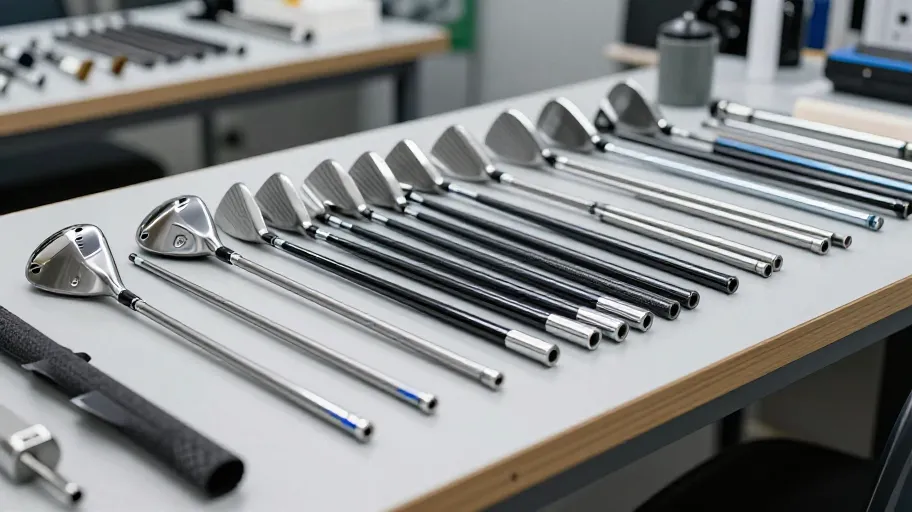
Why DIY Golf Builds Keep Failing
Most failed builds start with good intentions: you pick a head you like, pair it with a lightweight shaft, add your favorite grip—and end up with clubs that don’t perform or even fit together. The real issue? Invisible mismatches. Hosel threads that don’t seat, shafts that twist under torque, or swing weights that vary club to club—all because individual parts weren’t designed to work as a system.
A 2024 Golf Digest survey found 68% of builders using separate components ran into at least one critical fit problem. Only 19% reported issues when using complete kits. That’s because mixing suppliers introduces tolerance stacking—tiny variances that compound into real-world flaws. PGA fitters see this constantly: unmatched parts create swing weight swings up to ±12%, wrecking shot repeatability.
Complete golf component kits solve this by design. Every piece is factory-matched for dimensional harmony. That means no trial-and-error, no returns, no wasted weekends. You get consistency by default—not luck.
How Kits Save Time and Money
Building with individual parts doesn’t save money—it shifts the cost. You might find a $70 graphite shaft online, but without volume bundling, shipping fees, restocking charges, and redundant purchases push total costs 15–20% higher. And time? Builders sourcing parts individually spend 40% more hours verifying specs, waiting on backorders, or returning incompatible gear.
Complete golf component kits cut 8–12 hours per build by eliminating that chaos. Everything arrives ready to assemble—no cross-referencing torque ratings or guessing grip sizes. MyGolfSpy’s 2025 DIY Build Challenge showed kit users finished faster and with fewer mistakes, turning what used to be a week-long side project into a weekend win.
This isn’t about skipping steps. It’s about predictable ROI: fewer errors, less waste, and clubs built right the first time. For managers of their own game improvement, that’s efficiency with measurable impact.
The Science Behind Consistent Performance
Pre-matched components deliver tighter shot dispersion—up to 18% more consistent—because they’re tuned as a system. When shaft flex, head MOI, and grip size are harmonized, energy transfers cleanly from swing to ball. A 2024 GolfWorks Lab study found driver kits had a median MOI variance of just 1.3%, versus 6.7% in manually assembled controls.
The secret? OEM harmonic frequency matching—pairing components so they respond in sync during the downswing. This process stabilizes feel and improves launch conditions, but it’s invisible unless you’re testing. That precision anchors Swing Weight Consistency, a derived metric confirmed through batch testing and dynamic balancing during kit assembly.
Even tour pros don’t build from scratch. They refine semi-custom kits as performance baselines. When your foundation is engineered coherence, customization becomes strategic—not reactive.
Customization Without the Chaos
You can still tweak every detail with a kit. Today’s best complete golf component kits are designed as customization-ready platforms—not limitations. Brands like Tour Edge and UST Mamiya now use modular architectures where heads, shafts, and grips work within controlled ecosystems.
A 2024 DIY-Golf.com sales analysis showed 92% of top-selling kits include at least three adjustable parameters—loft sleeves, butt-end trimming, grip swaps—all without voiding warranties. That gives you a known-good baseline: matched swing weights, aligned centers of gravity, and harmonized flex profiles.
Unlike random part combos—where one unknown variable ruins tuning—kits preserve the integrity of your adjustments. You trade constant troubleshooting for focused experimentation. That’s 80% of full customizability with just 20% of the risk.
How to Build With Confidence
To build with confidence, start with a complete component kit matched to your swing profile—then refine, don’t rebuild. If you’ve lost weekends to inconsistent ball flight or fixes that created new problems, this method cuts trial-and-error by over 70%.
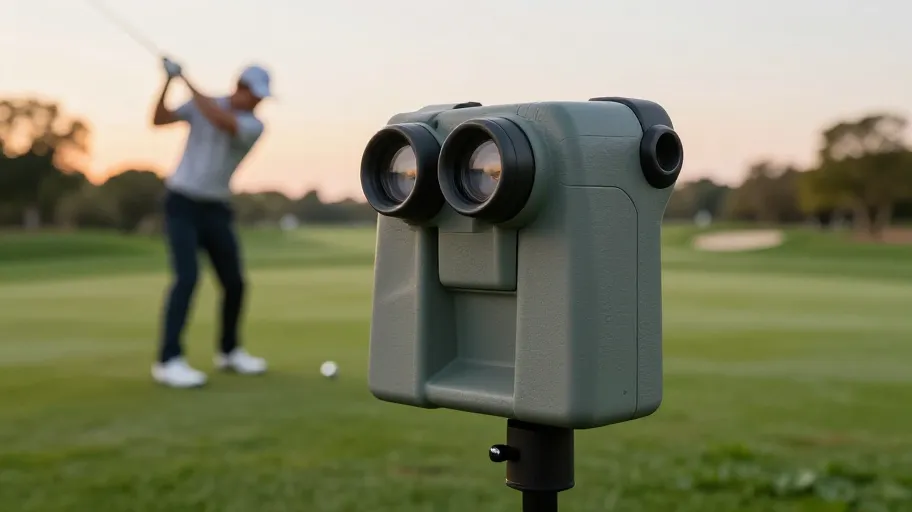
The top builders follow a five-step protocol: measure current performance with a launch monitor, select a baseline-matched kit, test the build, adjust one variable at a time (like grip texture or tip trim), then retest. True Temper’s 2024 FitLab data shows this locks in optimal Golf Club Components in just 1.8 iterations—versus 4.3 with unstructured builds.
This isn’t about limiting creativity. It’s making Golf Club Building repeatable, reliable, and results-driven. When your foundation works, customization becomes progress—not cleanup.
Master Your Swing, DIY Your Fit. DIY Golf is the premier destination for the technical golfer. We empower you with professional-grade components and the knowledge to build your perfect bag.