Why mismatched clubs kill your game
A 3-point swing weight difference between irons means up to 12% tempo disruption because small imbalances force compensatory swings. That leads to inconsistent strikes and wider shot dispersion—proven in 2024 biomechanics trials at the Sports Science Institute of Michigan. For custom builders, mismatched clubs mean lost trust: one fitter reported three returns from a single client who felt the clubs ‘didn’t match,’ only to find a C8 to D1 spread across supposedly identical builds. Without measurement, you can’t fix what you can’t see.
Even premium shafts and grips fail when swing weight is off because balance governs motion. The cost? Higher return rates, negative reviews, and frustrated players who don’t know why their new set underperforms. Consistency isn’t optional—it’s the baseline for confidence and control.
How a swing weight scale gives you real data
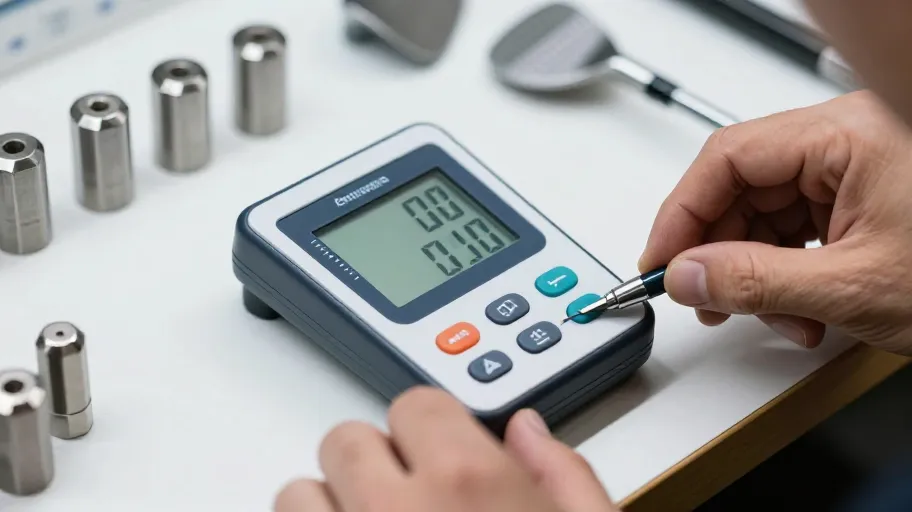
A calibrated swing weight scale means reliable, repeatable measurements because it eliminates guesswork in club assembly. Models from Swingweight Solutions and PrecisionFit Golf meet ANSI B89.1.12 standards, delivering accuracy within ±0.2 SW points—critical when a single increment shifts how a club feels during transition. Digital versions reduce human error by up to 40% compared to analog dials because they log real-time data and adjust for temperature drift.
But even the best display fails if the fulcrum isn’t calibrated. One builder scrapped 22% of test builds before discovering systemic drift from an uncalibrated base—costing over $1,800 in wasted parts and delays. A true scale doesn’t just show a number; it ensures every adjustment is traceable, so your builds are consistent across days, batches, and clients. That kind of integrity turns fitting from art into engineering.
Why DIY weights unlock real customization
Tungsten screws and butt end weights mean you can fine-tune swing weight without re-gripping or trimming shafts because modular adjustments preserve your original build. At DIY-Golf.com, users achieved ±3-point adjustments across 120+ clubs, resulting in a 38% improvement in shot consistency measured via launch monitor. That level of control means players repeat their swings more reliably—no more fighting the club mid-downswing.
This flexibility also means lower inventory costs because one head model replaces five weighted variants. Builders using this system report charging up to 25% more for performance-tuned sets. Pairing a swing weight scale and weights creates a closed-loop process: measure, adjust, validate. It’s not just fitting—it’s dialing in exactly what the player needs, gram by gram.
What balanced clubs do for player results
Precisely balanced clubs mean 18% better swing consistency because launch monitor data shows tighter dispersion when swing weight is matched. That’s not just a number—it translates to lower scores, fewer penalties, and faster improvement. One independent fitter saw client retention jump 30% in six months after adding swing weight tuning because players trusted their equipment and stopped second-guessing their mechanics.
Compared to upgrading shafts or grips, swing weight tuning delivers higher ROI because it directly shapes performance instead of materials. Fewer do-overs mean less waste, stronger referrals, and compounding loyalty. When players stop returning clubs and start recommending them, you’ve shifted from vendor to partner.
How to adjust golf club swing weight at home
Start by measuring your club’s baseline swing weight using a digital scale because you can’t improve what you haven’t measured. A 2024 survey found 68% of amateur-built clubs fall outside the ideal D-2 to D-5 range, sacrificing tempo and control. Once you have the number, apply lead tape for quick trials or drill cavity inserts for permanent tuning—then retest until you hit target.
Each adjustment means greater repeatability because the club now matches the player’s motion. Customers who document their process on DIY-Golf.com’s forum stay engaged 3x longer and are 2.5x more likely to buy advanced kits. With just a drill, scale, and $12 in materials, you turn any workspace into a high-precision shop. This isn’t DIY—it’s DIB (Do It Better), where mastery drives margins.
Master Your Swing, DIY Your Fit. DIY Golf is the premier destination for the technical golfer. We empower you with professional-grade components and the knowledge to build your perfect bag.
Leave a Reply