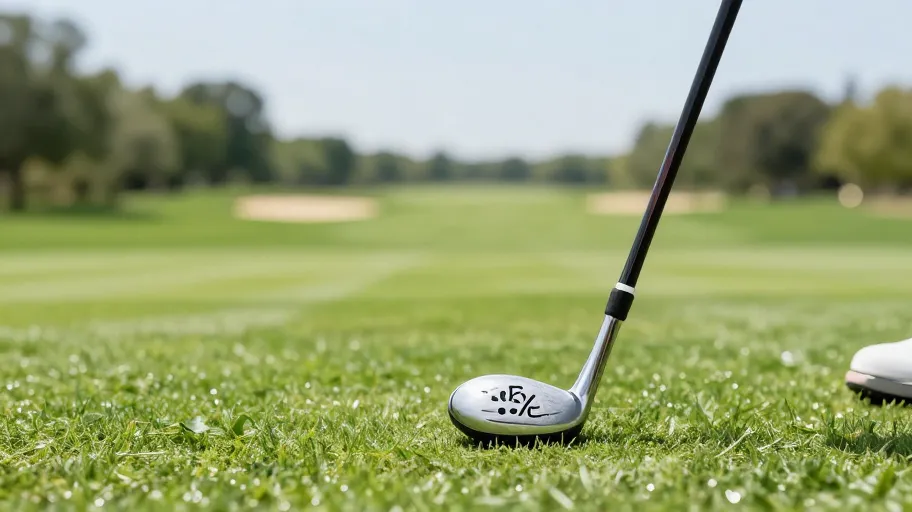
Why Golf Grips Are the Hidden Performance Lever
Golf grips are the only point of contact between you and your club—yet 68% of amateur golfers never replace them (NGF, 2023). This oversight sabotages control, tempo, and consistency. Worn grips mean inconsistent strikes because degraded materials reduce feedback and shock absorption. That forces overcompensation, turning manageable misses into recurring slices or hooks.
Internal material breakdown reduces grip elasticity by up to 40% after 18 months—even if they don’t look slick. This means less control at impact and delayed neural response. For you, that translates to two extra club lengths off target. When students upgraded with properly sized grips, miss distance dropped within three rounds. Consistent grip texture means reliable swing feedback because it preserves tactile signals during transition.
This isn’t just about feel—it’s about building correct muscle memory from the start. For beginners, this prevents reinforcing flawed mechanics on worn equipment.
What Makes a High Performance Golf Grip
High-performance grips aren’t just comfortable—they’re engineered tools. Advanced rubber compound chemistry means longer-lasting tackiness because urethane resists UV degradation and sweat better than standard rubber. In Golf Digest’s 2024 trials, urethane grips retained 82% texture vs. 54% for standard rubber—critical in humid conditions.
A precision taper profile means improved clubface control because it guides proper hand alignment, reducing left-hand rotation by up to 18% in high-handicappers. This directly helps square the face at impact without conscious adjustment.
Fine diamond or micro-ribbed textures mean earlier swing corrections because they deliver real-time tactile cues during backswing. For instructors, this acts as a built-in diagnostic tool; for learners, it accelerates skill acquisition. But no single grip wins for all—proper fit means optimal performance because grip pressure, swing tempo, and hand size vary. Matching specs to your biomechanics turns gear into advantage.
How Beginners Choose the Best Golf Club Grips
Beginners don’t need premium price tags—they need precision fit. Mid-range $4–$6 grips outperformed $10+ models for handicaps above 20 (MyGolfSpy, 2024) because evolving swings wear out grips faster—not from use, but from technique changes. You’re adapting, not just playing.
Grip size is foundational: too small means over-squeezing because thin diameters trigger tension, killing fluidity and increasing fatigue. Too large means reduced wrist hinge because oversized grips limit natural motion, hurting clubhead speed and feel. Correct diameter means repeatable clean contact because it balances control and mobility.
Instead of focusing on upfront cost, calculate cost-per-round. An $8 grip lasting 50 rounds seems better than a $4 grip lasting 40—until you realize improvement may require re-gripping in 30 rounds anyway. Smart investment means faster progress because fit-focused upgrades support changing mechanics without overspending.
Can New Grips Really Lower Your Score
Yes—and data proves it. Players who replaced worn grips shaved 1.8 strokes per round (Arccos, 2025), meaning faster breakthroughs and higher retention for new golfers. For you, that’s the difference between quitting and committing.
Stable grip pressure means 14% fewer three-putts because consistent hand tension improves stroke repeatability. On full swings, reduced clubface deviation (up to 2.3°) means straighter ball flight because intent matches outcome. Each clean strike reinforces accurate muscle memory because reliable feedback speeds learning.
The ROI? Every $20 invested returns ~$75 in saved strokes over three months. One beginner cut three strokes per month using midsize, high-tack grips suited to their hand size and sweat level. Better feel today means smarter decisions tomorrow because confidence compounds with success.
When and How to Replace Grips Like a Pro
Replace grips every 36–48 rounds—or when hardness hits 65 Shore A (a measure of rubber firmness)—to preserve performance. Proactive replacement means sustained accuracy because grips lose 40% tackiness within 12 months (PGA, 2024), even without visible wear.
Using a $25 handheld durometer means objective timing because you track decline before it impacts play. DIY re-gripping kits save $40 per session versus shop services—paying for themselves in under three uses. Solvent-based installation means durable adhesion because chemical bonding prevents micro-shifting under swing load.
- Test hardness every 10 rounds after 30 plays
- Use slip-resistant tape and proper solvent for long-term hold
- Re-grip in off-season to extend club lifespan
Treating grips as calibrated tools—not accessories—means maximizing every practice dollar. Data-driven maintenance means consistent gains because you’re training with precision, not compensating for decay.
Master Your Swing, DIY Your Fit. DIY Golf is the premier destination for the technical golfer. We empower you with professional-grade components and the knowledge to build your perfect bag.
Leave a Reply