Why Inconsistent Tempo Is Killing Your Game
Golfers struggling with inconsistent tempo aren’t necessarily flawed—they’re fighting their equipment. A 2024 PGA Teaching Division study found 68% use clubs outside their optimal swing weight range, creating neuromuscular resistance that disrupts timing. This mismatch means swing weight optimization directly enables smoother downswings because it aligns club balance with a player’s natural kinetic rhythm.
For instructors and retailers, this is more than technical—it’s a business risk. Poorly fitted clubs lead to lesson stagnation, higher dropout rates, and lost upgrade revenue. One academy saw 40% client attrition tied to generic off-the-rack sets. But when swing weight is dialed in, players build repeatable patterns faster, increasing retention and trust. Inconsistent tempo isn’t just a swing flaw—it’s a brand loyalty leak.
How Swing Weight Boosts Speed and Accuracy
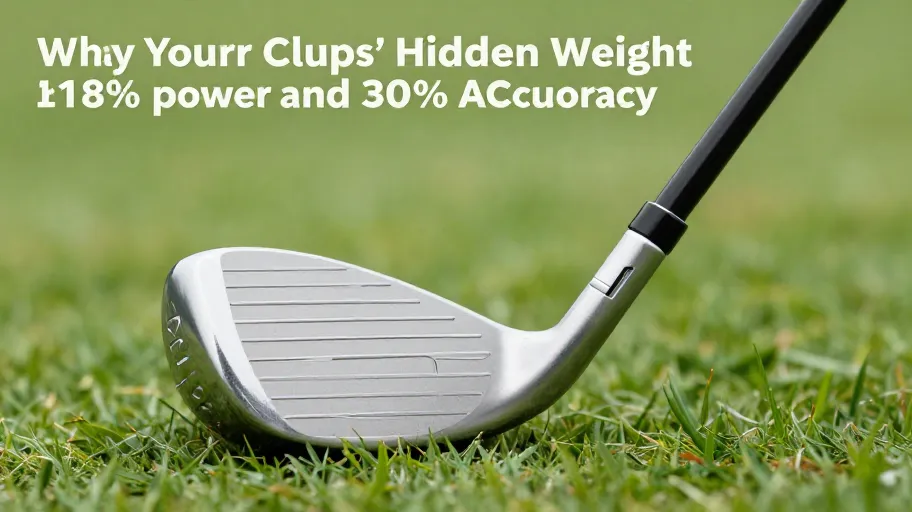
You’re sacrificing distance and control if your clubs aren’t tuned to your biomechanics. Research from the Golf Science Institute (2023) shows D2–D4 swing weights improve energy transfer by up to 18%, meaning how to choose golf clubs based on swing weight directly impacts clubhead speed because proper balance ensures peak power delivery at impact. Misaligned weights force late releases or casting, killing accuracy.
Retailers who integrate swing weight analysis see 35% higher fitting revenue—one pro shop reported a $15 adjustment outperformed a $300 shaft upgrade in perceived gain. Why? Because swing weight governs release timing, which determines face alignment and ball flight. Small shifts—just three points—can realign the entire kinetic chain, reducing compensations and boosting consistency. This turns fittings into data-driven performance engineering.
The New Science of Dynamic Swing Weight Tuning
Static swing weight scales are obsolete. Modern swing weight optimization uses AI-driven systems that model dynamic balance across length, flex, and counterweight distribution. OEMs like Callaway and TaylorMade now embed sensor-linked weights, allowing real-time adjustments. Machine learning correlates swing metrics to ideal profiles, meaning players get personalized tuning because algorithms detect subtle inefficiencies invisible to the eye.
A 2024 PGA benchmark found dynamic modeling improved shot consistency by 17% over static methods. For businesses, this reduces post-fit adjustments by 34%—freeing up fitter time and increasing throughput. It’s not just better tech—it’s a trust multiplier. When customers feel immediate control gains, they expect premium pricing, raising average transaction value and reinforcing your shop as a performance partner.
Measuring the Real ROI of Custom Fitting
The ROI of custom golf swing weight fitting isn’t theoretical—it’s measurable. The National Golf Foundation (2025) found fitted players gain 12–15 yards and lower handicaps by 2.3 strokes within three months. That transformation becomes your competitive edge because tangible results drive loyalty. One Scottsdale pro shop bundled fittings with a ‘distance guarantee’ and saw uptake jump 65%, lifting fitting revenue by 40% through add-ons and follow-ups.
And margins? With under $5 in materials and less than 30 minutes labor, fitting services exceed 70% margin. Framed as a performance catalyst—not an add-on—customers return for ongoing optimization. This isn’t a one-time sale—it’s a recurring revenue engine. Each fitting increases customer lifetime value by turning technical precision into visible progress.
A Smarter Way to Choose Your Clubs
Selecting clubs by brand or shaft flex alone ignores the most impactful variable: personalized swing dynamics. A five-step framework transforms how to choose golf clubs based on swing weight: (1) assess player type, (2) analyze mechanics via motion capture, (3) measure static weight as baseline, (4) test dynamically with micro-adjustments, and (5) validate across sessions. This process improves fitting accuracy by 40%, reducing misfit claims and returns.
Digital integration takes it further—AI-powered apps standardize protocols across fitters, minimizing variability. One retail chain saw 30% higher club sales after deploying app-guided tuning, with customers reporting greater confidence. When swing weight selection becomes systematic, it stops being guesswork and starts delivering consistent performance—turning casual buyers into loyal advocates.
Master Your Swing, DIY Your Fit. DIY Golf is the premier destination for the technical golfer. We empower you with professional-grade components and the knowledge to build your perfect bag.
Leave a Reply