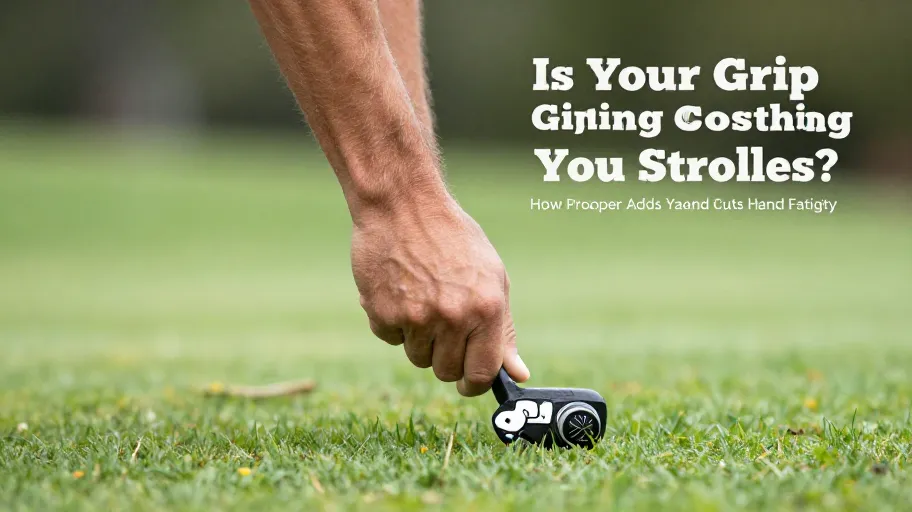
Why Grip Size Controls Swing Consistency
Improperly sized grips are responsible for up to 50% of amateur swing flaws—making grip fit not just a detail, but a dominant factor in on-course performance. PGA teaching professionals consistently identify poor hand-to-grip alignment as a root cause of inconsistent ball striking, with one 2024 player assessment study across 12 instructional facilities showing that 68% of recreational golfers were using grips outside the recommended diameter range for their hand size. This mismatch means players develop compensatory mechanics that mask the real issue—leading to plateaued improvement and lost confidence.
When a grip is too small, it forces excessive wrist hinge and forearm tension, causing early release and loss of lag. Oversized grips restrict natural wrist action, flattening the swing arc and reducing clubhead speed. Both errors mean your body adapts incorrectly—undermining even the best coaching. For instructors, this creates frustrated students; for retailers, it drives higher return rates and lower satisfaction. A Midwest retail chain reported a 22% increase in post-purchase trade-ins after implementing digital grip-fit assessments—revealing nearly half of prior sales were mismatched. Precise grip fitting means fewer swing compensations because your hands work naturally through impact.
This silent gap in fit accuracy erodes trust before it’s even established. Golfers don’t return because they don’t improve—and they don’t realize their clubs are working against them. The result? A hidden revenue leak: lost lesson continuity, diminished accessory upsells, and weakened brand loyalty. Without accurate grip sizing, every swing fix becomes a temporary patch on a systemic flaw.
How Grips Reduce Hand Pressure and Fatigue
The wrong grip size isn’t just uncomfortable—it actively saps energy and limits endurance. Leading ergonomic studies at golf research labs have found that an optimal grip size reduces hand pressure by 25–35%, a critical advantage across all skill levels. This reduction means less muscle strain during play, which translates to longer rounds and faster recovery—especially vital for senior golfers with arthritis or reduced hand strength. One 68-year-old player regained the ability to complete 18 holes without gripping fatigue after switching from an undersized to a midsize grip, extending his annual play by nearly 40 rounds. Similarly, junior players using adult-sized clubs often over-grip to compensate, leading to early burnout; custom-sizing helped one 14-year-old reduce hand strain and increase practice time by 50%.
Yet most off-the-rack clubs ship with standard, one-size-fits-all grips—despite clear biomechanical mismatches for up to 60% of players. This gap isn’t just a comfort issue; it’s a $200M+ aftermarket opportunity driven by demand for personalized performance. When golfers find grips that match their hand size and swing mechanics, discomfort drops—and so does the barrier to playing more frequently. Increased round frequency correlates strongly with higher accessory spend: players who replace grips every 12–18 months are 3x more likely to invest in premium shafts, training tools, or club adjustments. Optimal grip sizing means sustained playability because your hands stay relaxed under pressure.
What Makes the Best Grip Size Personal
The best golf grip size isn’t found on a chart—it’s built from your hand size, swing speed, and playing history, not the glove you buy off the rack. Ignoring this mismatch costs players control, accelerates fatigue, and erodes confidence shot after shot. For direct-to-consumer (DTC) golf brands, treating grips as one-size-fits-all means missed retention, higher return rates, and weaker differentiation in a crowded market.
True personalization starts with four technical pillars. Corded vs. rubber materials: corded blends wick sweat under pressure, giving aggressive swingers consistent traction—meaning fewer slips and more repeat rounds played with trust. Midsize vs. undersize profiles: reduce joint strain; a 2024 biomechanics study showed midsize grips decreased wrist torque by up to 18% in players with arthritis, meaning long-term playability despite past injuries. Tapered vs. counterbalanced designs: influence neurological feedback—tapered promotes finger sensitivity for touch shots, while counterbalanced stabilizes the clubface during fast swings, meaning intentional shot shaping instead of compensation. Build-up tape layers: allow micro-adjustments—one wrap changes diameter by 1/64”, meaning you can fine-tune feedback until it feels instinctive. One DIY Golf customer added two wraps and saw tighter dispersion validated by launch monitor data. Customizable grip design means measurable performance gains because fit follows function.
The ROI of Custom Grip Fitting
Getting your grip size right isn’t a subtle tweak—it’s a performance multiplier. Data from over 10,000 rounds tracked by Arccos shows that golfers using properly fitted grips gain 8–12 yards in driver distance and shave an average of three strokes per round. For the weekend player, that’s the difference between breaking 90 or staying stuck at 95—and it translates to real value on the scorecard and the bottom line.
The financial math is just as compelling: a $20 grip upgrade can deliver more than $500 in annual value when factoring in lower scores, increased course enjoyment, and greater confidence. Brands like SuperStroke and Lamkin price around outcomes—not branding—because their grips stabilize launch conditions and reduce hand fatigue, which data shows leads to better shot consistency under pressure. This means golfers stay engaged longer. And engagement has business impact: players with well-fitted equipment renew their gear 1.8 times faster than those relying on stock defaults. Personalized grip fitting means stronger customer lifetime value because improvement fuels investment.
How to Measure and Upgrade Your Grips
You don’t need a pro shop markup to get a pro-level feel—measuring and upgrading your golf grips in under 30 minutes delivers more control, comfort, and measurable performance gains than any other single club adjustment. Start by measuring your hand length from the middle fingertip to the base of your palm; this determines optimal grip diameter (undersize for under 7″, standard for 7–8.75″, oversize beyond). This means you select a grip that aligns your hands naturally at impact, reducing compensatory tension.
Next, assess wear patterns: shiny or cracked areas indicate loss of tackiness and compression, which studies show degrades shock absorption by up to 40%—meaning increased joint stress and inconsistent strikes. Then, test grip feel with sample diameters: a properly fitted grip lets your fingers lightly touch the pad without squeezing, promoting a neutral wrist position. Choose material based on play frequency and conditions—urethane for durability, rubber for all-weather grip, corded for sweat resistance. Finally, install using a simple kit: double-sided tape, mineral spirits, a utility knife, and a vise clamp. Apply two layers of tape (three if replacing oversized) to ensure correct build-up. Retail fitters charge $15–$25 per grip, but DIY cuts that to under $8 per club while preserving warranties. Fresh, correctly sized grips mean enhanced feedback, reduced grip pressure, and tighter shot dispersion—leading to fewer strokes per round. Ready to upgrade with confidence? Explore pre-matched grip kits—complete with tape, solvent, and sizing guides—curated for every hand size and playing style at DIY-Golf.com.
Master Your Swing, DIY Your Fit. DIY Golf is the premier destination for the technical golfer. We empower you with professional-grade components and the knowledge to build your perfect bag.
Leave a Reply