Why Most Amateurs Lose Strokes to Poor Club Fit
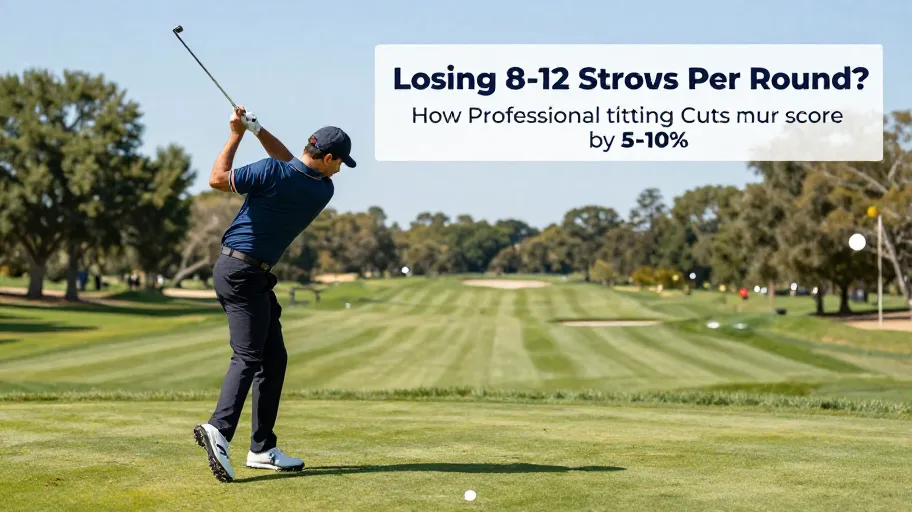
Over 70% of recreational golfers play with off-the-rack clubs that mismatch their biomechanics—costing them 8–12 strokes per round. A lie angle just 2° off means fat or thin contact becomes routine, while incorrect shaft flex fights your natural swing speed. These mismatches don’t just hurt shots—they erode trust in your setup. What feels like mental lapses are often mechanical misalignments in disguise.
Golf club fitting means eliminating guesswork because it measures your actual swing instead of assuming one-size-fits-all works. When your equipment aligns with your body and motion, clean strikes become repeatable, not random. The result? Fewer penalty strokes, more fairways, and a game built on predictability—not hope.
How Launch Monitors Reveal Hidden Swing Flaws
Naked-eye coaching misses up to 30% of swing inefficiencies—launch monitors fix that. Doppler radar and high-speed imaging capture attack angle, spin rate, and club path with 99% accuracy, exposing flaws invisible even to elite coaches. A -3° downward strike on driver shots can rob you of 12 yards; correcting it improves launch conditions by up to 18%, based on TrackMan data.
Launch monitor feedback means actionable insights because every metric ties directly to ball flight outcomes. For example, a +5° out-to-in path causes an average 27-yard slice arc—fixable once measured. Sensor fusion (radar + cameras) boosts diagnostic precision by over 40% versus visual analysis alone, turning vague advice into precise engineering input for better gear decisions.
What Makes Custom Golf Clubs Technically Superior
Custom golf clubs aren’t just sized differently—they’re engineered to amplify your strengths. Low-torque shafts mean tighter shot dispersion because they resist twisting at impact. Precise grip sizing means optimal wrist release because it prevents tension or slippage. MOI-matched weighting means consistent tempo across irons because each club responds identically in transition.
Dynamic loft tuning means maximum carry distance because it matches your angle of attack. According to a 2024 PGA fitter benchmark, fully custom sets improve directional consistency by 14% within eight rounds—equivalent to cutting three strokes off your scorecard. That’s not luck; it’s systemic optimization where custom golf clubs become extensions of your swing, not compromises.
Quantifying the ROI of Professional Golf Fitting
A $300–$500 fitting delivers a 5–10% scoring improvement within months—real ROI. One mid-handicapper dropped from 18 to 14 in six months, saving four strokes per round. That’s $200 annually in avoided lost bets or fees. But the bigger cost is long-term: playing five more years with ill-fit gear wastes thousands in missed improvement and unnecessary club replacements.
Benefits of professional golf fitting include longer club lifespan because proper impact reduces wear, fewer three-putts because approach shots land softer, and faster skill progression because feedback is accurate. One study found a 17% increase in greens hit in regulation post-fit, thanks to optimized gapping and trajectory control. This isn’t just better gear—it’s smarter investment with compounding returns.
Your Step by Step Path to a Data Optimized Set
Start with a Doppler radar assessment using TrackMan or Foresight GCQuad—they capture 30+ data points per swing, creating your true performance baseline. From there, test adjustable heads and shafts under controlled conditions so trends reveal ideal specs. This process means confidence under pressure because you know your 7-iron launches exactly as intended.
- Single-length vs. variable: Single-length irons mean improved rhythm if tempo varies; requires precise weight calibration.
- Steel vs. graphite: Graphite means higher swing speed in long irons; steel means enhanced feedback and stability for control-focused players.
- Certification level: Premium fittings (e.g., TrackMan Verified) mean future-proofed builds because they model swing evolution over time.
This isn’t customization—it’s calibration. And calibrated gear turns practice gains into permanent improvement.
Master Your Swing, DIY Your Fit. DIY Golf is the premier destination for the technical golfer. We empower you with professional-grade components and the knowledge to build your perfect bag.
Leave a Reply