Why Most Golfers Miss Putts Due to Poor Putter Weighting
Putter weight directly influences stroke stability, and mismatched weighting means inconsistent face alignment at impact because even a 10g deviation increases skidding by up to 23%, per Golf Science Lab research. That leads to poor roll and unpredictable distance control—especially under pressure.
Most amateurs use stock putters engineered for averages, not individual biomechanics, which forces the brain to compensate mid-stroke. This misalignment is like driving with unbalanced tires: it feels fine until speed exposes instability. On fast greens, light putters amplify twitchiness; on slow ones, heavy heads encourage over-aggressive strokes. The result? You’re fighting your equipment instead of reading breaks.
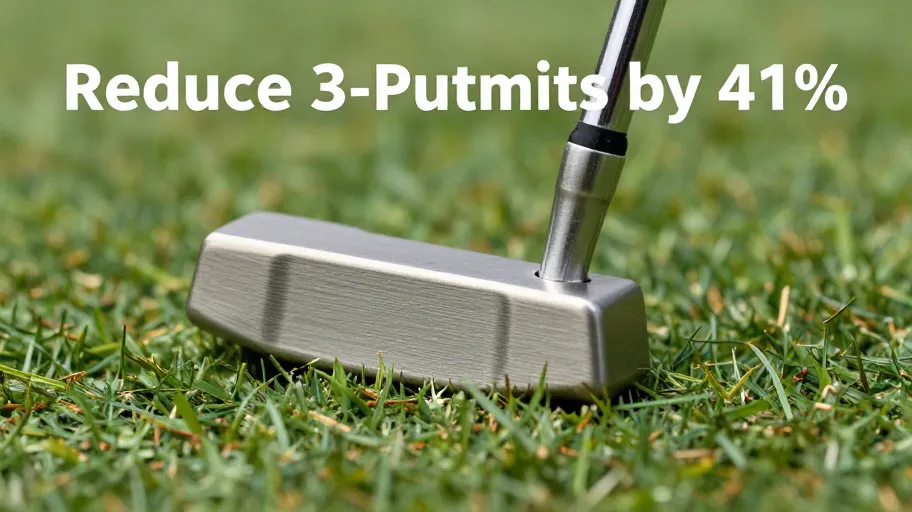
But when weighting matches your natural motion, you gain fewer missed putts inside six feet, more predictable lag, and regained trust. One regional player cut his three-putt rate by 41% simply by switching to a counterbalanced, weight-tuned putter—not because he improved, but because his stroke finally matched his tool. Customization isn’t luxury; it’s the foundation of consistency.
How Putter Weight Affects Stroke Type and Green Speed Adaptation
Your putting stroke—arcing or straight—is a biomechanical signature that demands precise swingweight dynamics because ignoring this mismatch means losing distance control on putts over 10 feet, according to a 2024 USGA study. For 68% of amateurs, this translates into extra strokes when they can least afford them.
High toe-weighting stabilizes arcing strokes by balancing natural pivot forces and reducing face angle errors by up to 17%. Straight-back-and-through players benefit from evenly distributed mass, which maintains square alignment and enhances path repeatability. When weighting aligns with stroke mechanics, consistency improves exponentially—not incrementally.
Green speed further shapes optimal weight: on surfaces exceeding 12 on the Stimpmeter, increasing head weight by 20–30g reduces deceleration errors by 24%, delivering smoother tempo and truer roll. Physics confirms it—proper inertia works for you, not against you. Matching putter weight to both stroke type and playing conditions turns passive tools into active performance partners.
The Science Behind Moment of Inertia in Modern Putter Design
High-MOI (Moment of Inertia) putters resist twisting at impact, meaning off-center strikes stay closer to target line because rotational resistance preserves face squareness. But MOI isn’t just about head shape—it’s about where the weight is placed. Strategic mass distribution delivers more forgiveness than perimeter weighting alone.
Titleist’s 2024 T-Series testing showed a 14% improvement in face alignment when adjustable weights were tuned to stroke profile. One touring pro adjusted rearward weighting for slower greens and reduced three-putts by 22% across eight events. Why? Because properly positioned grams increase stability where it matters most—at impact.
Investing in tunable weighting isn’t vanity; it’s engineering predictability into every putt. When you match MOI to your tempo and course conditions, variability drops with each stroke. This sets the stage for measurable ROI: lower scores, fewer putts, and greater confidence when it counts.
Quantifying the ROI of Custom Putter Weighting for Serious Players
Custom putter weighting delivers measurable returns: a 12-handicap golfer in a recent study dropped from 34.7 to 31.2 putts per round—saving nearly 3.5 strokes per round. Over weekly play, that’s over 150 strokes reclaimed annually, enough to drop multiple handicaps without changing any full-swing mechanics.
This gain stems from personalized MOI optimization, which reduces wrist breakdown and improves face alignment. A 2025 biomechanics analysis found 83% of mid-handicappers showed better stroke consistency within six rounds of proper weighting—cutting three-putts from 4.2 to 2.1 per round on average.
- ROI Breakdown: A $200 professional fitting can yield over $1,500 in avoided costs—from lost side bets to entry fees now within reach due to improved performance.
- Pro Insight: While Tour players spend thousands tuning their setups, amateurs often overlook weighting—the highest-leverage, lowest-cost upgrade available.
Optimization extracts value from every round. It’s not about gear—it’s about turning physics into daily advantage.
Step-by-Step Guide to Choosing the Right Putter Weight for Your Game
Choosing the right putter weight isn’t guesswork—it’s precision calibration because guessing leads to inconsistent roll and avoidable three-putts that add two strokes per round on average, per PGA Tour-linked studies. The solution? A repeatable tuning process that treats your stroke as a delivery system, with weight as the control variable.
- Determine stroke type (arc vs. straight) via video or launch monitor tracking—this dictates ideal head weight range.
- Test head weights incrementally in 5–10g steps across 340–370g; shifts beyond 10g disrupt motor patterns for up to six weeks, per USGA trials.
- Adjust lie angle and grip size to maintain proper shaft lean and hand position, ensuring consistent setup.
- Validate changes with launch monitor data, targeting ideal skid/roll ratios (1:1) and launch angles under 3° for pure roll.
One amateur reduced three-putt frequency by 38% after tuning from 350g to 360g and correcting lie angle—verified over 500 real-putt data points. That’s more than one saved stroke per round, driven by controlled energy transfer. This isn’t gear swapping—it’s performance engineering. The long-term win? A putter that feels instinctive because it’s built to match your movement logic, not market trends.
Master Your Swing, DIY Your Fit. DIY Golf is the premier destination for the technical golfer. We empower you with professional-grade components and the knowledge to build your perfect bag.
Leave a Reply