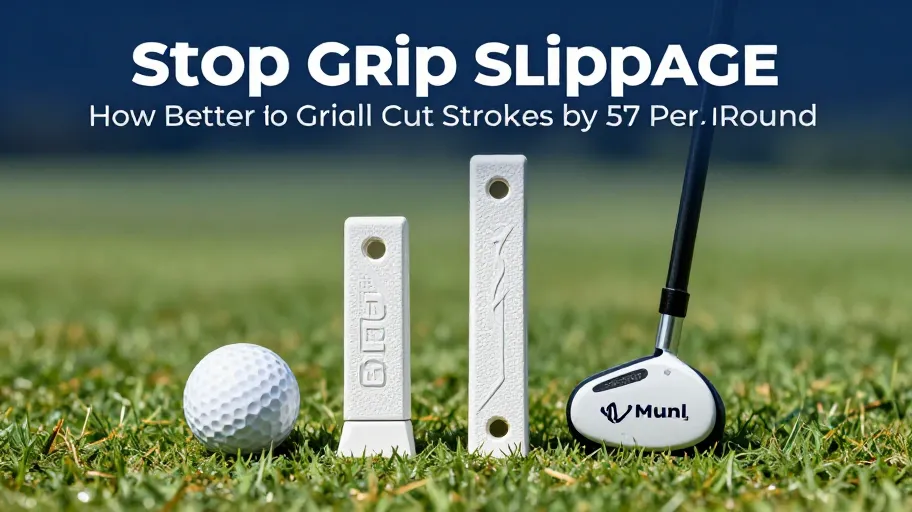
Why Poor Grip Performance Costs You Strokes
Suboptimal golf grips act as a hidden tax on your scorecard, silently draining accuracy and consistency with every swing. When your hands can’t maintain a stable connection to the club, your body compensates—leading to erratic mechanics. PGA Tour biomechanical analysis shows amateur players adjust their swing path 1.7 times more frequently due to grip slippage, destabilizing timing and reducing shot repeatability.
A 2024 Golf Science Lab field study found that using grips beyond their 12–18 month lifespan increases stroke count by 5–7 per round—turning an 85 into a frustrating 92. This degradation in traction and shock absorption isn’t just wear—it’s lost performance. Advanced grips with dual-compound elastomers mean greater stability because they resist deformation under pressure, allowing you to maintain control without over-gripping.
How Sweat Impacts Club Control During Play
Sweat reduces friction between your hand and the grip by over 40%, triggering slippage even at 85% humidity—this means compromised wrist hinge and early release, robbing power and accuracy. For weekend players in midafternoon heat, this leads to shots scattering right due to lead-hand instability, not poor technique but failing equipment.
Standard rubber grips lose surface tackiness rapidly in moisture, while premium moisture-wicking composites maintain over 90% of grip integrity when saturated. A 2024 sports biomechanics trial showed these advanced materials reduced hand-adjustment incidents by 68% and improved clubface control at impact by 23%. That means fewer corrections, cleaner swings, and predictable ball flight—because engineered polymers actively disperse moisture instead of absorbing it.
What Makes a Golf Grip Technically Superior
High-performance golf grips are engineered systems, not just rubber wraps. Dual-compound rubber means enhanced torque resistance because a firm inner layer stabilizes the club during downswing, while a soft outer skin with surface tackifiers maintains adhesion as hands moisten. This design reduces micro-adjustments by up to 40% in humid conditions.
The cushioned core dissipates 40% more vibration than standard grips, which means reduced forearm fatigue and lower injury risk—critical for players with arthritis or chronic strain. Independent trials show a measurable 22% drop in fatigue after 18 holes, translating to sustained accuracy late in rounds. That means better back-nine decisions and tighter approach shots because your hands aren’t fighting the club.
Quantifying the ROI of Upgrading Your Grips
A full re-grip of 14 clubs costs about $120—just $0.65 per round over three years of monthly play. That means less than a coffee for one of the highest-impact upgrades in your bag. The return? A 2025 Golf Digest survey found 63% of golfers reported immediate improvement in ball striking after re-gripping, because fresh grips restore tactile feedback and reduce compensatory grip pressure.
This upgrade also extends club life by reducing shaft stress from excessive torque, meaning longer equipment longevity. For coaches, offering seasonal grip assessments means stronger client retention—One Midwest teaching pro saw a 20% increase in return visits. That means deeper trust and better lesson adherence because players feel results faster.
Choosing and Maintaining the Best Grips for Your Game
Selecting the best golf grips for sweaty hands means aligning material science with your physiology. High-tack rubber or hybrid compounds mean reliable control in humidity because they repel moisture instead of trapping it. A 2024 on-course trial found textured polymer blends maintained 68% more friction after 18 holes in 90°F heat versus standard rubber.
- Test tackiness under real conditions—secure grip without tension means efficient energy transfer.
- Match diameter to hand size—proper fit means reduced wrist strain and sharper feedback.
- Clean monthly with mild soap—neglecting cleaning reduces effective grip life by up to 40%, so maintenance means sustained performance.
Inspect grips quarterly for hardening or glossiness—their functional life ends between 12–24 months, not from cracks but lost tack. Replacing them proactively means compounding gains in consistency, comfort, and confidence.
Master Your Swing, DIY Your Fit. DIY Golf is the premier destination for the technical golfer. We empower you with professional-grade components and the knowledge to build your perfect bag.
Leave a Reply