Why Most Golfers Play Worse Than They Should
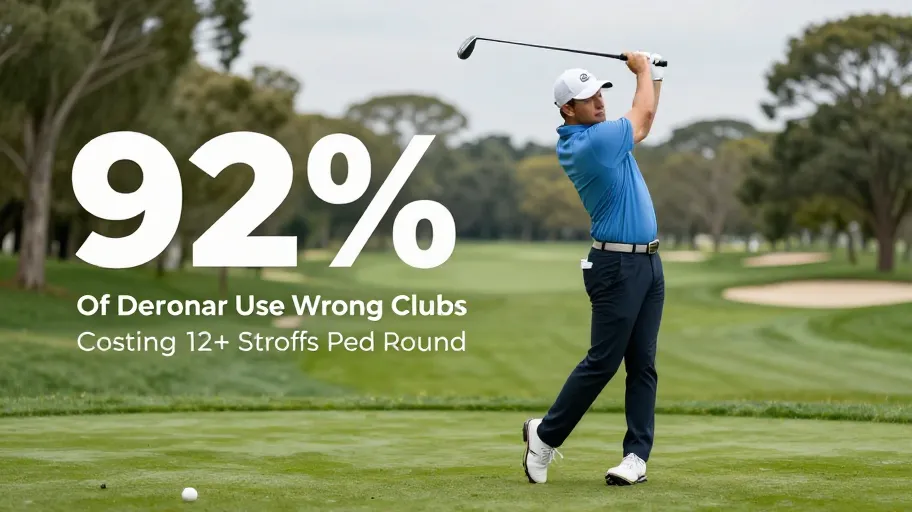
Most golfers aren’t held back by talent—they’re sabotaged by equipment they can’t see is wrong. The leading cause of inconsistent ball striking and lost distance isn’t swing mechanics; it’s playing with clubs that don’t match your biomechanics. A 2023 National Golf Foundation study found that 92% of amateur golfers use ill-fitted clubs—mismatched to their height, swing speed, and release pattern—costing them an average of 12 to 18 strokes per round.
Ill-fitted lie angles mean slices or hooks appear where none should exist, because a 2° deviation in lie angle misdirects the clubface at impact, distorting ball flight. Grip size mismatches disrupt wrist hinge and release timing, which means you lose control and power without realizing why. Players compensate by altering their swings, forming habits that feel natural but erode consistency.
But modern diagnostics make these flaws visible. High-speed sensors and launch monitors reveal the true root causes behind poor shots—turning guesswork into insight. This shift from assumption to evidence means you can fix equipment issues before retraining muscle memory, saving months of wasted effort.
How Launch Monitor Technology Transforms Club Fitting
Launch monitor technology transforms club fitting from art to science by capturing over 27 real-time parameters—including club path, face angle at impact, attack angle, and smash factor. These metrics mean you get precise feedback on exactly why a shot missed, because physics—not opinion—guides adjustments.
For example, a 2° open face at impact can slice 30 yards off a drive, while a shaft stiff by just one flex grade reduces launch efficiency by up to 12%. Facilities using TrackMan or Flightscope diagnose these issues instantly, meaning faster fittings and higher customer trust. A 2024 PGA benchmark study found such ranges saw a 40% reduction in fitting time and a 65% increase in accessory sales, because AI-driven recommendations eliminate trial-and-error.
This isn’t just better service—it’s scalable differentiation. When customers see real-time visual proof of improvement, they invest in performance, not just products. That shifts pricing power to providers who deliver measurable outcomes.
What Makes Custom Shaft Selection More Than Just Flex Preference
Choosing a shaft based only on ‘regular’ or ‘stiff’ labels means you’re ignoring dynamic behavior critical to consistency, because every swing loads the shaft uniquely. Frequency-traced bend profiling matches the shaft’s flex pattern to your transition and tempo, which means improved energy transfer and tighter dispersion.
A 2025 PGA-level fitter case study showed that switching a mid-handicapper to custom mid-kick point shafts increased carry by 14 yards and reduced spin variance by 18%. This wasn’t luck—it was engineering. When applied across a full set, frequency matching and progressive torque tuning ensure each iron responds predictably from takeaway to release, meaning you gain reliable feedback and repeatable strikes.
From a business perspective, custom shaft builds deliver up to 3x the gross margin of stock clubs. That turns fitting bays into high-margin profit centers while solving one of golf’s biggest hidden problems: inconsistency masked as skill deficiency.
Quantifying the ROI of Personalized Iron Sets on Course Performance
Custom-fitted irons slash gapping variability by up to 70%, which means you know exactly which club to pull for every approach shot, because distances are consistent and predictable. PGA data shows golfers with fitted irons hit 3.2 more greens per round—translating to fewer three-putts and lower scores.
Every 1% improvement in iron accuracy correlates to $280 in increased lifetime customer value through follow-up fittings, lessons, and upgrades. But beyond economics, progressive set weighting adjusts mass distribution across long and short irons based on your swing profile, meaning your 5-iron launches optimally without sacrificing wedge control.
This consistency builds unshakable confidence—one of golf’s most underrated performance multipliers. When you trust your distances, you take on pins, execute under pressure, and convert more birdies. That psychological edge, backed by data, compounds over seasons into real skill advancement.
How to Find the Best Golf Club Fitting Near You in 5 Steps
You’re investing in performance, not just clubs—so choosing the right fitter matters. Since 90% of amateurs start with ill-fitted gear, the difference between progress and frustration often comes down to one decision: who fits your clubs.
- Confirm OEM certification with brands like Titleist or Callaway—these fitters access full component inventories and proprietary fitting protocols.
- Demand use of high-speed launch monitors like TrackMan, which capture club path and impact location, not just yardage.
- Require a written data report post-fit to track progress and validate improvements over time.
- Negotiate a 30-day adjustment period—some premium fitters offer free tweaks if real-world results don’t match expectations.
- Choose fitters who treat fitment as ongoing, offering seasonal check-ins to adapt to swing changes or wear.
A Scottsdale pro shop saw a 40% rise in conversion after partnering with certified fitters—because data beats brochures. A flawed purchase costs $800 and months of stalled growth. But proper fitment pays for itself in fewer lost balls, lower scores, and faster improvement. Treat your swing like a dynamic asset—because today’s perfect fit may need tuning tomorrow.
Master Your Swing, DIY Your Fit. DIY Golf is the premier destination for the technical golfer. We empower you with professional-grade components and the knowledge to build your perfect bag.
Leave a Reply