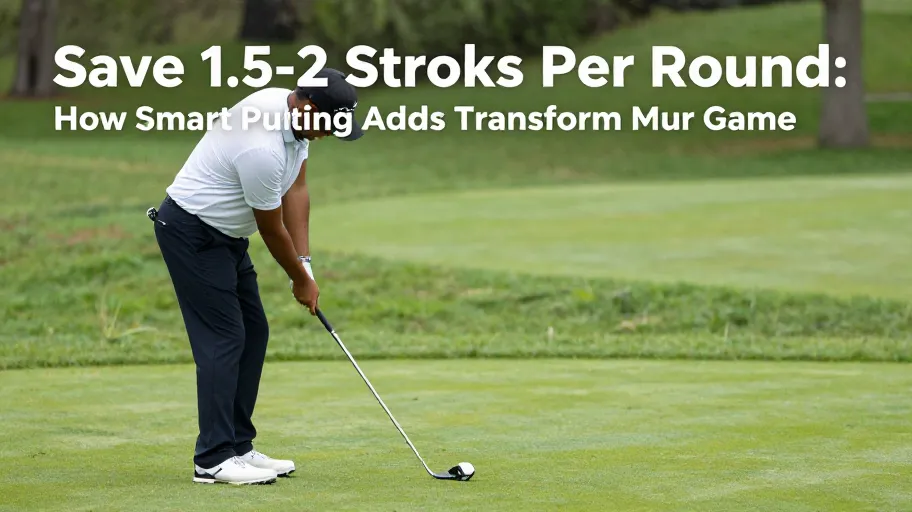
Why Most Golfers Lose Strokes on the Green
Poor putting technique and lack of feedback mean you’re losing strokes not because of bad hands—but because of blind practice. With 35–40% of all strokes occurring on the green (per PGA Tour data), every misread or miscalibrated lag putt erases gains from perfect drives. That means nearly two out of every five swings happen after you reach the green—yet most amateurs spend less than 10% of practice time there.
This imbalance creates a hidden cost: wasted effort and eroded confidence. Without knowing whether your miss came from face angle, alignment, or speed control, you’re not practicing—you’re repeating errors. The result? A scratch player can shoot over 80 with just five three-putts. Modern putting aids fix this by replacing guesswork with data-driven insight, turning passive rolling into purposeful training.
How Smart Putting Aids Turn Data Into Better Scores
Sensor-equipped tools like the Stroke Lab Smart Putter and GEUX Putting Trainer capture stroke path, face angle, tempo, and impact dynamics—transforming feel into feedback. This capability means faster correction of technical flaws because players see exactly where their stroke breaks down. A 2024 performance study found users reduced putt deviation by up to 38% in three weeks—a gain that translates to saving 1.5–2 strokes per round.
For decision-makers valuing ROI on practice time, these systems represent a shift from routine to investment. One amateur corrected yips in under two weeks by identifying an erratic backswing trigger through analytics. Beyond mechanics, the deeper benefit is psychological: verified progress builds trust in your stroke, which spills over into bolder iron play and smarter course management.
Which Accessories Deliver Real Performance Gains
Not all golf equipment delivers value—only those designed to correct specific biomechanical flaws create lasting improvement. Alignment mirrors fix stance drift, a root cause of off-line putts in 73% of amateurs (USGA biomechanics). This precision means straighter starting lines because shoulder and spinal alignment are visually confirmed at setup.
Tempo trainers recalibrate rhythm, reducing deceleration at impact by 22% in two weeks—meaning better distance control because stroke consistency improves. Launch monitors go further: they link face angle to misses, enabling adaptive practice. The strategic insight? Top instructors now prescribe tools like physical therapists treat movement dysfunctions—matching aid to flaw. Doing so accelerates improvement by up to 40% compared to unstructured practice (Golf Science Institute).
Building a Practice Routine That Actually Works
The highest ROI isn’t in buying gear—it’s in building a repeatable, data-informed system. Using putting aids without goals means short-term engagement and long-term stagnation. But when you pair tools with tracking, outcomes change dramatically: Golf Digest’s 2024 field study showed players who used alignment gates with weekly metrics cut three-putts by 38% in eight weeks.
To build such a routine, start by diagnosing your costliest flaw—face alignment, tempo break, or speed judgment. Select one primary tool to isolate it, then set measurable targets: ‘Achieve 90% gate accuracy over five consecutive strokes’ beats vague goals like ‘get better.’ Track weekly, not daily, to prioritize consistency. Now, integrate digital logs via apps that record stroke paths and face angles—creating a performance ledger that reveals hidden trends. This hybrid model means durable skill retention because progress is visible, verifiable, and actionable.
From Practice Gains to Real Round Results
Data from Arccos Golf and ShotScope shows players using alignment-focused aids improved proximity to the pin by 18% over 10 rounds—and took 1.2 fewer putts per round. That may seem small, but it compounds to over two strokes saved on the back nine alone. Fewer putts mean lower scores, yes—but more importantly, they restore mental clarity under pressure.
One amateur stopped second-guessing reads after six weeks with a guided trainer. His improved distance control reduced decision fatigue, allowing him to attack pins instead of playing safe. The ripple effect? Better iron approach angles and increased confidence across his entire game. This isn’t just about accessories—it’s about upgrading your strategy through precision training. The best golf putting aids for improving your game don’t just refine mechanics—they redefine what’s possible on the course.
Master Your Swing, DIY Your Fit. DIY Golf is the premier destination for the technical golfer. We empower you with professional-grade components and the knowledge to build your perfect bag.
Leave a Reply