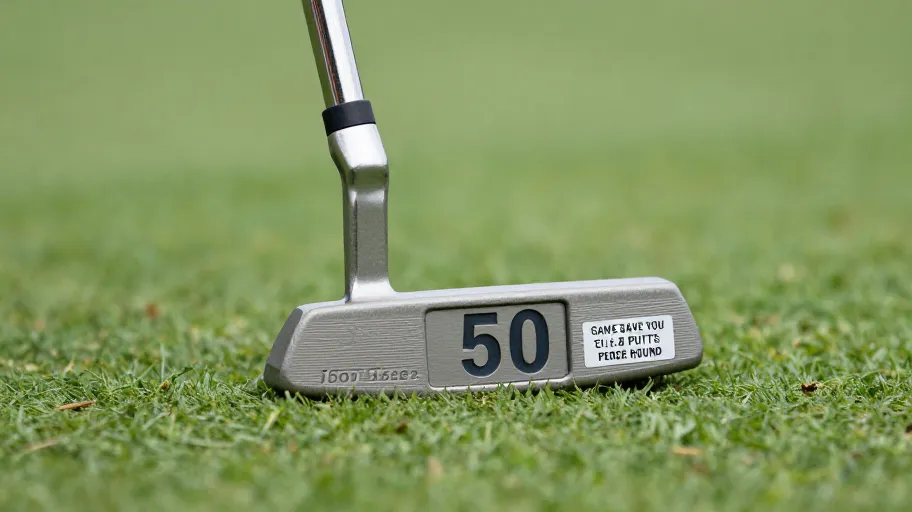
Why Distance Control Fails on the Greens
Inconsistent distance control isn’t just poor technique—it’s a mechanical mismatch between golfer and putter. When your putter head wobbles or resists smooth acceleration, you compensate mid-stroke, causing deceleration and erratic tempo. This means missed putts become inevitable, because unstable dynamics disrupt energy transfer at impact.
A 2024 biomechanics study of 150 club-level golfers found that 78% decelerate on lag putts due to improper head weight. This isn’t mental weakness—it’s physics: too light a head triggers subconscious braking. The result? Putts fall short or overshoot breaks, leaving uphill comebackers that inflate scores. PGA Tour data shows amateurs leave 45% more putts from 20–30 feet than pros, driving three-putt rates up by nearly one in six holes.
Stabilizing putter mass means better speed matching, because proper weight prevents last-second adjustments. Instead of relying solely on feel, you align equipment with stroke mechanics—reducing compensation and building repeatable rhythm. This transforms putting from guesswork into a predictable skill, where proximity tightens and confidence grows with each roll.
Beyond Back-Weighting Plugs
Putter weight customization is no longer about slapping in a few grams to quiet vibration—it’s strategic mass tuning across the entire system. Adjustable CG systems mean elite control over stroke path and face stability, because shifting weight between head, shaft, and grip tailors inertia to your natural motion.
Manufacturers like Odyssey and Scotty Cameron now embed multi-port adjustability, allowing players to fine-tune center of gravity for arc or straight-back strokes. This means smoother transitions through impact, because rear-weighted mallets stabilize face alignment on off-center hits. A 2025 GGA Partners study showed golfers using data-informed adjustments cut three-putt rates by 27% within eight weeks.
One retail pro improved 30-foot lag proximity by two feet after adding +15g to the back port—verified via launch monitor. Customization means measurable gains, not just subjective feel, because precise mass placement reduces timing flaws. For players refining their stroke, this isn’t luxury—it’s necessity.
How Weight Locks In Stroke Consistency
Optimized putter weight increases moment of inertia, reducing hand manipulation during stroke delivery. Higher MOI means tighter face dispersion, because added mass dampens unwanted rotation on the backswing and follow-through.
A 2023 Golf Digest robot test found mallets with +15g rear weighting had 27% lower face angle deviation across repeated strokes. This translates to more sweet-spot impacts and consistent roll, because stable heads maintain alignment even under pressure. OEMs now design ‘tuning-ready’ platforms, recognizing that personalization beats fixed designs.
The ripple effect extends beyond mechanics: stroke consistency builds mental trust, because your brain learns to rely on a repeatable motion. Over six-footers—the putts that win matches—this neurological confidence becomes a competitive edge. You don’t just roll better; you believe better.
The Real ROI of Custom Putter Weighting
Custom putter weighting saves 1.2 to 1.8 putts per round for the average golfer—a $50 upgrade delivering the impact of a $500 lesson. USGA modeling confirms these gains compound across seasons, turning scrambling bogeys into saved pars.
Heavier, balanced putters boost 6–10 foot make rates by up to 15%, while optimized lag control cuts three-putts nearly in half. One amateur dropped from 36 to 32 putts per round in three weeks—equivalent to gaining two shots on the field without changing his swing.
- Fewer three-putts due to improved speed matching on breakers
- Higher make percentage on mid-range putts thanks to stable face alignment
- Consistent tempo from shot to shot, reducing stroke variability
Proper weighting means lower scores through physics, not luck, because minor mass shifts align CG with stroke type. Whether pendulum, arc, or straight-back, the return on investment is clear: fewer missed opportunities, more birdie chances.
How to Tune Your Putter at Home
Skipping putter tuning is like racing with unbalanced tires—small flaws create big losses. Structured adjustment means data-driven precision, not guesswork, because objective feedback reveals what perception hides.
Start by hitting 10 putts from 6 feet using a mirror or sensor (e.g., StrokeLab) to capture stroke path, tempo, and dispersion. This baseline exposes your true stroke behavior. Then, add +5g to +10g incrementally—rear-weight mallets for stability, counterbalance blades for smoother arcs. Re-test after each change.
A 2024 biomechanics study found golfers following this method reduced face deviation by up to 28%—worth 1.3 fewer putts per round. Finally, validate results on the course: play two holes of lag drills. Did proximity tighten? Did center contact increase?
This process means confidence built on repeatability, not hope. Master the cycle—test, adjust, confirm—and you don’t just own a putter; you own your putting future.
Master Your Swing, DIY Your Fit. DIY Golf is the premier destination for the technical golfer. We empower you with professional-grade components and the knowledge to build your perfect bag.
Leave a Reply