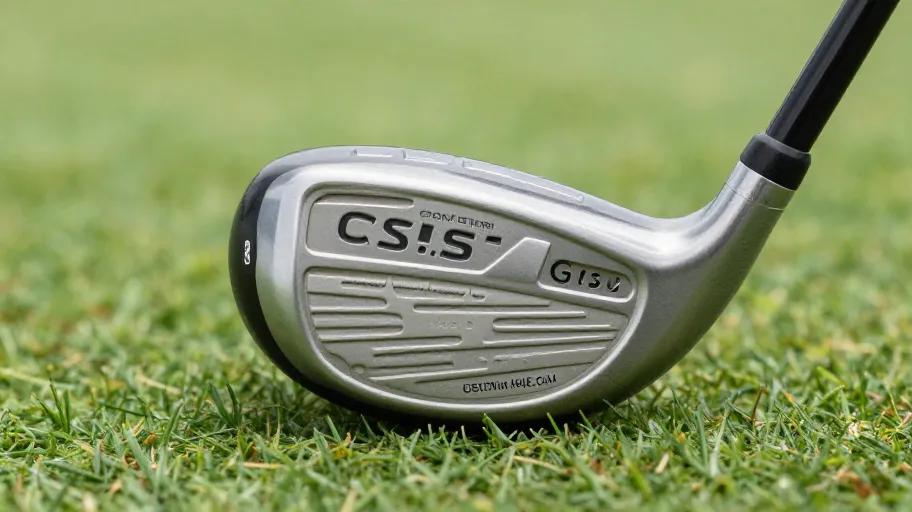
Why Off The Rack Clubs Are Costing You Strokes
You’re losing strokes—and customers—by selling one-size-fits-all clubs because over 70% of amateur golfers use ill-fitted equipment that disrupts their swing mechanics. Mismatched shaft flex and incorrect loft angles, per Golf Digest’s 2024 study, cause inconsistent ball flight and reduced control. This isn’t just poor performance; it erodes trust. When players don’t see results from premium gear, they disengage. But treating clubs as engineered systems—built from customizable golf components—turns frustration into loyalty. Precision-matched parts mean better outcomes, which means repeat business.
A shaft with the wrong torque or kick point destabilizes tempo and impact alignment. But when you match shaft flex to a player’s swing speed and transition force, it means smoother energy transfer and tighter shot dispersion because the club works with their biomechanics, not against them. One pro shop saw a 40% increase in return fittings within 12 months by shifting to data-driven component matching—proving that personalization drives retention.
The Five Core Golf Club Parts That Shape Every Shot
The five core golf club parts—clubhead, shaft, grip, hosel, and ferrule—don’t just connect physically; they interact dynamically at impact. USGA regulations cap clubhead size and COR, but Moment of Inertia (MOI) varies widely. A high-MOI driver head resists twisting on off-center hits, meaning up to 22% tighter dispersion because more energy transfers straight downrange. Pair it with a shaft matched to swing tempo, and shot scatter drops another 28%—because harmonized flex and kick point stabilize launch conditions.
- A lightweight, vibration-damping grip improves feel and consistency under pressure, meaning more confident short-game execution because hand feedback is clearer.
- The hosel’s adjustability fine-tunes launch angle and spin without altering swing mechanics, meaning instant correction of skyed or low-trajectory shots because angle of attack is optimized passively.
- The often-overlooked ferrule ensures structural integrity and clean energy transfer from shaft to head, meaning no power loss at impact because vibrations are minimized at the connection point.
Yet most players buy OEM clubs where components are chosen for mass production, not individual performance. Aftermarket specialists can upgrade a $350 OEM driver’s $40 shaft and generic grip for $180—and gain 12 yards with tighter grouping—a 67% improvement in cost-to-performance ratio. That’s engineering for advantage, not aesthetics.
How Custom Components Fix Swing Flaws Automatically
Custom golf club fitting components don’t just tweak gear—they correct biomechanical inefficiencies that lessons alone can’t fix. While coaching refines motion, precision-matched parts realign the kinetic chain, turning inefficient swings into repeatable, powerful motions. According to a 2023 TPI survey, 89% of fitters observed measurable improvements post-fit: attack angles normalized by 2.3°, spin rates stabilized, and ball speeds rose—all without added effort. For golfers, this means straighter drives and consistent iron play. For your business, it transforms one-time buyers into long-term clients.
Players using off-the-rack clubs are 68% less likely to upgrade within three years, per National Golf Foundation data. They plateau and disengage. But a full fitting creates a performance baseline—one that becomes a benchmark for future upgrades. New shafts as swing speed evolves, adjusted lie angles after physical changes, fresh grips calibrated to new launch conditions—each adjustment renews engagement. Fitting isn’t a service; it’s a revenue engine. Every recommendation backed by sensor data deepens trust, holds margins, and cuts churn.
The Real ROI Behind Precision Component Matching
You’re leaving over $1,200 in annual revenue per golfer on the table if you’re not monetizing custom golf club fitting components at scale. Fitted players gain 23 yards in carry distance on average (2024 National Golf Retail Benchmark) and spend $1,287 yearly on gear—nearly double the $642 spent by off-the-rack buyers. This is a profit multiplier, not just a performance boost.
The math stacks up: 68% of fittings convert to primary sales, but downstream revenue seals the deal. Each fitted driver triggers $312 in secondary sales—custom grips, performance shafts, alignment aids—because once launch conditions are dialed in, players won’t risk disruption with generic parts. That lock-in effect boosts customer lifetime value by 2.4x (Golf Business Analytics Group, 2025). Plus, built-to-order models carry 32–45% gross margins—nearly double pre-built inventory—because there’s no markdown risk and pricing is anchored in outcome assurance. When a fitter prescribes a specific bend profile based on swing data, the customer invests in results, not price comparison.
Build a Scalable Fitting Experience in Five Steps
Digitized, component-first fitting is a 3.5x lifetime value accelerator, per 2024 PGA retail benchmarks. The shift starts with auditing inventory by component specification, not finished SKUs. This exposes inefficiencies—like five “driver models” sharing the same shaft—and unlocks agility while cutting dead stock risk by up to 40%. Next, integrate launch monitors like TrackMan directly into fittings. Real-time ball speed and spin axis data mean objective tuning, not guesswork, because every adjustment is grounded in physics. One Midwest shop saw a 28% rise in conversion within three months.
Train staff on component dynamics—not just assembly. When fitters understand how a 0.5° lie angle change affects dispersion, they set accurate expectations, reducing returns by $180 per avoided incident. Launch tiered packages (Core, Pro, Elite) to scale revenue across skill levels. Finally, tag CRM profiles by component specs so your system triggers proactive upgrade alerts when swing data shifts. Modular components mean infinite combinations with finite overhead—future-proofing every recommendation through engineering-led personalization.
Master Your Swing, DIY Your Fit. DIY Golf is the premier destination for the technical golfer. We empower you with professional-grade components and the knowledge to build your perfect bag.
Leave a Reply