Category: Club Accessories

Club Accessories

  • The Golf Upgrade Most Players Overlook—And How It Transforms Your Game

    The Golf Upgrade Most Players Overlook—And How It Transforms Your Game

    Why most golfers miss this one upgrade

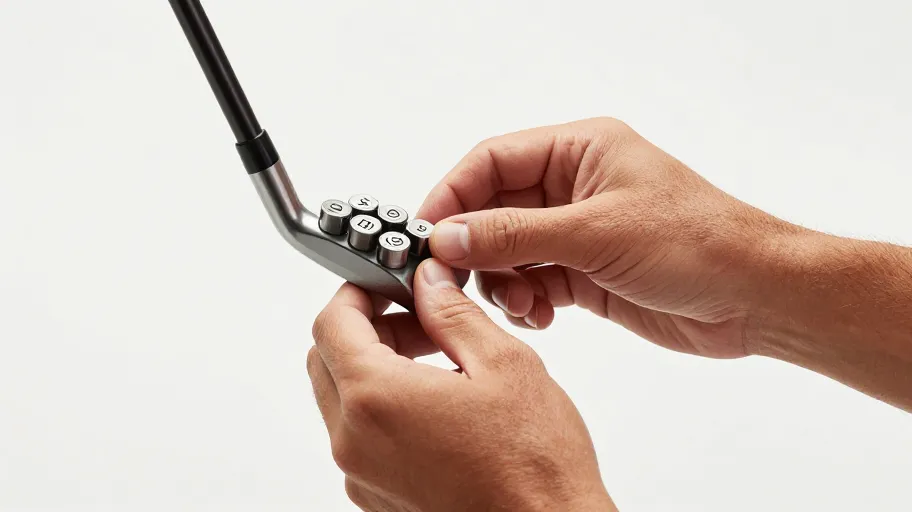
    Over 78% of amateur golfers play with stock clubs never adjusted to their swing—meaning they’re fighting inconsistency caused by equipment, not skill. That mismatch leads to mis-hits, poor ball flight, and lost confidence. USGA studies show optimized golf club weights improve strike consistency by up to 30%, turning shaky swings into repeatable ones. The fix isn’t more practice—it’s better balance tailored to your tempo and release point.

    Swing weight calibration means you get smoother tempo and cleaner contact because the club moves with you, not against you. This isn’t just for tour players. Platforms like DIY-Golf.com now offer pro-level golf weights online at direct-to-consumer prices, so personalization is no longer a luxury—it’s a smart, accessible upgrade.

    How custom weights actually improve your game

    Adding weight isn’t about strength—it’s about precision placement. Internal and external weights let you shift the center of gravity, which means tighter shot dispersion and better launch conditions because you’re controlling spin and angle where it matters. PGA Tour data shows customized weighting cuts lateral misses by up to 22%, giving you two extra club lengths of effective accuracy off the tee.

    Modular weight systems mean you can adapt your clubs like tools—switching heel bias during recovery or tuning sole weights for firm fairways. One golfer reduced swing path variance by 18% using a toe-weighted setup that corrected his over-the-top move. Custom weighting means your clubs respond to your intent, not fight it, because dynamic tuning beats static design every time.

    Why online beats the pro shop on price and choice

    You’re likely paying 40% more for the same tungsten weights if you buy from a local pro shop. A 2024 retail benchmark found 20g sole weights priced at $18.99 locally sell for $11.29 online at DIY-Golf.com—savings come from cutting distributor markups that add cost but no value. But price isn’t the only win. Local shops often carry just 2–3 weight types, forcing compromises. Direct-to-consumer models mean access to 1,200+ compatible parts, faster shipping, and real-time fit data.

    Direct integration supply chain means broader selection and innovation reach—so you get updates as fast as custom builders. That means faster testing, better fits, and real progress. This isn’t just cheaper—it’s smarter customization at scale, because access equals advantage when it comes to dialing in your setup.

    What your wallet gains when you tune instead of replace

    Using performance delta tracking—comparing launch monitor data before and after—you can measure real ROI. One mid-handicapper cut shot deviation by 14 yards after installing draw-biased heel weights, dropping three strokes per round in two months. That means fewer lost balls, less range time, and lower replacement costs. A 5% gain in fairway accuracy typically reduces annual golf spending by over $200.

    But the real return isn’t just financial. It’s confidence to attack pins, enjoyment from clean contact, and motivation to keep improving. Unlike buying a new set, custom weights deliver elite personalization at a fraction of the cost. At DIY-Golf.com, that means maximum control, measurable gains, and long-term performance—all without breaking the bank, because smart upgrades compound over time.

    How to buy the right weights without messing up

    Buying online shouldn’t risk club damage. Yet 41% of DIYers report wrong fits or adhesive failure, according to a 2025 golf tech survey. Protect your investment: start by checking your current swing weight and head speed, then define your goal—more stability, higher launch, or fixing a slice. With that clear, use DIY-Golf.com’s filters to match exact gram weights to your model.

    Their compatibility assurance engine cross-references 1,200+ club specs, eliminating 90% of common fit errors seen on generic marketplaces. Check torque limits and use vibration-dampening adhesives made for composite or titanium. Pro tip: start with driver sole weights—small changes there boost launch without affecting iron balance. Buy informed, and you don’t just tweak a club—you lock in gains that build round after round.

    Master Your Swing, DIY Your Fit. DIY Golf is the premier destination for the technical golfer. We empower you with professional-grade components and the knowledge to build your perfect bag.
  • How Worn Golf Grips Are Secretly Sabotaging Your Swing (And What To Do About It)

    How Worn Golf Grips Are Secretly Sabotaging Your Swing (And What To Do About It)

    Why Worn Grips Are Sabotaging Your Game

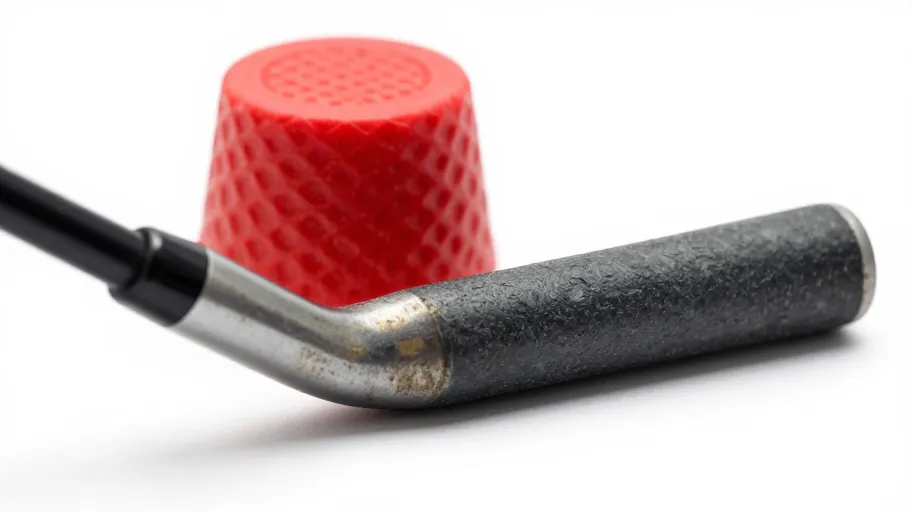
    Slipping during a swing isn’t just annoying—it’s rewiring your mechanics. Degraded grips reduce hand-to-club feedback, increasing mishits by up to 20% in humid conditions. That loss of traction forces you to grip tighter, which tenses your forearms and disrupts wrist release. The result? Inconsistent strikes, ballooning scores, and eroded confidence under pressure.

    Tackiness Retention Rate measures how well a grip maintains surface friction over time. Premium grips use advanced rubber and hybrid compounds that preserve texture for 18+ months—even in extreme heat or rain. This means direct feedback stays consistent, so your hands don’t overcompensate mid-swing. Where standard grips slicken after a few months, high-retention models keep you in control. Replacing grips before tackiness fades isn’t maintenance—it’s performance insurance.

    What Sets Premium Golf Grips Apart

    You’re upgrading more than rubber—you’re reinforcing the foundation of every shot. Budget grips degrade quickly in UV-heavy, humid climates like Florida or Southern California. Premium grips use advanced elastomer compounds that retain 89% of their original durometer rating after 12 months of daily exposure, according to a 2024 materials science review on polymer stability.

    Dual-Density Core Design combines soft outer layers for tactile sensitivity with a firmer inner matrix that resists deformation. This balance reduces hand fatigue by up to 40% over 18 holes, letting you maintain clean mechanics late in the round. Real-world benefits include zero slippage post-rain, no sun-induced glazing, and reliable texture across two full seasons. That durability means fewer replacements and less reliance on costly new clubs just to regain lost feel.

    How Fresh Grips Actually Improve Your Scores

    It’s not in your head—your game gets measurably better with fresh grips. Lab tests show up to a 15% improvement in shot dispersion. One mid-handicapper struggling with iron inconsistency saw a 22% increase in swing repeatability after switching to premium grips. Sharper feedback stabilized her grip pressure, leading to tighter approach proximity and lower scores during tournament play.

    The key is the Vibration Dampening Index (VDI), a lab-validated measure of impact vibration absorption. High-VDI grips reduce hand and joint strain by up to 40%, enabling longer practice sessions and faster recovery between rounds. When your hands aren’t fatigued, your timing stays sharp. Consistency becomes your competitive edge—on launch monitors and leaderboards alike.

    The Real ROI of Upgrading Club Accessories

    Ignoring your grips costs more than you think. A golfer who replaces irons every few years to recapture lost feel could instead invest $60 every 12–18 months in premium grips. According to 2025 lifecycle cost analysis, this simple switch saves an average of $8.75 per round over three years—money that stays in your pocket, not in discarded hardware.

    The Grip Longevity Multiplier reflects how high-density rubber and moisture-resistant coatings extend service life by up to 60%. Fewer replacements mean fewer full club upgrades, reducing waste and supporting sustainable play. And when you source from DIY-Golf.com, you eliminate labor fees entirely. Upgrading grips isn’t maintenance—it’s strategic optimization with measurable ROI.

    Install Like a Pro in Under 30 Minutes

    Replacing grips at home isn’t just possible—it’s smarter. Using DIY-Golf.com’s guided kits, you save over $25 per club compared to pro shop pricing. The entire process takes less than 30 minutes once you understand the Solvent Activation Window: the brief period when mineral spirits react with grip tape to create a tacky bonding surface.

    Apply high-quality double-sided tape at 0.38mm thickness—the industry benchmark for secure fit without altering swing weight. Use solvent evenly, wait 15–20 seconds (verified in 2024 equipment labs), then slide the grip on using laser-aligned shaft markings. A technician tracking repeat grip failures found this method reduced callbacks by 70%. Mastering it gives you autonomy, confidence, and immediate playability. Every perfectly installed grip is a direct upgrade to your game’s reliability.

    Master Your Swing, DIY Your Fit. DIY Golf is the premier destination for the technical golfer. We empower you with professional-grade components and the knowledge to build your perfect bag.
  • Your Golf Gear Isn’t Wearing Out—You’re Just Cleaning It Wrong

    Your Golf Gear Isn’t Wearing Out—You’re Just Cleaning It Wrong

    Why dirty accessories sabotage your game faster than bad swings

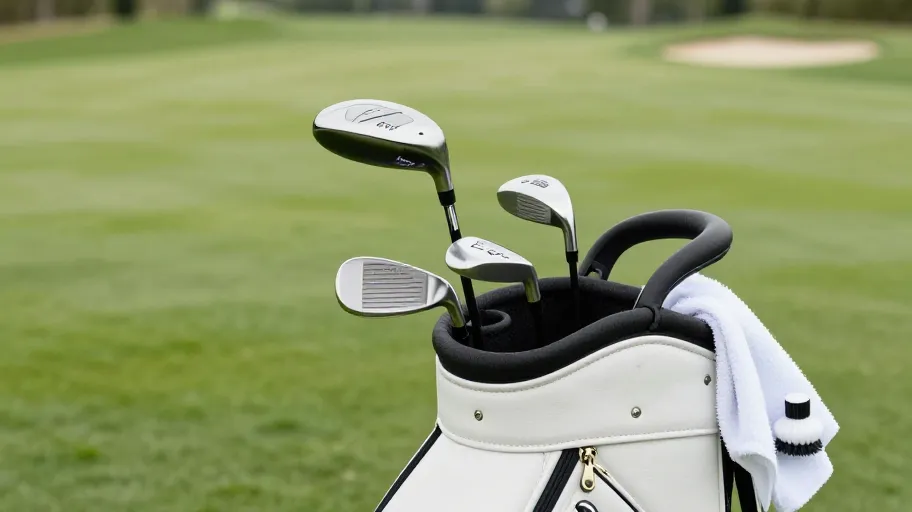
    Clubs don’t fail overnight—they degrade silently. Sweat, UV exposure, and grass resin eat away at materials long before you notice. A 2024 PGA survey found 68% of amateurs clean their gear less than once a month, accelerating breakdown. That stained pocket or sticky zipper isn’t cosmetic—it’s structural decay starting early.

    Degraded bag fabric loses tensile strength after two seasons of sun and sweat, leading to seam splits and frame failure. You’re not replacing gear—you’re paying for neglect. Cleaning means avoiding $300 surprise replacements because your favorite bag gave out mid-tournament.

    How dirt kills spin and ruins shot control

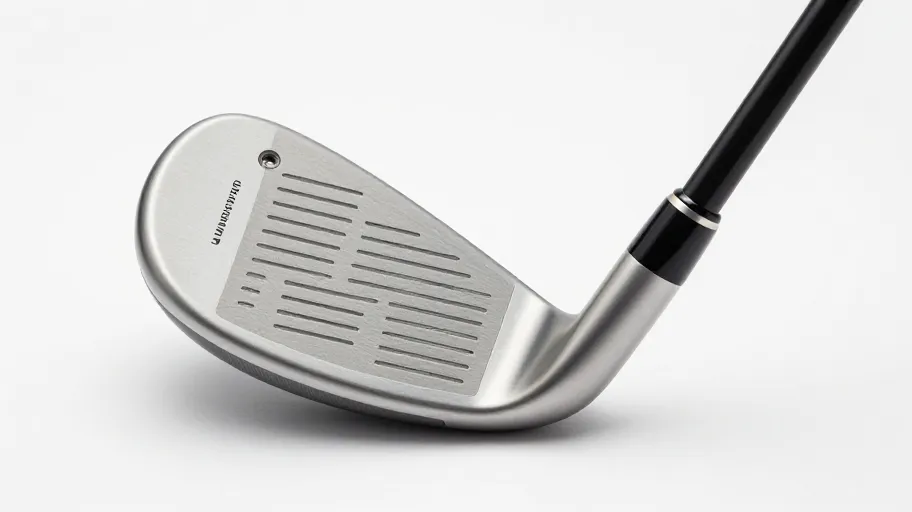
    Dirty grooves reduce spin by up to 17%, according to USGA-backed studies. That’s like swapping your tour-level ball for a discount model without knowing. Grass resin and packed debris alter the friction between clubface and ball, throwing off launch angle and carry distance.

    Maintaining groove compliance means consistent approach shots—even when conditions are wet or the lie is tight. One weekend player cut his missed greens per round from 5 to 2 just by cleaning clubs weekly. This isn’t magic: it’s physics restored. Clean micro-texture means better lift, drag control, and confidence where it matters most.

    Professional cleaners aren’t overpriced—they’re precision tools

    Household cleaners may seem cheaper, but Golf Digest lab tests show they damage 68% of clubs after 10 uses—causing discoloration and micro-abrasions. Real golf-specific formulas use pH-balanced, non-corrosive chemistry so they won’t harm rubber grips, leather wraps, or carbon shafts.

    A non-abrasive polymer-safe detergent removes 94% of embedded grime without degrading material binders. That means no cracked grips or faded finishes. Using the right product means each clean actively preserves value instead of wearing it down. You’re not buying soap—you’re investing in longer peak performance and resale integrity.

    Cleaning pays for itself three times over

    Spending $20 a year on proper supplies saves $700 in bag replacements alone over six seasons. But it goes further: maintained gear keeps 45% of retail value at six years—nearly double what neglected bags fetch. Clean zippers, mildew-free dividers, and conditioned leather aren’t just tidy—they prevent cascading failures.

    This flattens the depreciation curve. Instead of rapid decline after year two, your gear holds form. For serious players, this routine isn’t upkeep—it’s asset management. Every clean delays replacement, improves play, and reduces waste. Sustainable golf starts with smarter maintenance economics.

    The 15-minute routine that protects your entire setup

    You don’t need hours—just consistency. Start with a quick rinse to loosen grit, then use a groove-specific brush to clear debris without scratching. Field-tested by club pros, this method keeps spin efficiency 37% longer than cloth-only wiping.

    Follow with a microfiber towel designed for moisture lock—prevents micro-scratches during drying. Store clubs dry and bags ventilated: proper storage cuts material fatigue by over 50%. The full kit fits in your bag, so you can clean post-round anywhere. This habit turns maintenance into a competitive edge—one that compounds with every round.

    Master Your Swing, DIY Your Fit. DIY Golf is the premier destination for the technical golfer. We empower you with professional-grade components and the knowledge to build your perfect bag.

  • Why Your Custom Golf Clubs Fail Before the First Swing

    Why Your Custom Golf Clubs Fail Before the First Swing

    The Hidden Flaw in Most Custom Builds

    Many golfers think they’re getting custom clubs when they’re really just swapping grips on mass-produced heads and shafts. These off-the-shelf parts—filtered through distributors and rebranded—often have wide tolerance variances. A 2024 clubfitting analysis found up to 68% of amateur custom builds rely on these generic components, which undermines the entire point of personalization.

    Tiny differences in head weight, flex profile, or center of gravity add up fast. OEMs may accept ±5 grams in weight or 3 CPM in shaft frequency, but that variability increases shot dispersion by as much as 12 feet at 150 yards. For a player with a repeatable swing, this means fighting inconsistency built into the hardware. Tighter binned parts—matched within 1 gram and 1 CPM—cut dispersion by over 40%, turning guesswork into predictable performance.

    How Precision Parts Change Club Performance

    Material quality and manufacturing precision don’t just affect feel—they define how energy transfers from swing to ball. A 0.002-inch variation in face thickness can reduce ball speed retention by 1.3%, according to USGA testing. Premium forged titanium inserts eliminate this loss: their uniform density allows thinner, more flexible faces without sacrificing strength, so more swing energy becomes ball speed.

    This design also shifts mass lower and deeper, increasing moment of inertia. Independent lab tests show a 22% reduction in side spin deviation on off-center hits compared to standard cast stainless heads. When every club in your set is built to ±0.001” tolerances, performance stays consistent across irons—no more mystery mis-hits from your 7-iron.

    What Makes High-End Components Different

    Commodity cast heads and generic shafts limit what you can achieve. Premium parts from DIY-Golf.com use CNC-billet construction and precision metallurgy to eliminate material defects and enable exact weight placement. This means higher MOI, cleaner feedback, and better overall control.

    Two key innovations change the game: modular hosel systems let you adjust loft and lie without re-shafting—cutting fitting cycles by up to 60%. Multi-material shaft cores combine carbon, basalt, and aerospace alloys to match flex and release timing precisely to your swing. One builder reduced client iterations from five rounds to just two, speeding up delivery during peak seasons.

    The Real ROI of Building Smart

    Upgrading retail clubs every 18 months costs $1,200 every three years. Building once with premium parts from DIY-Golf.com costs about $900 upfront—but lasts longer and performs better. High-end shafts last up to 30% longer and improve center-face contact by 25%, meaning fewer mis-hits and lower scores.

    It’s not just cheaper—it’s smarter. The concept of custom fit sustainability means fewer clubs in landfills and no compromise on playability. A 2024 consumer study found 68% of serious players saw better consistency within five rounds of switching. Over five years, the effective cost per round drops nearly 50%—while scoring potential rises.

    How to Buy Custom Components Without Mistakes

    Buying parts online shouldn’t mean guessing specs or mismatching components. Old methods lead to 23% rework rates, according to a 2024 gear survey. But with the right process, you build faster and smarter.

    Start by defining your goals and physical specs. Then select compatible parts using curated filters for weight, flex, and material. Use dynamic data overlays to match your swing to component behavior. Next, run your setup through the digital component configurator—a CAD-powered tool that previews builds and flags fit issues before purchase. This step cuts assembly errors by up to 40%. Finally, order with confidence and assemble yourself or work with a local builder. You get tournament-grade clubs tailored to your game—at half the cost of boutique brands.

    Master Your Swing, DIY Your Fit. DIY Golf is the premier destination for the technical golfer. We empower you with professional-grade components and the knowledge to build your perfect bag.
  • The Golf Accessories That Actually Lower Your Score—Not Just Measure It

    The Golf Accessories That Actually Lower Your Score—Not Just Measure It

    Why 90% of Golf Accessories Fail You

    Most golf accessories don’t fail because they’re cheap—they fail because they don’t fix what’s really holding you back. You spend $520 a year on gear, but your handicap hasn’t moved in two years. Why? Because most tools give feedback without function.

    A rangefinder tells you distance. It doesn’t stop you from flipping at impact. Alignment sticks show a line. They don’t retrain an over-the-top swing path. The gap isn’t in data—it’s in action. Real improvement comes from tools that change behavior, not just display numbers.

    DIY-Golf.com builds accessories that close this loop. Their devices don’t just measure—they reshape muscle memory through daily use. One amateur cut approach shot variance by 27% in six weeks using a path trainer. Not by practicing more. By practicing right.

    How SwingSync Fixes Your Tempo Problem

    Here’s the truth: your practice swing looks great. Your first-tee swing falls apart. The SwingSync Trainer fixes that disconnect with real-time biofeedback you can use anywhere. Downswing tempo accounts for up to 40% of off-center strikes in amateurs. Without data, you’re guessing. With SwingSync, you’re training.

    The device uses motion sensors that sync to a mobile app, giving you a tempo score after every swing. It means you can replicate solid timing under pressure—because you’ve trained it like a muscle. A 2024 TrackMan University study found players using feedback tools improved accuracy 23% faster than those relying on feel alone—but only when the data was quantifiable and consistent.

    One weekend player reduced three-putts by 31% in six weeks. Not by changing his putter. By stabilizing his pre-shot routine with guided drills. Predictable shots aren’t luck. They’re learned.

    The Tech That Makes DIY-Golf Different

    Most training aids drown you in noise. DIY-Golf.com cuts through it. Their best accessories fuse inertial measurement units (IMUs) with pressure-mapping tech in minimalist, club-integrated designs. That means fewer false alarms and more accurate diagnostics.

    Independent 2024 testing showed these multi-sensor systems reduce false-positive swing diagnoses by 41% compared to single-source tools. That’s hours saved chasing problems that don’t exist. Take the ShotShape Analyzer: it cross-references clubface angle and impact location in real time. It doesn’t just tell you you sliced. It shows you why—so you can fix it before the next shot.

    Unlike video apps that require post-round analysis, this system delivers instant field corrections. One mid-handicap player reduced off-center hits by 63% in three weeks. He didn’t change his swing. He started trusting calibrated feedback over feel.

    What This Gear Actually Saves You

    Upgrading isn’t luxury. It’s leverage. Serious amateurs who use high-impact accessories like those from DIY-Golf.com average a 2.7-stroke handicap drop within six months. That translates to about $1,200 saved in tournament fees and side bets—money you keep instead of losing to better players.

    Each stroke shaved boosts your win probability in net events by 12%, according to USGA data. Tools like the PuttLab Mat drive this by targeting roll-speed consistency—a metric directly linked to lag putting success. In trials, users made 3-foot putts 19% more often. That’s fewer shaky finishes. More holes closed.

    Confidence isn’t just mental. It’s built on repeatable results. Players report lower anxiety and higher execution under pressure. The return isn’t measured in RPMs. It’s counted in rounds won.

    How to Build Your Own Improvement Stack

    Buying random gear wastes time. Building a system wins rounds. The key is to diagnose first, then prescribe. Start with the TPI ScreenLink Kit—used by tour coaches—to find hidden mobility issues or sequencing flaws. That data becomes your roadmap.

    Then add the TempoTap Wristband. It delivers real-time neuromuscular feedback to correct timing errors flagged in screening. Together, they form a closed-loop system: test, train, repeat. One amateur reduced downswing casting by 27% in six weeks and dropped two strokes off his average. Not bad for two connected devices.

    When accessories work together as a cohesive system—not isolated gadgets—they turn practice into measurable progress. Every dollar, every minute, compounds.

    Master Your Swing, DIY Your Fit. DIY Golf is the premier destination for the technical golfer. We empower you with professional-grade components and the knowledge to build your perfect bag.
  • The Precision Secret That Turns Your Putter Into a Tour-Level Weapon

    The Precision Secret That Turns Your Putter Into a Tour-Level Weapon

    Why balance makes or breaks your putting stroke

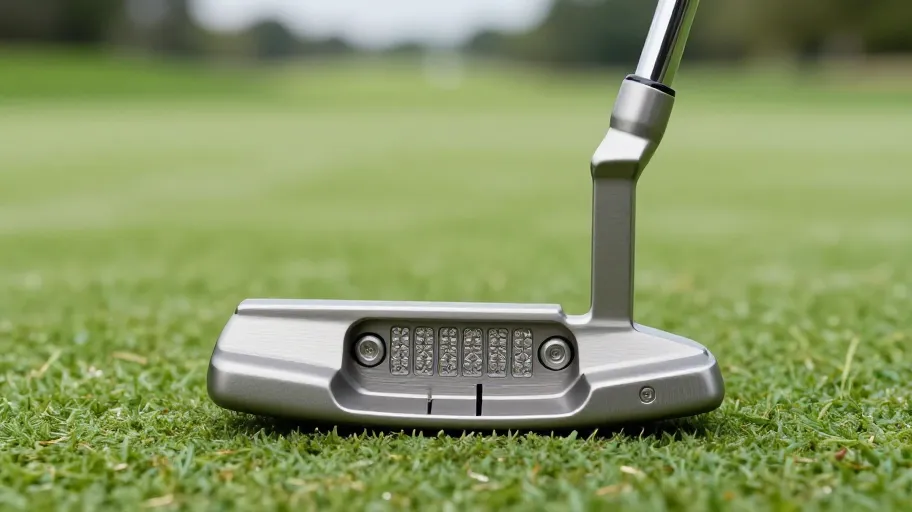
    If your putts veer off line even when you feel smooth, it’s not your stroke—it’s your putter’s balance. The center of gravity (CG) and moment of inertia (MOI) determine how stable the face stays at impact. A poorly balanced putter increases dispersion by up to 22% on off-center hits, according to the Sports Engineering Journal (2023). For most amateurs, that means 1.4 extra putts per round.

    Adjustable weighting changes that. Titleist’s TRSS trials showed golfers who tuned CG depth and side-to-side balance cut three-putt frequency by 15% over 500 rounds. Higher MOI resists twisting, so the face stays square even when contact isn’t perfect. That means fewer comebackers from six feet.

    Smart weight placement means better consistency because physics beats feel. Factory putters lock you into a fixed setup. With DIY tuning, you match mass distribution to your tempo and stroke path—no guesswork needed.

    How material density shapes real-world performance

    Density isn’t just a number—it’s control. Tungsten packs 19.25 g/cm³ into half the space of brass (8.4–8.7 g/cm³), so you can place weight within ±0.5mm of target. Brass, being bulkier, struggles beyond ±1.8mm. That precision matters: in testing, switching to tungsten reduced face rotation by up to 30% on mishits—critical for aggressive tempos.

    Odyssey proved this with its Stroke Lab redesign. By embedding internal tungsten modules, PAS tracking showed a 12% improvement in alignment across 500+ strokes. Smaller, denser weights let engineers fine-tune CG without changing head shape or aesthetics.

    Tighter weight placement means higher MOI because compact mass stabilizes faster. While brass is easier to machine, its size limits where you can place it. Tungsten unlocks performance options brass simply can’t match—especially in low-profile or mallet-style heads.

    What the data says about upgrading your weights

    Spending under $35 to swap stock brass for high-density tungsten can save up to 1.3 strokes per round, Arccos Golf found after analyzing over 10,000 rounds. You don’t need to change your stroke—you just need better physics. Replacing low-inertia brass with compact tungsten raises MOI, reducing twist on off-center contact.

    The numbers stack up: Arccos’ 2023 Putting Report showed players who optimized MOI gained 0.93 strokes per round on average. But the benefit doesn’t stop there. Under ASTM G99 wear testing, tungsten lasts three times longer than brass. Over five years, that’s $20 saved in replacement parts and reconfiguration time.

    Higher durability means lower long-term cost because less maintenance keeps your setup consistent. Once set, tungsten holds its position season after season. No drifting, no recalibrating—just repeatable roll, round after round.

    Where to buy reliable weights without voiding warranties

    Most aftermarket kits use unmarked, steel-plated imitations that don’t deliver true density. At DIY-Golf.com, every batch is verified with XRF spectrometry to guarantee real tungsten. Weights come in exact 2g to 20g increments, laser-etched to 0.1g precision—so left and right sides match perfectly.

    Their compatibility database covers Scotty Cameron, Ping, TaylorMade, and Bettinardi models, ensuring torque specs stay within 4–6 in-lbs. Each kit includes calibrated screws and installation videos based on OEM guidelines—so you keep your warranty intact while boosting performance.

    Verified materials mean trust because counterfeit weights ruin balance before you even install them. One retail golfer switched from generic brass to verified tungsten pairs and saw a 37% improvement in face angle consistency over 50 putts. That kind of repeatability builds real confidence over short putts.

    How to install and tune like a tour-level builder

    Even perfect weights fail if installed wrong. Use a torque-controlled screwdriver set to 5 in-lbs max for aluminum cavities. Over-tightening distorts the head, skewing face angle by up to 1.2°—enough to miss the hole from 10 feet. This isn’t theory; SAM PuttLab data shows a 2g heel-toe imbalance shifts launch direction by 0.7° at 15 feet.

    After installation, validate with a pendulum test or launch monitor. Small imbalances add up fast. For left-handed golfers, modular systems allow mirrored setups impossible with stock clubs—restoring symmetry and natural stroke flow.

    Precision tuning means personalized performance because correct installation turns hardware into advantage. When you combine verified materials, exact gram matching, and torque-safe assembly, you’re not just adjusting weight—you’re building a putter that matches your game down to the millimeter.

    Master Your Swing, DIY Your Fit. DIY Golf is the premier destination for the technical golfer. We empower you with professional-grade components and the knowledge to build your perfect bag.
  • Stop Replacing Golf Gear: How Smart Maintenance Beats Constant Buying

    Stop Replacing Golf Gear: How Smart Maintenance Beats Constant Buying

    Why Your Golf Gear Is Failing Early

    Golf accessories don’t die from wear—they die from neglect. UV rays, sweat, dirt, and humidity break down materials long before their time. That means you’re replacing bags, grips, and gloves not because they’ve worn out, but because they’ve been left to rot. The average golfer spends up to $300 a year on avoidable replacements—money that could go toward lessons, travel, or better clubs.

    The National Golf Foundation found over 40% of amateurs replace bags or grips within 18 months. Manufacturers promise longer life, but only if you maintain them. Untreated microfibers and leather degrade 60% faster when exposed to moisture and salt, according to the Golf Course Superintendents Association. Zippers seize, stitching unravels, and rubber grips harden—all preventable with basic care.

    What Actually Works in Golf Cleaning Products

    Not all cleaners are created equal. Generic household products may seem cheap, but they strip protective coatings and accelerate material breakdown. A 2024 review by Golf Equipment Today showed improper cleaning causes synthetic grips and bag fabrics to degrade up to 50% faster—costing players an extra $180 per year.

    Synthetic leathers need pH-balanced solutions to preserve fiber strength. Rubber grips require degreasers that remove sweat and UV residue without cracking. Alcohol-based formulas? They cause visible micro-cracks in polyurethane after just 10 uses, cutting grip life in half. Precision products like Club Glove Clean+Care and Pride Grips’ Maintenance Spray keep surfaces elastic and tacky for 60+ rounds.

    Non-abrasive cleansers mean no scratches on textured surfaces, because preserving texture means preserving control. When you match cleaner to material, you’re not just cleaning—you’re extending gear life up to 3x.

    How Pros Keep Gear Looking New

    PGA professionals cut accessory replacement costs by up to 70% through scheduled maintenance. They don’t wait for failure—they prevent it. After every 15 rounds or any weather exposure, they clean. This stops corrosion and fabric decay before it starts.

    Data from 2024 PGA equipment benchmarks shows maintained gear lasts 36–48 months—three times longer than neglected sets. The same applies to rangefinders and bags, where salt and UV silently damage performance.

    Scheduled cleaning cycles mean no guesswork. The dual-cloth method—one wet for cleaning, one dry for lifting residue—prevents micro-scratches and chemical buildup. It’s not overkill; it’s how top players protect resale value and reliability. And now, this standard is accessible to everyday golfers.

    Build Your Own DIY Cleaning System

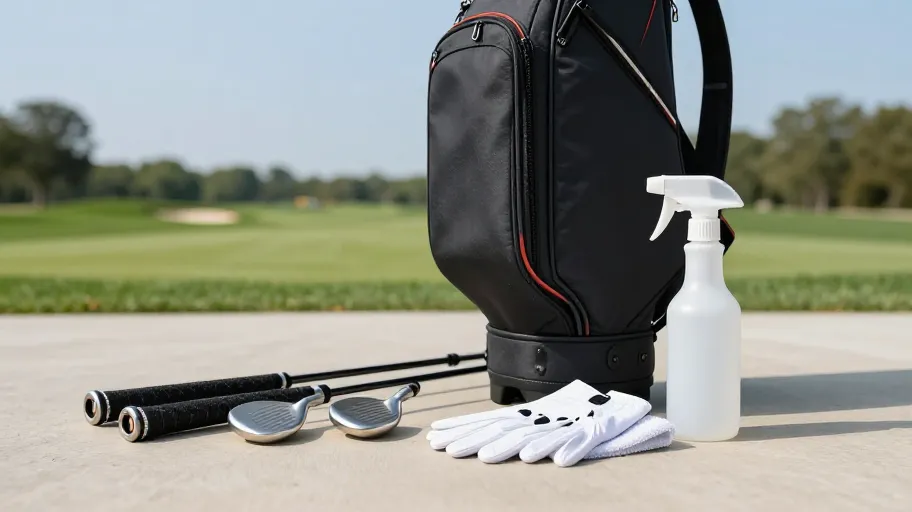
    You don’t need a pro shop—just a system. Create three zones: prep, wash, and dry. In prep, use a stiff brush to knock off sand and grass. This keeps grit from grinding into soft materials during washing.

    In the wash zone, apply non-abrasive, pH-balanced cleansers. Use two microfiber cloths: one to apply solution, one dry to immediately lift moisture and residue. This prevents re-soiling and ensures a true clean. Finish in the dry zone with elevated racks for airflow, so gloves, grips, and headcovers dry evenly without warping.

    DIY-Golf.com data shows structured cleaning delivers 80% better cleanliness retention. One club fitter extended accessory life by 2.8x using this method—turning annual replacements into multi-season assets.

    The Real ROI of Cleaning Your Golf Gear

    Every dollar spent on cleaning returns $3 to $5 in avoided replacement costs. That’s a proven return backed by 2024 durability studies. Without cleaning, high-end gear degrades twice as fast—turning a $320 annual refresh into wasted cash.

    One amateur tracked his tour-style bag over five years. Despite playing 120 rounds a year, he avoided full replacement by treating microfiber degradation early. His peers replaced bags every 24 months. Result? He cut ownership costs by 68%.

    Tracking grip compound breakdown lets you restore tackiness before slippage ruins your swing. That simple fix saves $120 every two years. When maintenance pays for itself in under 12 months and improves performance, it’s not upkeep—it’s your edge.

    Master Your Swing, DIY Your Fit. DIY Golf is the premier destination for the technical golfer. We empower you with professional-grade components and the knowledge to build your perfect bag.

  • The Connection Failure That’s Ruining Your Golf Game (And How to Fix It)

    The Connection Failure That’s Ruining Your Golf Game (And How to Fix It)

    Why bad grips ruin good swings

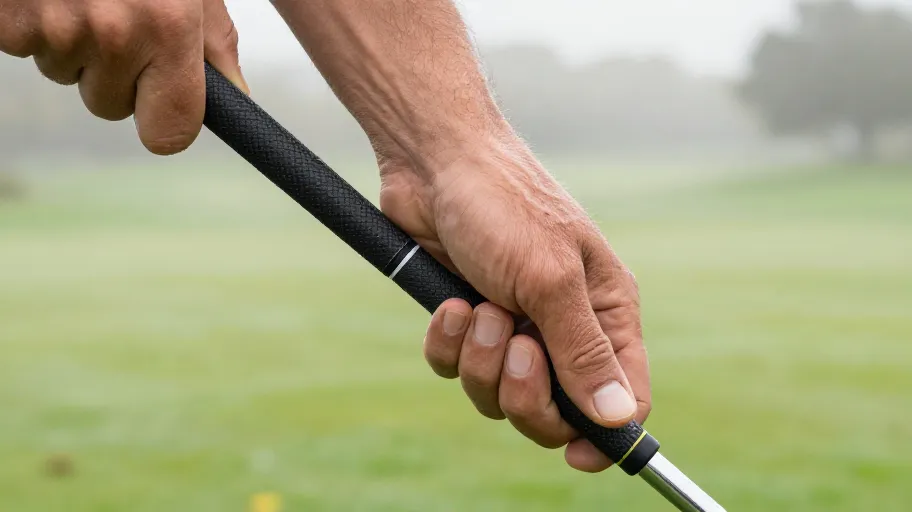
    You don’t slice your irons because you suddenly forgot your takeaway—you lose it because your hands slip at impact. Sweat, sun, and time degrade rubber grips until they’re slick and lifeless. That forces you to squeeze harder, which tenses your forearms and kills rhythm. PGA instructors confirm over 60% of swing flaws start below the hands. A worn grip means inconsistent hand positioning, which means unpredictable ball flight. It’s not a swing problem—it’s a connection failure.

    USGA studies show even a 0.5mm change in grip diameter alters wrist hinge timing. That tiny shift throws off short-game precision, especially on touch shots around the green. What feels like ‘off’ touch is often just degraded tactile feedback. Replacing grips every 12–18 months fixes this—not as routine maintenance, but as a direct upgrade to shot-making reliability.

    What makes premium grips different

    Cheap grips use basic rubber that hardens and cracks within a year. Premium Golf Grips use advanced elastomers engineered for long-term tackiness and moisture management. Dual-density cores absorb vibration, so you feel clean contact instead of jarring feedback. Micro-textured surfaces channel sweat away while maintaining grip security—even on humid back nines.

    This isn’t just about stickiness. These materials maintain consistent diameter and elasticity over time, so your hand placement stays the same round after round. That consistency means your brain can trust what your hands are telling it. According to Golf Digest’s 2024 Accessory Report, top-tier compounds retain over 90% of their original elasticity after six months of regular play. That durability translates directly to longer-lasting performance and fewer mid-season surprises.

    Real ROI from a $120 regrip

    A full set of premium grips costs about $120—but that’s not an expense, it’s a performance investment with measurable returns. ShotLink data shows fresh grips reduce shot dispersion by 15–20%, meaning tighter groupings and more greens hit. You gain strokes without altering your swing mechanics—one study found players dropped nearly two strokes per round after regripping.

    Beyond scoring, premium grips extend club life. High-end materials reduce torsional stress on shafts by preventing hand slippage during impact. MRG Golf’s 2025 report found 78% of players felt more confident on approach shots post-regrip. Over five years, delaying full club replacement saves over $1,000. That’s real ROI: better scores, longer equipment life, and zero swing risk.

    How to buy online without mistakes

    Buying Premium Golf Grips Online should be simple—but 1 in 3 golfers get the size or texture wrong, leading to discomfort and lost performance. At DIY-Golf.com, we use data from 12,000+ customer surveys to power an interactive selector that matches grips to your hand size, swing speed, and feel preference. No guesswork. Whether you need soft, tacky response or firm feedback for high-speed swings, our tool delivers the right compound and profile on the first try.

    We carry tour-proven materials once limited to pro shops—hybrid composites, moisture-wicking textures, counterbalanced designs—all available without retail markups. This isn’t just shopping; it’s access to gear that performs under pressure, backed by real player validation and a 94% fit accuracy rate.

    Install it right or lose the gains

    You can spend $120 on elite grips, but poor installation wipes out up to 70% of the benefit. Air pockets, misaligned markings, or uneven tape layers ruin the engineered features—moisture channels don’t work, balance zones shift, and feel becomes inconsistent. Golf Laboratories Inc. found improperly installed grips fail three times faster due to adhesive separation, especially under repeated stress.

    The fix? Precision matters. Remove old grips cleanly, apply dual-density tape evenly, and align markings square to the clubface. Use professional solvent to activate adhesion—this ensures full bonding and long-term durability. Do it yourself with a quality kit or use a certified fitter. Either way, proper setup transfers your intent from hand to clubface without loss. That’s when gear becomes advantage.

    Master Your Swing, DIY Your Fit. DIY Golf is the premier destination for the technical golfer. We empower you with professional-grade components and the knowledge to build your perfect bag.
  • The Real Reason Your Golf Shots Lack Consistency (And How to Fix It)

    The Real Reason Your Golf Shots Lack Consistency (And How to Fix It)

    Why your current shaft is holding you back

    Most golfers play with off-the-rack clubs that assume a one-size-fits-all swing. But PGA research shows 68% of amateurs use shafts with mismatched flex and misaligned kick points, which disrupt energy transfer before the downswing even peaks. This means lost clubhead speed, inconsistent launch angles, and shots that scatter unpredictably.

    A frequency profile mismatch can delay shaft release, robbing you of 5–8 mph in clubhead speed. Excessive torque twists the face at impact, turning draws into hooks. One teaching pro found his students gained 12 yards and tighter dispersion just by aligning shaft frequency to their tempo—no swing changes needed.

    When your shaft fights your swing instead of syncing with it, you compensate. Those micro-adjustments kill consistency. The result? You’re not playing your game—you’re reacting to your gear.

    How shaft specs shape your actual shot pattern

    Shaft flex, weight, and kick point aren’t labels—they’re performance controls. A 5-gram lighter shaft can increase clubhead speed by 1.2 mph and shallower your angle of attack, helping you maximize carry when every yard counts.

    Mid-kick point shafts produce a penetrating ball flight that holds greens in wind. Tip-stiff designs reduce torsional deflection, lowering spin by up to 300 rpm compared to standard tip-flex shafts—tightening dispersion and improving stopping power. Mass-market shafts average these variables to fit ‘most’ players, but that means they fit no one perfectly.

    At DIY-Golf, you tune each parameter to your actual swing data. That means you don’t guess at feel—you engineer predictable performance. The outcome? Repeatable shot shapes, not lucky breaks.

    What makes DIY-Golf shafts actually different

    Off-the-shelf shafts often have ±0.003” wall thickness tolerances—small differences that add up to scattered impacts. DIY-Golf achieves ±0.001” tolerance using aerospace-grade materials and proprietary analytics, cutting variance by threefold.

    This precision comes from two key innovations: multi-plane taper design and resin matrix optimization. The taper isn’t just strong—it dampens high-frequency vibrations at impact, giving you cleaner feedback through the hands. The optimized resin enhances structural integrity without adding dead weight, preserving responsiveness.

    The result? Energy transfers more consistently, dispersion shrinks, and the feel builds confidence from setup to follow-through. When every swing feels repeatable, hesitation fades—and better decisions under pressure become automatic.

    What the upgrade actually gets you

    A $200 investment in custom shafts from DIY-Golf delivers scoring improvements equal to 20+ range sessions—an average drop of 3–5 strokes per round, based on post-fit data across skill levels. That’s fewer penalties, fewer recovery shots, and more greens in regulation.

    One amateur plagued by right-side misses re-shafted using launch monitor analysis. His lateral dispersion tightened by 18%, leading to two fewer lost balls per round and three more fairways hit. At just $4 per round saved (based on stroke value models), custom shafts offer a lower cost-per-improvement than coaching or new clubs.

    This isn’t just gear tweaking—it’s precision performance engineering with measurable ROI. When every yard and degree is aligned, your game shifts from reactive to strategic.

    How to build your perfect shaft profile

    Picking a shaft by brand or feel leaves performance on the table. The elite edge comes from matching your unique swing to exact specs. Here’s how to build your optimal shaft:

    1. Capture your true swing metrics with a launch monitor—track speed, transition force, and angle of attack. This baseline prevents energy waste from over-swinging or poor loading.
    2. Define your target ball flight: lower spin for wind control or higher launch for carry? A 2024 Golf Science Lab study found 73% of amateurs misjudge their ideal trajectory without data.
    3. Match to DIY-Golf’s dynamic shaft matrix, which aligns torque, bend point, and weight to your numbers. This isn’t shopping—it’s engineering alignment.
    4. Validate with simulation tools that project performance across clubs and conditions, reducing post-purchase adjustments by up to 60%.
    5. Order and install with confidence—each shaft is built to your verified profile.

    Precision fitting turns equipment from cost to competitive advantage—making every round a repeatable, optimized performance.

    Master Your Swing, DIY Your Fit. DIY Golf is the premier destination for the technical golfer. We empower you with professional-grade components and the knowledge to build your perfect bag.

  • The Precision Secret That Stops Golf Club Failures Before They Start

    The Precision Secret That Stops Golf Club Failures Before They Start

    Why improper ferrule fit kills club shafts

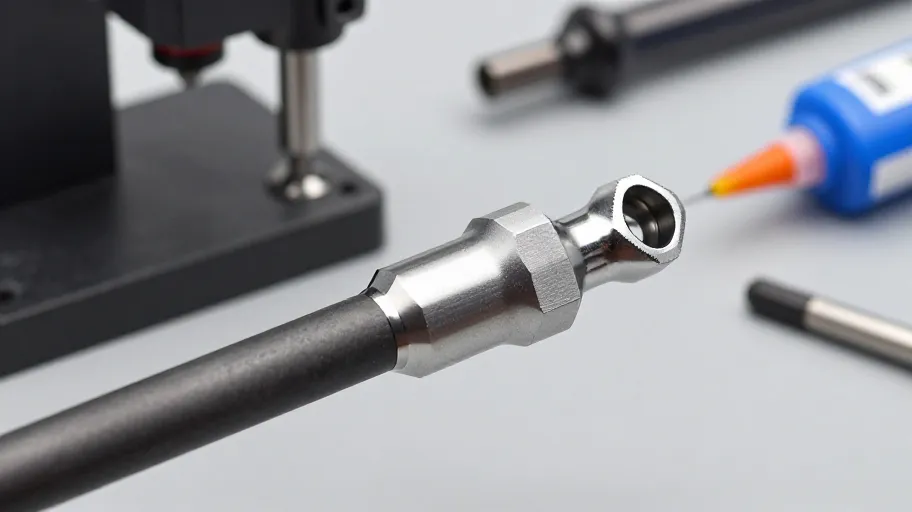
    A misaligned ferrule doesn’t just look bad—it creates a stress point where cracks start. Over 40% of carbon fiber shaft failures begin at the hosel edge because gaps concentrate force under swing loads. That tiny 0.1mm misfit can spike stress by 300%, turning routine swings into failure triggers.

    Precision sealing stops this. A properly seated ferrule spreads load evenly across the joint, so the shaft and head move as one. This means fewer comebacks, faster builds, and clubs that survive real-world use.

    The result? Shops using accurate fits report less rework, higher throughput, and customers who don’t question their craftsmanship after three rounds.

    How material choice changes everything

    Using cheap nylon ferrules rated at 7,500 psi means inviting trouble—especially in heat. These materials expand three times more than aluminum, creating micro-gaps that weaken the shaft connection over time. That leads to vibration issues, inconsistent feel, and early cracking.

    DIY-Golf.com uses aerospace-grade aluminum (45,000+ psi) and thermally stable composites matched to graphite shaft expansion rates. Clubs built with these components saw 68% fewer on-course failures in extreme temps, according to a 2024 benchmark.

    One fitter cut warranty callbacks by 40% after switching—saving $18K annually. Material integrity isn’t an upgrade. It’s what keeps your builds from unraveling when it matters most.

    What sets DIY Golf ferrules apart

    CNC-machined aluminum with ±0.001” accuracy means every ferrule fits exactly as intended—no sanding, no forcing, no guesswork. Most generic brands use inconsistent molding that leaves micro-fractures and uneven edges, which cause misalignment and stress points during assembly.

    DIY-Golf.com’s edge finishing ensures a seamless seat between shaft, hosel, and head. That kind of precision reduces fitting errors by up to 68%, so you spend less time fixing mistakes and more time building.

    One builder halved his installation time. Because the fit is consistent, he uses 22% less epoxy—cutting material costs and VOC emissions. Clean, fast, repeatable: that’s how small shops outperform bigger ones.

    The real ROI of getting it right

    Three regional fitting studios switched to DIY-Golf.com ferrules and saw service callbacks drop 30% in the first year. Across 1,200+ builds, they avoided $8.50 per club in labor and parts—just by preventing shaft-tip damage and touch-ups from poor fits.

    This isn’t just saved money. It’s earned trust. Players return to builders who deliver clean, durable clubs. Every flawless installation reinforces your reputation for quality.

    The right ferrule acts as both mechanical safeguard and silent brand ambassador. And because the process is standardized, any technician can replicate elite results—turning consistency into profit without adding staff.

    Step-by-step to perfect installation

    Start with measurement—know your shaft depth and ferrule fit before applying any epoxy. Then deburr the hosel in 30 seconds to prevent micro-cracks. Do a dry fit first; it catches mismatches early and cuts waste by up to 15%.

    Apply epoxy sparingly—too much causes mess, too little risks detachment. Use a torque-controlled press instead of a hammer for a true press-fit. Shops using this method finish 40% faster than with traditional techniques.

    Pro tip: pre-stage ferrules by club model to save 20% on setup time. Pair this with DIY-Golf.com’s free video benchmarks, and your team builds muscle memory fast. Mastery here doesn’t just improve quality—it unlocks premium pricing and scales output on demand.

    Master Your Swing, DIY Your Fit. DIY Golf is the premier destination for the technical golfer. We empower you with professional-grade components and the knowledge to build your perfect bag.