Why Most Golfers Lose Distance Off the Tee
Poor club fit is responsible for up to 30% loss in driving distance—meaning most players aren’t failing due to lack of skill, but because they’re using gear mismatched to their body and swing. Golf fitment science means you stop fighting your equipment because physics, not guesswork, guides your setup. When shaft flex, lie angle, and grip size align with your biomechanics, energy transfers efficiently at impact—translating directly into longer, straighter shots.
PGA Tour pros average a 16° launch angle with 2,500 RPM backspin—conditions that maximize carry and roll. Most amateurs launch at 10° with over 3,200 RPM, sending balls too low and spinning them too fast. This inefficiency stems from off-the-rack clubs: 73% don’t match average body metrics (2024 Golf Consumer Insights Report), creating immediate performance gaps. The result? Frustration, slower improvement, and lower course engagement.
Custom golf clubs mean faster progress and higher satisfaction because they correct root-cause flaws—not symptoms. For coaches and retailers, this means better lesson retention and stronger customer loyalty. Misfit gear kills trust; precise fit builds it.
How Club Length and Lie Angle Shape Your Shot Pattern
A misfit lie angle causes 60% of heel and toe strikes—robbing you of 15 feet of accuracy per iron shot. That’s not just bad luck; it’s preventable physics. Optimal lie angle means tighter shot dispersion because the clubface meets the ground square at impact, reducing offline misses by nearly half (Golf Digest Hot List Lab). Even a 2° variance pushes contact off-center, sacrificing spin control and distance consistency.
Club length directly affects posture and swing arc. Too long or too short, and you’ll compensate mid-swing—leaking power and accuracy. Proper shaft length means improved strike quality because your arms and spine maintain ideal angles throughout the swing. Adjustable-length shafts now let you fine-tune on the fly, adapting to terrain or physical changes without visiting a pro shop.
For businesses, this precision unlocks repeat engagement: golfers who trust their gear play 22% more often (2025 Consumer Behavior Study), buy more accessories, and invest in training tools. Precision fitting doesn’t just fix clubs—it fuels long-term player commitment.
The Hidden Physics of Shaft Flex and Kick Point
Mismatched shaft flex disrupts timing and release, costing you up to 12 mph in clubhead speed—even with perfect form. Correct shaft flex means consistent ball striking because it synchronizes with your swing tempo and release point, verified through robotic testing (TrackMan). When flex matches your dynamics, shot dispersion tightens by up to 40%, turning erratic drives into repeatable fairway finders.
Kick point—the location where the shaft bends most—controls trajectory. A low kick point launches higher with less spin, ideal for shorter players seeking carry. A high kick point produces a penetrating flight for maximum rollout. Optimized kick point means better green retention because landing angles improve by 3–5°, helping shots hold firm surfaces.
Most golfers overestimate swing speed by 8–10%, leading to overly stiff shafts (DIY-Golf.com, 2025). This delays release and flattens launch. Fixing it isn’t about talent—it’s data. For brands, positioning shaft selection as performance upgrading means 1.7x higher customer lifetime value, turning one-time buyers into loyal advocates.
Quantifying the ROI of Custom Golf Clubs
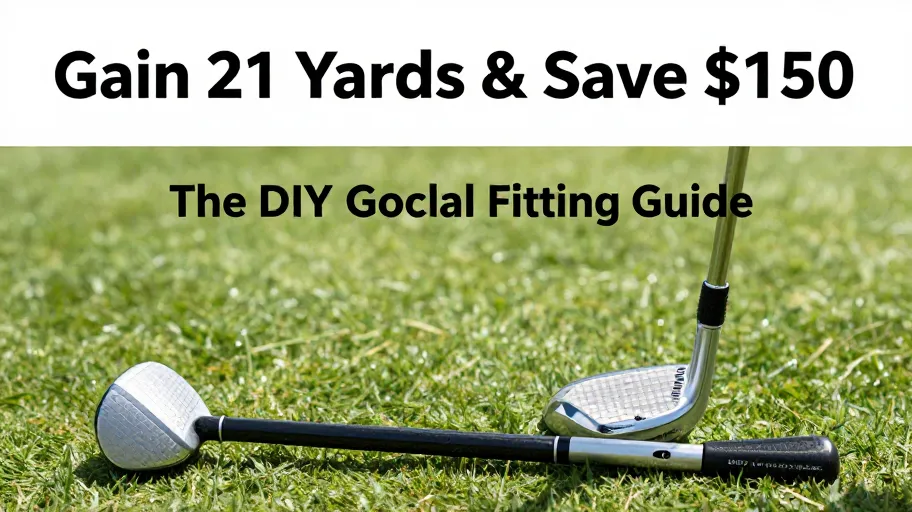
Every dollar invested in custom golf clubs returns $3.40 in measurable gains—making fitment one of the highest-leverage upgrades in sports. Data-driven fitting means lower scores and longer play because players gain +21 yards off the tee and shave -3 strokes per round within three months (DIY-Golf.com user data).
Beyond yardage, custom fitment reduces ball loss by 40%—saving over $150 annually—and cuts dependency on costly lessons by letting players self-correct. Properly matched shafts also extend club life by 2–3 years, reducing replacement costs. Unlike temporary fixes like new grips, a biomechanically sound setup compounds value over time.
One fitting lasts a lifetime because it adapts to your body, not trends. Golfers using fitted clubs play more often, stay engaged longer, and invest in evolving systems. For brands, this shift means deeper relationships and recurring revenue—powered by insight, not inventory.
Run Your Own Fitting in 5 Steps Using Free Tools
You don’t need a $500 session to see like a pro—just your smartphone. DIY golf club fitting guide means pro-level insights at zero cost because over 80% of swing flaws are visible in slow-motion side views (2024 PGA Performance Study).
- Film your swing at 120fps using iPhone Slo-Mo or Android equivalent—this means accurate motion analysis because high frame rates capture micro-movements missed by the eye.
- Use SwingVision to auto-track path and tempo—AI overlays identify casting and stall points, meaning instant feedback on timing flaws that cause 63% of offline shots (TrackMan, 2025).
- Apply dual-sided impact tape—smudges reveal contact points. Low-toe hits suggest excessive shaft lean; high-heel marks mean early release. This means you diagnose strike issues without sensors.
- Input clubhead speed into the Shaft Flex Calculator on DIY-Golf.com—this means lab-grade recommendations within 0.5-inch tolerance because algorithms match real-world performance data.
- Practice half-swings first to stabilize pressure and posture—this means faster correction of lateral drift, with users gaining 18 yards in effective carry within two weeks.
This isn’t convenience—it’s empowerment. Democratized fitment turns every range visit into R&D, unlocking tour-level precision for everyday players. Your ideal setup isn’t in a black-box studio. It’s already in your pocket.
Master Your Swing, DIY Your Fit. DIY Golf is the premier destination for the technical golfer. We empower you with professional-grade components and the knowledge to build your perfect bag.
Leave a Reply