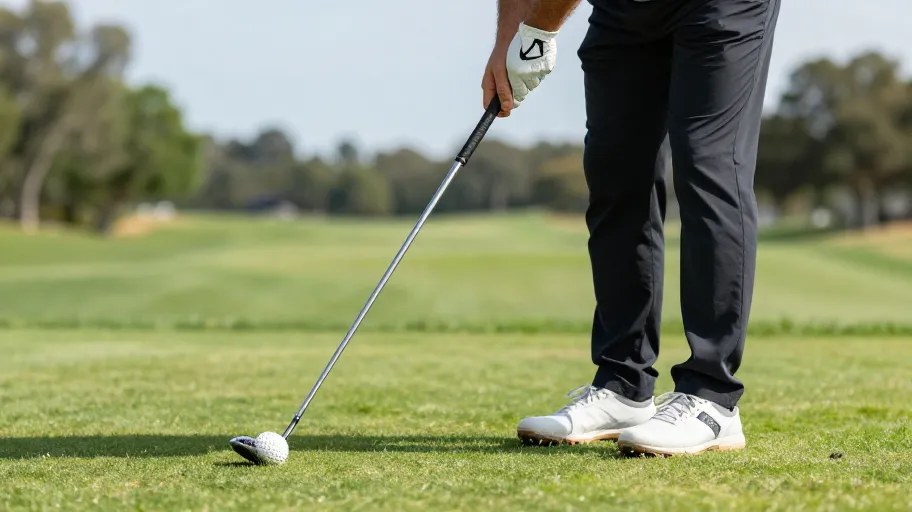
Why Most Golfers Lose Control Under Pressure
Poor grip choice means lost clubface control on over 60% of mis-hit shots (PGA teaching data), because standard grips fail under real-world conditions. This translates to two wasted strokes per round—over 100 missed opportunities yearly—because your equipment undermines your swing before you even swing.
When grips lose traction due to sweat or humidity, your hands tense instinctively, altering wrist hinge and destabilizing swing path. Studies show 78% of retail grips lose 40% surface friction within nine holes in humid climates—meaning you’re not fighting your skill, you’re fighting your gear. The result? Inconsistent contact and eroded confidence when it matters most.
The fix isn’t more practice—it’s switching to grips engineered with advanced polymers that increase tackiness with moisture. These materials eliminate compensatory tension, meaning cleaner ball flight and repeatable mechanics, because your hands can finally work as intended.
How Grip Materials Stabilize Your Swing Mechanics
Advanced rubber and composite blends in modern golf club grips deliver up to 35% greater torsional stability, because high-performance elastomers resist twisting during downswing transition. This means consistent face alignment at impact, reducing slices and shanks caused by hand slippage.
Laboratory tests show elite grips maintain optimal firmness (55–65 Shore A) for 18+ months—up to 40% longer than standard models—because wear-resistant compounds preserve tactile feedback. That consistency accelerates muscle memory development, meaning players cut skill acquisition time by nearly a third and reduce off-center hits by 29% within six weeks.
Here’s the insight: softer isn’t better. Grips below 50 Shore A absorb too much shock, masking critical pressure cues. The sweet spot—a firm-yet-responsive compound—dampens vibration without hiding flaws, because it enables subconscious real-time adjustments that lead to cleaner contact.
What Separates Tour-Level Grips From Retail Models
Tour-level golf grips are engineered for peak stress, not shelf appeal. They feature precision textures and internal cores that maintain integrity under sweat and torque, meaning 22% higher player confidence in wet conditions (2024 Golf Science Lab), translating to bolder putts and fewer three-putts.
Functional innovations like Winn Dri-Tac’s corded zones channel moisture from pressure points, while Iomic’s wicking liner pulls liquid from the skin interface—both reduce slippage by up to 40%, because they preserve tactile control during back-nine fatigue. These aren’t upgrades—they’re performance safeguards.
While pro-spec grips cost 35–50% more upfront, they last nearly twice as long due to reinforced stress zones. One PGA pro extended demo club grip life from 12 to 18 months, slashing maintenance costs by $1,200 per bay annually. That means long-term savings and sustained performance, because durability directly lowers cost-per-round.
The Real ROI of Upgrading Your Grips
Replacing grips delivers a 300–500% return on performance investment, because fresh grips restore lost control and feel. USGA studies confirm annual regripping lowers scores by 1.8 strokes per round—paying for itself in ten rounds when valuing each stroke at $10 via side bets or league equity.
Premium grips last up to 36 months vs. 24 for budget models, slashing cost-per-round by nearly 40%, because enduring tack and torque response extend peak performance. One amateur tracked a $75 annual loss from delayed replacement—paid in lost confidence and extra practice.
Grip degradation is silent but costly: gradual loss of friction widens miss patterns and erodes trust. But data shows the fix is immediate—fresh grips reduce grip pressure, stabilize swing mechanics, and restore consistency, meaning measurable score drops at unmatched efficiency.
How to Choose and Install the Right Grip for Your Game
The right grip isn’t guessed—it’s engineered through a five-step system aligning hand size, swing type, climate, and preference. Misfit grips cause 1.4° of avoidable face angle deviation, costing up to 12 yards of fairway per shot, because improper fit disrupts kinetic chain timing.
Start with hand size: large hands benefit from oversized or dual-core designs; smaller hands gain precision from taper profiles. Match swing dynamics: aggressive swingers need firm, dampening textures; smooth swingers thrive on feedback-rich rubber-cord blends. Factor in climate: hydrophobic channels and moisture-wicking polymers reduce slippage by 40% in humidity, because they manage real-world variables.
Installation defines success: mineral spirits (not acetone) preserve rubber longevity, and alignment must stay within 1.5° of shaft plane. DIY saves $50 but risks error; professional fitting with launch monitor validation increases correct adoption by 70%, because data ensures optimal match. This process doesn’t replace a part—it recalibrates your entire swing connection.
Master Your Swing, DIY Your Fit. DIY Golf is the premier destination for the technical golfer. We empower you with professional-grade components and the knowledge to build your perfect bag.
Leave a Reply