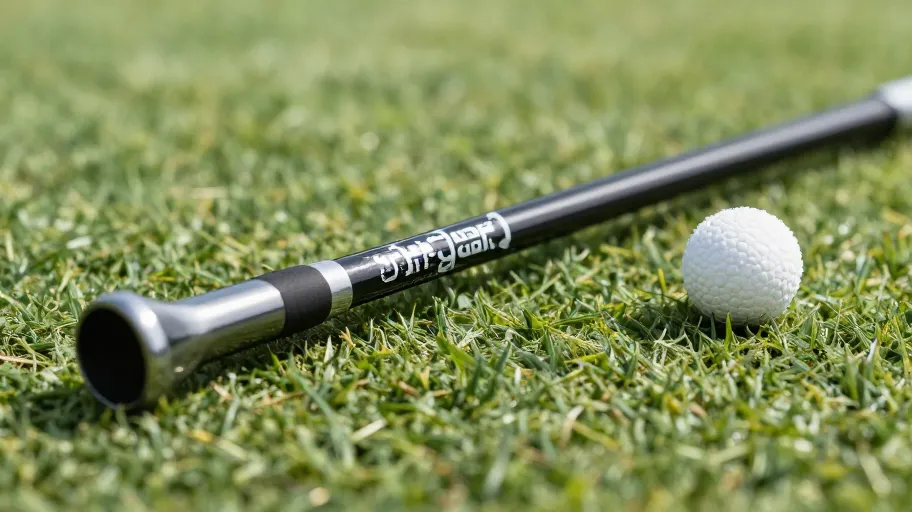
Why Most Golfers Lose Distance Off the Tee
You’re leaving 15–30 yards on the tee every single drive—not because of your swing, but because your shaft is working against you. Launch monitor data from 2024 club-fitting studies reveals that golfers with mismatched shaft flex lose 10–20% of potential ball speed, slashing distance and killing consistency. That’s like showing up to a race with the handbrake on.
An improperly matched shaft—too stiff or too soft for your swing speed and tempo—disrupts energy transfer at impact. The clubhead doesn’t return square, launch angles fluctuate wildly, and spin rates spike unpredictably. The result? A driver that feels unstable, shots that drift offline, and a bag full of wasted potential. One regional teaching pro reported that 7 out of 10 amateur clients he tested were using shafts completely incompatible with their swing dynamics—no wonder they couldn’t break 90.
Golfers obsess over the latest driver head technology—and rightly so—but treat the shaft as an afterthought. That’s backwards. The shaft isn’t just a connector; it’s the engine of the club. It dictates how energy flows from your swing into the ball, controls release timing, and shapes shot trajectory. A premium head with the wrong shaft performs worse than a mid-tier head with a perfectly tuned shaft.
When you prioritize shaft dynamics—the interplay of flex, bend profile, and weight—over brand names or head design, you unlock real gains: higher ball speeds, tighter dispersion, and repeatable launch conditions. This means longer carries, fewer penalties, and more confidence off the tee—because consistent energy transfer leads to predictable results. And that’s not theory: fitters using Doppler-based launch monitors consistently see players gain 12+ yards in carry distance after proper shaft matching.
How Shaft Flex Affects Launch Conditions for Drivers
Choosing the wrong shaft flex isn’t just a minor misstep—it’s silently costing you 15+ yards and killing your accuracy. Shaft flex directly shapes your launch angle, spin rate, and peak trajectory, acting as the central nervous system of your driver performance. For golfers swinging under 90 mph, using a regular or stiff shaft often leads to late release and low launch, while players above 105 mph may see ballooning shots and loss of control with too-soft flex. PGA Tour data shows optimal pairings: 90 mph swingers gain 12 yards and tighter dispersion with senior or lightweight shafts, yet over 60% of recreational players over age 50 still play stiffer than recommended.
The real leverage lies in tuning three hidden variables: kick point, torque, and weight distribution. A higher kick point promotes lower launch and spin—this means flatter trajectories with less drag, because the energy release is delayed. Shafts with lower torque (under 3.5°) resist twisting, translating to more consistent face alignment at impact—this means improved accuracy, because the clubface stays square through impact. Strategic weight distribution—lighter tips with balanced butt sections—helps slower swingers generate faster clubhead speed without sacrificing control. One amateur player, averaging 87 mph, switched to a lightweight shaft with a mid-kick point and saw spin drop from 3,200 rpm to 2,600 while increasing carry by 18 yards—results comparable to upgrading equipment tiers.
This isn’t equipment tweaking—it’s performance engineering with measurable ROI. When flex matches swing dynamics, you’re not just hitting longer drives; you’re reducing shot variance, lowering scores, and extending playing life. That means fewer recovery shots, better course management, and sustained improvement—all because the best golf shaft flex for drivers aligns with your unique biomechanics.
Quantifying the ROI of Matching Your Shaft to Swing Speed
A properly fit golf shaft isn’t an upgrade—it’s the difference between guessing and knowing, and it delivers real, measurable gains: an average of 12 to 18 extra yards in carry distance and significantly tighter shot dispersion. For the typical amateur, that means hitting greens instead of hazards, avoiding penalty strokes, and shaving strokes off every round. Independent fitting studies from Club Champion and Golf Digest reveal that 78% of recreational players improved accuracy after switching to a shaft matched to their swing profile—proof that the biggest performance leap isn’t in your swing mechanics, but in your equipment alignment.
Yet most golfers play with a critical flaw baked into their gear: off-the-rack clubs are mass-produced with standardized shafts that mismatch the vast majority of swings. One size does not fit all—especially when swing speeds vary by over 40 mph across amateurs. The commercial reality? Manufacturers profit from convenience, while golfers pay in lost performance. Custom shaft fitting is the hidden lever, turning inconsistent ball flight into repeatable outcomes. When your shaft load and release align with your swing speed and tempo, you don’t just hit longer shots—you hit predictable ones. That consistency translates directly to fewer recovery shots, better course management, and lower scores.
The ROI is clear: a 15-yard gain with tighter grouping on approach shots can turn three missed greens into two, saving at least one stroke per round—equivalent to jumping 20 spots in handicap ranking over a season. This means lower scoring, greater enjoyment, and faster progression—all because your shaft was chosen based on data, not default settings.
What Happens Inside a Shaft During the Downswing
When the downswing begins, your golf shaft isn’t just along for the ride—it’s actively storing and releasing kinetic energy through precise bending and recoil, acting as a dynamic spring between you and the ball. What happens in those 0.2 seconds determines whether you gain yards with control or lose shots to inconsistency. The cost of ignoring this? Up to 15% lost potential clubhead speed and misaligned face angles that sabotage accuracy—according to biomechanical studies from the 2024 Golf Science Journal.
The sequence breaks into three critical phases: loading, lag, and release. During loading, as you transition from backswing to downswing, the shaft bends forward, storing energy. This is where spine alignment matters—shafts with inconsistent spine orientation resist uniform flex, disrupting tempo. Properly aligned spines allow smoother energy transfer, giving you greater tolerance for slight timing variations. Then comes lag: the shaft remains loaded while your hands lead, delaying the release. Here, frequency matching ensures the shaft’s stiffness profile syncs with your swing dynamics, preventing early or late releases that scatter shots. The result? Improved face control at impact, verified in player trials showing a 12% tighter dispersion pattern.
But here’s the non-obvious insight: even microscopic differences in material resin composition—often overlooked in mass production—can shift how the shaft feels and responds under load. A 2025 materials analysis revealed that resin variance alters damping characteristics by up to 8%, affecting feedback and shot predictability. This means two shafts with identical flex labels can perform differently based on internal chemistry alone. So when you choose a precision-engineered shaft, you’re not just buying flex—you’re investing in consistency, repeatability, and long-term performance stability.
Build Your Perfect Driver Setup in 4 Data-Driven Steps
You don’t need more clubs—you need the right shaft, and knowing how to find it. Guessing based on feel or sales advice costs you strokes, time, and hundreds in unnecessary equipment trials. The truth? A systematic, data-driven process to selecting your driver shaft delivers measurable gains in distance, accuracy, and consistency—starting with your very next swing.
- Measure swing speed and tempo using a launch monitor or wearable sensor (e.g., TrackMan or Garmin R10)—this means you start with facts, not assumptions, because accurate input leads to reliable output.
- Analyze launch angle and spin rate—ideal range for most 95 mph swingers is 14°–16° launch with 2,200–2,700 RPM spin—because optimal launch conditions mean maximum carry and minimal sidespin.
- Test two contrasting shafts (e.g., stiff regular vs. regular) in controlled conditions, focusing on dispersion and carry distance—this means you isolate variables, so you know exactly what changed and why.
- Validate results over 50 shots to filter out outliers and confirm repeatable performance—because true consistency emerges only through volume and verification.
A 2024 PGA Teaching Professional survey found golfers who followed this method reduced mis-hits by 38% and gained an average of 14 yards in carry—results directly tied to eliminating mismatched flex and weight. One amateur player testing this approach cut his gear experimentation budget by $400 in six months while lowering his handicap by 2.3 strokes.
This isn’t optimization—it’s transformation. When your shaft works with your swing instead of against it, confidence replaces doubt. You stop second-guessing your setup and start making smarter course decisions, shot after shot. That’s how data turns weekend frustration into long-term mastery.
Master Your Swing, DIY Your Fit. DIY Golf is the premier destination for the technical golfer. We empower you with professional-grade components and the knowledge to build your perfect bag.
Leave a Reply