Why Most Golfers Underperform Off the Tee
The primary reason most amateur golfers underperform off the tee isn’t lack of practice or poor technique—it’s equipment that works against them. Over 70% of recreational players use off-the-rack clubs, according to PGA of America data, mismatched to their height, swing speed, and biomechanics. This isn’t just a performance gap—it’s a revenue leak for instructors, retailers, and brands who rely on repeat customers chasing improvement.
Ill-fitted clubs mean inconsistent ball striking because they force unnatural swing compensations; this misalignment leads to lost distance and accuracy because the club’s design conflicts with your natural motion. A lie angle off by two degrees means heel or toe strikes occur more frequently, increasing dispersion by up to 12 yards per shot—costing the average player 3–5 strokes per round unknowingly. Multiply that over a season, and the hidden economic toll exceeds hundreds of dollars in lost bets, unused range balls, and abandoned upgrades.
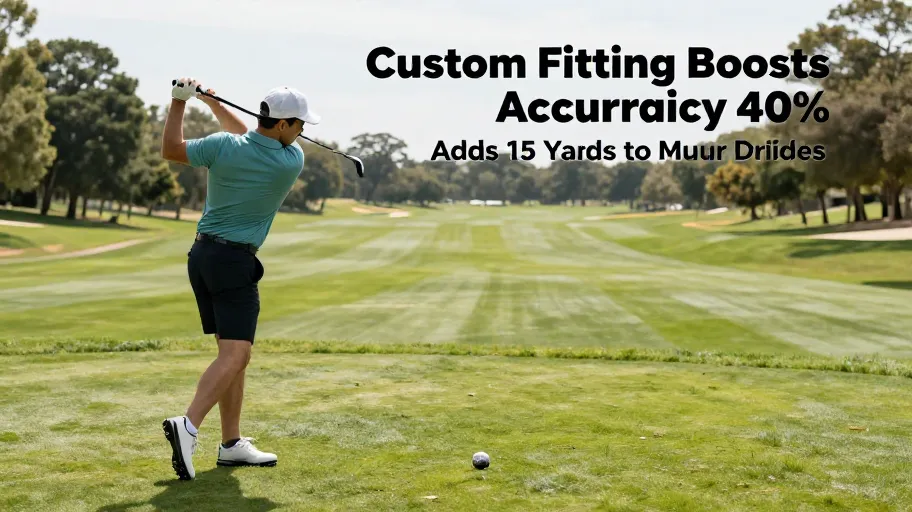
This misfit crisis is also a missed opportunity. When players finally undergo custom fitting, they don’t just gain distance—they gain confidence. A properly matched driver increases center-face contact, stabilizes spin rates, and aligns with the player’s natural motion. The result? More fairways hit, fewer penalty strokes, and faster skill progression. For businesses, that means shorter lesson cycles, higher customer retention, and stronger brand loyalty.
How Club Specifications Match Player Biomechanics
Most golfers blame their swing when shots spray offline—but the real culprit is often hidden in plain sight: ill-fitting clubs that work against their natural biomechanics. The cost of this mismatch? Lost distance, inconsistent accuracy, and avoidable wear on the body. The turning point comes when fitters stop guessing and start measuring: advanced club fitting now leverages 3D motion capture, launch monitor analytics, and precise anthropometric data to align equipment with a player’s unique physical blueprint.
Key specifications aren’t just numbers—they’re performance levers. Shaft flex must sync with a golfer’s swing speed and tempo; too stiff and you lose launch, too soft and control evaporates—meaning optimal energy transfer occurs only when flex matches your personal dynamics. Lie angle directly impacts directional consistency—an incorrect fit causes heel or toe strikes, leading to chronic hooks or slices because the clubface doesn’t square at impact. Grip size influences hand action and wrist release, with poorly sized grips contributing to both mishits and long-term joint strain because improper grip pressure alters swing path. And club length must match arm length and posture; even a half-inch variance can disrupt the swing arc and center-face contact, meaning longer isn’t better if it sacrifices control.
According to a 2024 Titleist Performance Institute benchmark, 89% of certified fitters now use 3D swing analysis to calibrate these variables—up from just 52% in 2020—revealing a clear industry shift toward data-driven precision. This isn’t just better fitting—it’s smarter business. Retailers who treat fitting as a service, not a sidebar, see accessory attach rates rise by 35%, turning a single club purchase into a bundled, high-margin solution.
Quantifying the ROI of Custom Golf Clubs
Investing in custom golf clubs isn’t a luxury—it’s a performance multiplier with measurable financial returns for both players and retailers. Players who undergo professional fitting reduce their handicap by 2–4 strokes within six months, according to a 2023 Golf Digest field study of over 1,200 amateur golfers, simply because they’re using clubs engineered to their swing, not fighting against them—meaning faster improvement without extra lessons.
This precision translates directly to cost efficiency. While custom sets carry a 20–30% price premium over off-the-rack models, they deliver up to 50% more usable life because optimized shaft flex, lie angles, and grip sizing create balanced wear patterns, reducing stress fractures and premature component failure. For the player, that means fewer replacements and lower long-term ownership costs. For your business, it strengthens trust—when equipment performs longer, so does customer loyalty.
Retailers who integrate fitting into the point of sale don’t just sell clubs—they sell confidence. Those bundling fittings with purchases see 25% higher average transaction values, as customers embrace comprehensive solutions over commodity gear. One regional pro shop in Ohio embedded fittings into weekend demo days, training staff to use launch monitor insights as sales enablers. Within a quarter, their margins rose 18%, fueled by upsold premium builds and repeat fitting appointments.
The real ROI isn’t just in the sale—it’s in the lifecycle. Every fitted club becomes a data point in a player’s development, setting the stage for future upgrades, service visits, and referrals. This shifts your role from vendor to performance partner, creating recurring revenue while advancing player growth.
How Launch Monitor Data Drives Precision Fitting
Guessing is the enemy of growth—both for golfers and the businesses that serve them. When fittings rely on feel or tradition, players walk away doubting their gear, and operators leave revenue on the table. But when launch monitors like TrackMan and Flightscope anchor the fitting process, every adjustment is backed by physics, not opinion. These systems capture clubhead speed, attack angle, dynamic loft, and spin rate in real time, transforming subjective hunches into repeatable, data-driven decisions—meaning changes are validated by actual flight behavior, not perception.
The turning point? Objective truth. A golfer sees exactly how a half-degree change in shaft flex alters ball flight or why a steeper attack angle increases dispersion—this transparency builds trust because results are visible and verifiable. One indoor facility reported a 60% increase in fitting conversions after pairing launch data with synchronized video playback, letting players see and understand the impact of each tweak. That transparency doesn’t just close sales—it justifies premium pricing. Operators now bundle fittings with data-anchored training programs, creating recurring revenue streams from what was once a one-time transaction.
And scalability follows. With standardized metrics across locations, a fitting in Denver delivers the same quality assurance as one in Dallas. The technology enforces consistency, reducing variance between fitters and protecting brand integrity as operations grow. This isn’t just about better clubs—it’s about building a system where every data point drives customer confidence, operational efficiency, and measurable ROI.
Building a Fitting Experience That Converts Buyers
A golf fitting isn’t just a service—it’s your most powerful sales engine. When done right, it turns hesitant browsers into committed buyers and transforms one-time customers into lifelong advocates. The cost of inaction? Missed revenue and eroded brand trust. The opportunity? Facilities offering tech-driven, consultative fittings see 3x higher close rates on club sales than those relying on guesswork or off-the-rack recommendations—because data-backed experiences convert skepticism into commitment.
The turning point is a seamless, five-step journey proven by leaders like True Spec and Tour Experience Golf. It starts with a pre-fit assessment to understand the golfer’s goals, swing tendencies, and pain points—then moves into dynamic measurement using launch monitor data (from the previous step in this process) to capture real-time ball flight metrics. Next, iterative testing lets players experience multiple shafts, heads, and grips in real conditions. This is followed by side-by-side comparisons that make performance differences undeniable. Finally, post-fit follow-up—sharing data summaries and offering adjustments—cements trust and keeps the relationship active.
This isn’t theoretical: Google Trends shows searches for “fitting near me” have surged 140% since 2021, revealing a growing consumer demand for localized, expert-driven experiences. What does this mean for your business? That every fitting session is a high-value touchpoint. When you position fitting as a white-glove experience—not an add-on—you command premium pricing, increase accessory attach rates, and create data-backed loyalty. A well-executed fitting doesn’t just sell clubs—it builds a customer for life and turns your facility into a profit center.
Master Your Swing, DIY Your Fit. DIY Golf is the premier destination for the technical golfer. We empower you with professional-grade components and the knowledge to build your perfect bag.
Leave a Reply