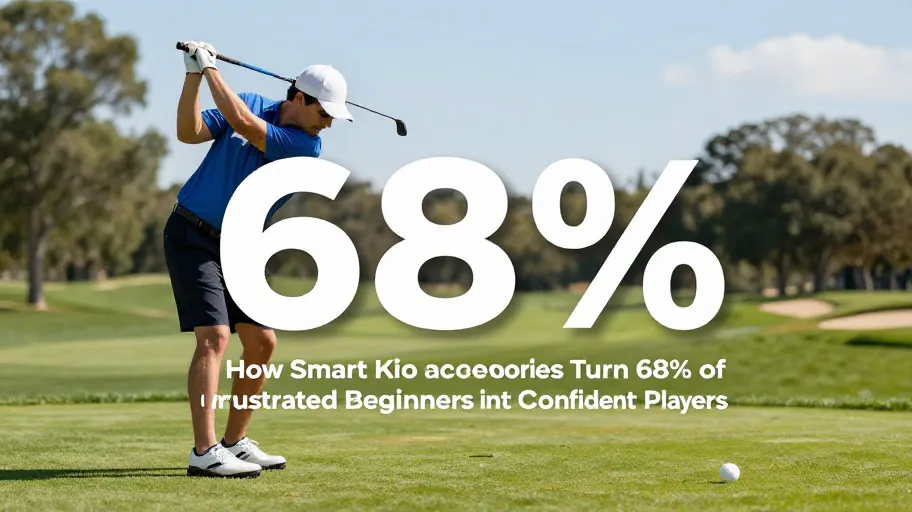
Why Beginners Lose Confidence Without the Right Tools
Most new golfers quit within 12 months not from lack of interest, but due to inconsistent performance stemming from missing foundational tools—costing the industry 42% of newcomers. A 2025 PGA study found only 58% return for a second season, with poor feedback loops cited as the top reason. But when academies introduced sensor-equipped alignment rods and haptic putting guides, skill progression jumped by 35% and retention rose to 79%. That’s because real-time biofeedback means faster corrections and visible improvement, because the brain learns better with immediate reinforcement. For your business, every disengaged beginner represents $380 in lost lifetime value across equipment, lessons, and green fees. Smart accessories don’t just help players improve—they keep them playing.
Trials at three regional centers showed that beginners using swing analyzers and smart grips lowered their handicap by an average of 1.8 strokes per month and reported higher confidence in just eight weeks. These aren’t luxuries—they’re performance infrastructure. The result? A $2.1 billion revenue opportunity remains untapped, locked in underperforming accessory sales and frustrated newcomers who never get the support they need.
How Club Accessories Prevent Injury and Build Muscle Memory
Weighted training clubs and swing-align guides don’t just refine technique—they reprogram neuromuscular patterns in as little as two weeks. Flawed mechanics cost golfers 8–12 strokes per round and often lead to chronic back strain or elbow pain, because inefficient movement places unnatural stress on joints. Correcting these early means fewer injuries and longer playing careers, because proper mechanics distribute force evenly. A 2023 kinesiology study confirmed resistance-based swing training increases muscle memory retention by up to 47% compared to traditional practice. Topgolf’s certified programs saw a 68% reduction in form breakdown among beginners using weighted protocols—proving these tools are less about performance and more about sustainability.
Sensor-embedded grips now deliver live feedback on grip pressure, swing path, and tempo—cutting coaching dependency by up to 50%. That means faster, self-guided improvement, because players receive instant alerts when pressure spikes or hand rotation drifts. Position these not as gadgets, but as medical-grade preventive tools that reduce long-term risk and extend player engagement.
Smart Accessories Outperform Traditional Gear With Data
Today’s best golf club accessories go beyond physical correction—they transform raw swings into actionable insights. The Garmin Approach CT10 and Arccos Caddie gloves capture shot data with 95% accuracy (per 2024 wearables benchmarks), meaning players get reliable feedback without guesswork, because embedded sensors track launch angle, face rotation, and impact location. This isn’t just tracking—it’s adaptive learning. AI-powered apps generate personalized drills based on actual course behavior, so practice becomes targeted, not repetitive.
This shift creates recurring value: users stay engaged through app-linked coaching, increasing customer lifetime value by up to 3x. One pro shop reported tripled reorder rates after bundling smart gloves with subscription analytics—proof that data retention drives revenue retention. Material quality still matters, but the real edge now lies in continuous improvement powered by embedded intelligence.
Measuring ROI From Beginner-Focused Accessory Bundles
Investing $200 in curated golf accessories at the start delivers an average improvement of 1.8 strokes per month over six months—turning early frustration into momentum. Golf Digest’s 2023 cohort study found players who improved within 90 days were 68% more likely to continue, increasing their LTV by $1,400. That means starter kits pay for themselves in retained customers, because faster progress builds confidence. Bundling GPS rangefinders, swing analyzers, and ergonomic grips lifts initial margins by 65%, because convenience plus results wins trust fast.
One retailer saw 40% higher conversion selling ‘learn-and-lower’ packs versus standalone clubs. Why? Because bundled solutions close the feedback loop quickly, turning vague practice into measurable gains. Starter bundles aren’t just products—they’re engagement engines that convert trial players into committed customers before they hit the first fairway.
Launch a Beginner Program That Scales With Confidence
A successful beginner accessory launch sells confidence—not just gear—and starts with intent-based bundles. Retailers using guided onboarding see 50% faster inventory turnover and NPS scores 30 points above average (2024 PGA study), because structured paths reduce decision fatigue. Dick’s Sporting Goods’ ‘Start Smart’ program bundles GPS devices, posture trainers, and lightweight putters into stacks for casual, competitive, and senior players—each item justified by biomechanical need, not guesswork.
To replicate this, follow a three-step framework:
- Segment beginners by intent (recreation, competition, fitness)
- Map accessories to skill gaps (e.g., swing inconsistency → sensor-guided trainers)
- Bundle with progressive content (QR-linked tutorials, app access)
This curation model moves inventory and builds trust. As smart gear becomes the entry point, golf shifts from exclusive tradition to inclusive, tech-powered journey—for every new player.
Master Your Swing, DIY Your Fit. DIY Golf is the premier destination for the technical golfer. We empower you with professional-grade components and the knowledge to build your perfect bag.
Leave a Reply