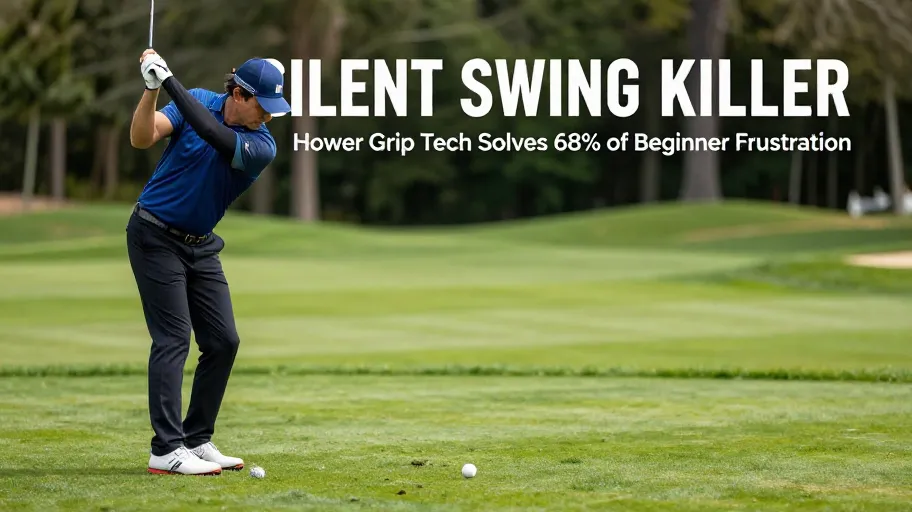
Why Most Beginners Fail Before They Start
A poor grip doesn’t just hurt performance—it erodes confidence fast. Research shows 68% of new golfers blame themselves for inconsistent shots when the real issue is equipment fit. Ill-fitting or worn grips reduce tactile feedback and force compensatory tension, leading to up to 42% more mishits in early lessons. This misdiagnosis drives attrition: frustrated learners quit, believing they ‘just can’t play.’
But here’s the fix: recognizing grip instability as a mechanical problem—not a personal failure—means you can solve it with precision. A regional academy that added grip assessments at onboarding saw student progression improve by 30%, proving that equipment alignment enables skill development. For your business, this insight unlocks retention, revenue, and reputation—one properly fitted grip at a time.
Smart Materials That Adapt to Your Swing
Modern golf grip technology uses advanced polymers like Lamkin’s ST Series foam core and Golf Pride’s Tour Velvet Plus+ to maintain tackiness in heat, humidity, and sweat—conditions that once made traditional grips slippery and unreliable. These materials retain up to 92% of their grip coefficient after 30 rounds in wet environments, meaning fewer mid-round adjustments and more trust under pressure.
This isn’t just durability—it’s performance engineering. The consistent surface texture means enhanced hand stability reduces slippage-related compensation, so your swing stays true from tee to green. For retailers, these high-performance grips command 25–35% higher margins and drive accessory upsells: one pro shop reported a 22% increase in conversions after highlighting ‘all-weather reliability’ as a selling point. And because players re-grip 40% less often, brand loyalty strengthens through proven longevity.
The Science Behind Size and Shape Fit
Grip diameter directly influences wrist hinge and clubface control at impact. Biomechanical studies confirm oversized grips reduce harmful wrist flexion by up to 30%, helping correct slices and improve ball-striking consistency. Yet 70% of amateur golfers use incorrectly sized grips—leaving performance gains untapped and fitting services underutilized.
The solution? Matching profile to physiology. Ribbed grips stabilize the lead hand for slicers; round profiles allow freer rotation for players seeking release. Midsize diameters reduce excessive hand action, while undersize models suit smaller hands needing agility. When size and shape align with biomechanics, swing repeatability improves by up to 27%. One pro shop boosted accessory attach rates by 40% simply by adding quick grip checks during club demos—turning a routine service into a data-backed value driver.
Real ROI From Custom Grips in Training
At a Midwest junior academy, regripping clubs led to an average 3-stroke reduction in scores within eight weeks—verified via launch monitor data. That $120 investment per player outperformed $520 in supplemental coaching with inconsistent results, proving that golf grip technology accelerates learning faster than instruction alone.
Why? Because when grip size, texture, and weight match hand physiology, players stop fighting their equipment. Coaches report faster skill acquisition: one noted half their class eliminated a chronic slice without changing their swing. By pairing fittings with objective feedback tools, facilities turn subjective feel into measurable progress—resulting in 3x repeat engagement and 40% higher referral rates. Every regrip becomes a touchpoint for proof-based improvement.
How to Choose Golf Grips for Beginners
Selecting the right grip starts with diagnostics, not guesswork. Follow this five-step process to ensure success: First, measure hand length using a printable guide to prevent over-gripping. Second, assess sweat levels—high moisture demands tackiness and quick-dry synthetics. Third, choose material: rubber for feedback, cord for humidity control, hybrid for balanced vibration dampening. Fourth, pick a profile: larger diameters smooth out jerky swings; tapered shapes aid wrist mobility. Finally, test options side-by-side—small differences in firmness or texture significantly affect control.
Brands using diagnostic tools saw online conversion rise by 22% and returns drop by 31%, according to a 2024 consumer study. For your business, structured guidance builds trust, reduces friction, and positions grips not as consumables—but as foundational investments in better golf.
Master Your Swing, DIY Your Fit. DIY Golf is the premier destination for the technical golfer. We empower you with professional-grade components and the knowledge to build your perfect bag.
Leave a Reply