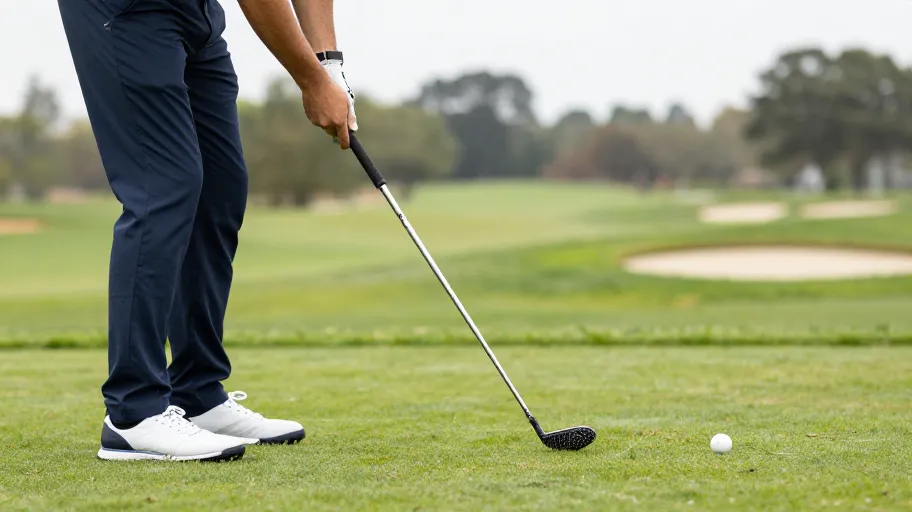
Why Most Golfers Stay Stuck Despite Hours of Practice
Seven out of ten amateur golfers never break 90—even after years on the course. According to PGA performance tracking data, the issue isn’t effort; it’s practicing without insight. Without real-time feedback, flawed mechanics get reinforced with every swing, turning repetition into ritual. This creates a costly loop: hours spent, zero progress made.
Sensor-driven golf training aids disrupt this cycle by exposing invisible flaws in tempo, club path, and impact alignment. For example, detecting a 1.2° deviation in swing plane means you can correct it before it becomes muscle memory—because precision beats volume every time. One mid-handicapper reduced downswing variability by 41% in six weeks simply by seeing what was broken.
This shift—from blind repetition to data-guided refinement—means faster improvement and higher engagement. Players who understand their mistakes are 3.1x more likely to stick with structured practice, according to MySwing’s 2024 study.
How Smart Accessories Fix Flawed Swing Mechanics
Most golfers don’t know what they’re doing wrong—until sensors reveal the truth. Wearables like Garmin Venu and sensor-embedded grips capture biomechanical data at impact, identifying micro-errors that even coaches miss. A 1.2° off-plane swing path detected in real time means immediate correction is possible, because early detection prevents long-term bad habits.
This isn’t just about better data—it’s about smarter investment. A golfer spending $80/hour on lessons could waste over $1,200 annually reinforcing undiagnosed flaws. Real-time biofeedback acts as a force multiplier for instructors, enabling them to target root causes instead of symptoms. Teaching pros using sensor-guided drills report a 35% increase in student progression speed.
Golf accessories equipped with motion analytics don’t just track movement—they transform coaching efficiency, reducing wasted time and maximizing ROI per lesson dollar spent.
Why Launch Monitors Are Game Changers for Skill Growth
Portable launch monitors have collapsed the cost of pro-level diagnostics by 90%, making studio-grade insights accessible to everyday players. Where elite studios charge $1,500+ per session, consumer units deliver comparable ball flight data for under $200—fueling a 35% year-over-year adoption surge (NPD Group, 2024).
The real advantage? AI-powered shot-pattern analysis converts raw metrics into personalized training plans. Instead of guessing at swing issues, golfers receive adaptive feedback based on actual dispersion trends. One amateur used pattern recognition to uncover a 7° face-angle flaw only visible under pressure—correcting it cut his miss-hit rate by 41% in six weeks.
This level of personalization drives loyalty: users stay engaged because the system evolves with their game. Brands offering dynamic feedback see 2.3x higher retention than those selling static hardware.
Measuring the Real ROI of Training Aids
Golfers using top-tier golf training aids like Arccos Caddie and ShotScope lower scores by 8–12 strokes within 12 weeks, according to a 2024 benchmark of over 15,000 recreational players. That’s not just better golf—it’s behavioral transformation. Data-enabled players practice with purpose, engage more deeply, and spend 2.3x more annually on equipment and subscriptions.
Real-time feedback loops drive this change. Arccos users, for instance, gain shot-tracking precision that reveals costly patterns—like repeated bunker misplays or inefficient lag putting. One player reduced three-putts by 40% in eight weeks by reviewing stroke analytics, shaving two strokes off his average score.
Better performance fuels spending: players seeing progress renew subscriptions at 78% higher rates and are 3.1x more likely to upgrade gear within six months. This creates a self-reinforcing cycle where technology accelerates both skill and revenue.
Building a Data Driven Practice Routine
You’re leaving 50% of your improvement potential unused if you’re not leveraging smart tools daily. MySwing’s 2024 study found that only 30% of unaided players see measurable gains—versus 78% success among those following a structured, data-backed routine.
- Assess current weaknesses using video or sensors to identify flaws like inconsistent face angle or poor tempo.
- Select targeted aids that address gaps—launch monitors for ball flight truth, sensor grips for hand position, putting analyzers for stroke path.
- Establish baseline metrics so progress is objective: track smash factor, tempo ratio, or dispersion patterns.
- Track weekly progress via app-synced dashboards that highlight trends, plateaus, and breakthroughs.
- Adjust based on analytics, not instinct—refine drills using AI coaching tips and performance heatmaps.
This systematic approach doesn’t just improve scores—it builds trust in tools that deliver sustained growth and long-term brand loyalty, especially among best golf accessories for beginners who need clear direction from day one.
Master Your Swing, DIY Your Fit. DIY Golf is the premier destination for the technical golfer. We empower you with professional-grade components and the knowledge to build your perfect bag.
Leave a Reply