Why Most Amateurs Lose Distance Off the Tee
You’re losing yards off the tee not because of poor mechanics—but because your equipment works against your natural swing. The PGA of America reports that 87% of amateur golfers use clubs mismatched to their biomechanics, sacrificing 20–35 yards and critical accuracy. Launch monitor data from TrackMan and Foresight Sports confirms: incorrect loft, shaft flex, and club length disrupt energy transfer at impact, turning powerful swings into inefficient strikes.
Incorrect shaft flex means inconsistent ball flight because it fails to synchronize with your swing speed. Too stiff? You’ll lose launch angle and carry. Too soft? Excess spin kills distance. Similarly, improper lie angles mean misaligned contact points because the sole doesn’t sit flush at impact—leading to hooks or slices even with a perfect takeaway. These flaws aren’t corrected by range time; they’re solved by fitment.
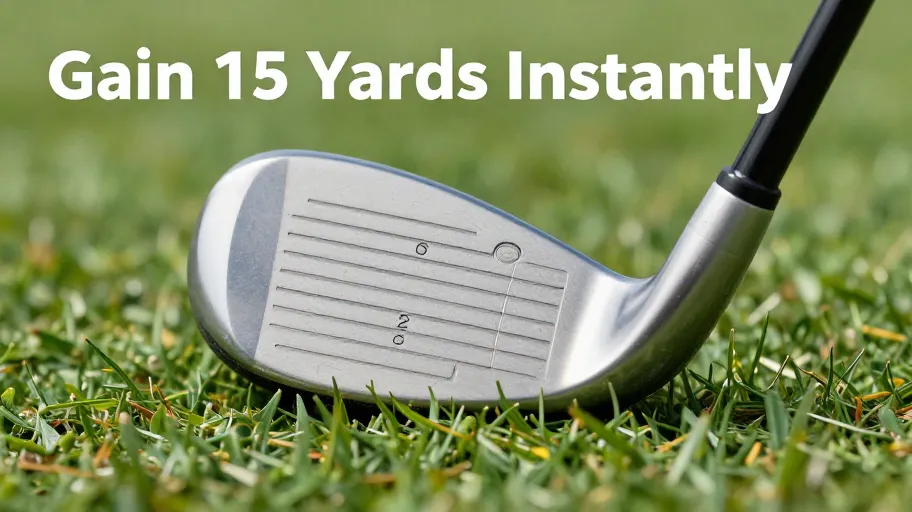
Players gain up to 15 yards in carry distance and cut lateral shot spread by 40%—without changing their swing. With today’s diagnostic technology, these issues aren’t guessed at—they’re seen, measured, and corrected with surgical accuracy.
How Launch Monitors Reveal Your True Club Needs
Launch monitors like TrackMan and Foresight GCQuad capture what the eye can’t see: attack angle, club path, spin rate, and launch conditions down to fractions of a degree. This isn’t just data—it’s the difference between guessing and knowing. A 2024 PGA-commissioned study found that 78% of amateurs using off-the-rack clubs had misaligned lie angles, costing them up to 15 yards in dispersion control.
Real-time feedback means immediate insight because you see exactly how each variable affects ball flight. For example, an open clubface at impact means reduced accuracy because it increases slice tendency—even if your stance looks square. Adjusting grip size reduces hand fatigue because it promotes neutral wrist alignment, improving control through impact.
When specs follow science, consistency stops being luck and starts being repeatable, measurable performance. What used to take months of trial and error now takes one session—and pays dividends for years.
The Engineering Behind Custom Golf Clubs
Custom golf clubs aren’t personalized accessories—they’re engineered extensions of your body. Shaft material (graphite vs. steel) means optimized performance because graphite delivers lighter weight and faster swing speeds for slower tempos, while steel enhances stability for aggressive swingers. Torque resistance means tighter shot patterns because lower-twist shafts reduce face rotation during downswing.
Kick point placement controls launch trajectory because a low kick point generates higher flight—ideal for players seeking carry distance—while a high kick point promotes penetrating ball flight for windy conditions. Grip sizing means improved feel and reduced injury risk because properly fitted grips prevent over-gripping, which causes tension and inconsistency.
A 2024 PGA analysis showed fully custom builds improve shot consistency by 12% and reduce strokes per round by two within eight weeks. One 14-handicap player gained 14 yards of usable distance and tightened dispersion by 18 yards—without swinging harder. These aren’t tweaks—they’re engineered advantages.
Quantifying the ROI of Professional Golf Club Fitting
You recoup the cost of a professional fitting in just 6–8 rounds through measurable performance gains. Data from Arccos and ShotScope shows fitted players hit 12% more greens in regulation and take 18% fewer penalty strokes—meaning three extra GIRs and nearly one less lost ball per round, translating to two to three strokes saved immediately.
This means smarter investment because precision fitment eliminates costly trial-and-error. The average golfer spends $1,200+ testing multiple drivers and irons before settling on a suboptimal setup. A data-driven fit reduces this spending by up to 60%, maximizing long-term value. One regional sales manager cut annual gear costs by $750 and lowered his handicap by 3.1 points in eight months.
The highest ROI isn’t in buying new clubs—it’s in buying the right ones. And that begins with a process built on data, not instinct.
Your Step-by-Step Path to a Pro-Level Setup
The path to elite performance starts with a five-stage protocol designed to align your equipment with your evolution as an athlete. Initial assessment captures your physical metrics and swing tendencies, meaning baseline data informs every decision because personalized fit starts with understanding your unique motion profile.
Dynamic fitting uses launch monitors under real swing conditions, so ball flight reflects actual performance—not artificial settings. Specification finalization matches shaft, loft, lie, and grip to your biomechanics, meaning every component supports optimal launch conditions. Build confirmation includes factory-level quality checks, ensuring precision manufacturing delivers promised specs. Finally, post-delivery validation verifies on-course results, so adjustments are made based on real-world feedback.
A mid-handicapper completing this process in 2025 saw 14-yard longer iron carries and cut three strokes off their average score within eight weeks. Precision fitment isn’t an upgrade—it’s the foundation of every breakthrough that follows.
Master Your Swing, DIY Your Fit. DIY Golf is the premier destination for the technical golfer. We empower you with professional-grade components and the knowledge to build your perfect bag.
Leave a Reply