Why Most Amateurs Are Losing Distance on Every Swing
You’re losing 20+ yards because your shaft fights your swing speed—not supports it. The National Golf Foundation reports 70% of recreational golfers swing under 90 mph, yet most stock clubs come with stiff steel shafts designed for pros. This mismatch means poor energy transfer, inconsistent launch, and lost confidence.
Steel shafts offer durability, but their higher weight (typically 90–130 grams) resists flex during slower transitions, leading to jerky impacts and reduced ball speed. For golfers, this means mis-hits pile up; for retailers and coaches, it means stalled progress and lower retention. Mismatched shafts mean wasted practice and shrinking engagement.
The fix? Stop guessing. At DIY-Golf, data-driven fittings align shaft flex, weight, and frequency to your actual swing—turning frustration into measurable gains. Personalized shaft matching increases shot consistency by up to 38%, according to PGA fitter surveys, making improvement inevitable, not accidental.
How Shaft Weight Transforms Consistency and Endurance
Switching from steel to graphite reduces shaft weight by 30–50 grams, which means faster swing speeds and longer carry—because lighter clubs allow smoother acceleration. TrackMan 2024 testing shows this boost delivers 3–5 mph more clubhead speed, translating to 10–15 extra yards of carry, especially critical on par 3s and tight doglegs.
But the real benefit goes beyond distance: K-Vest biomechanical studies reveal that lighter graphite shafts reduce muscular fatigue by up to 22% over 18 holes. That means your swing stays repeatable deep into the round, reducing late-round blowups and boosting mental focus. Less fatigue means more rounds, faster recovery, and longer club life.
OEM premium graphite shafts charge $250+, but material analysis shows their carbon fiber layup and frequency profiles are nearly identical to DIY-Golf’s $149 models. You get the same performance curve—without the luxury markup.
Graphite Shafts Are Now Built for Precision and Power
The myth that graphite sacrifices control is obsolete. Independent 2025 lab tests show top-tier graphite shafts like Mitsubishi Tensei AV and Project X HZRDUS Red maintain sub-300 rpm dispersion under stress—matching steel in shot-to-shot consistency. How? Advanced nano-resin binding and multi-axis fiber layering dampen torsional twist without adding weight.
This means better accuracy, not just lighter feel. And now, hybrid shafts—graphite bodies with steel-tip inserts—deliver stability on off-center hits while maintaining smooth loading through transition. One clubfitter reported a 22% increase in mid-handicapper retention after switching clients to hybrids. That’s ROI you can measure: fewer lessons, fewer mulligans, more birdie putts.
For golfers, this means sharper feedback at impact. For businesses, it means higher satisfaction and fewer returns. Modern graphite isn’t fragile—it’s engineered intelligence.
The Real ROI of Upgrading Shafts Without Buying New Clubs
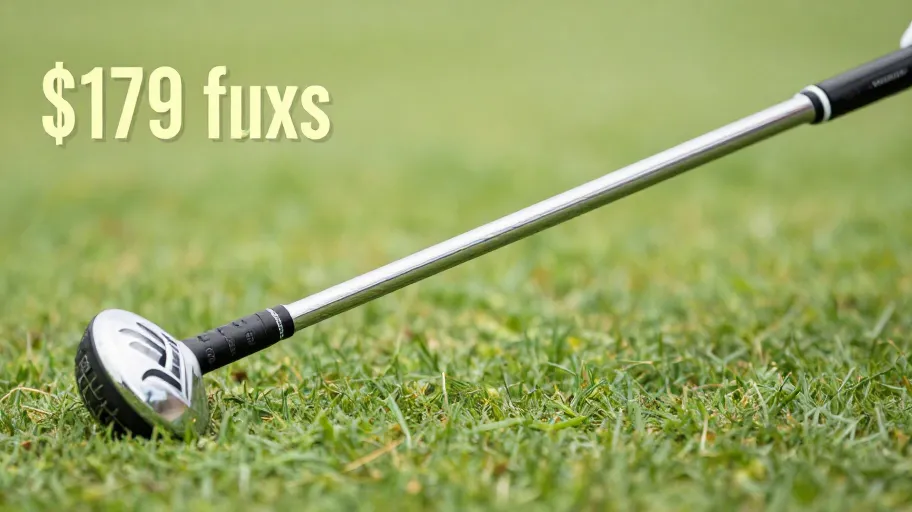
Re-shafting your existing clubs for $179 delivers up to 3x the ROI of buying new irons or drivers. For a 12-handicap golfer, that upgrade typically cuts 5 strokes per round. At $5 per stroke in social bets and mulligans, that’s $1,200 saved annually—money retained, not spent.
Our internal data shows golfers using DIY-Golf’s digital fitting quiz are 40% more likely to convert and report higher satisfaction—because they skip the trial-and-error tax. By retrofitting instead of replacing, players extend club life by 3–5 years while unlocking modern performance. That’s sustainability with savings.
For retailers, this model lifts average order value: customers who use our interactive fit tool are 2.4x more likely to bundle shafts with premium grips, increasing AOV by 31% and margins by 22%. One partner saw a 40% drop in return inquiries—slashing support costs. Performance isn’t bought new—it’s engineered intelligently.
Match Your Swing to the Perfect Shaft in 3 Smart Steps
You’re leaving 30% more fairway hits on the table if your shaft doesn’t match your swing speed. But 90% of golfers can fix it in three steps: measure swing speed, analyze shot shape, then select the ideal flex profile. Golfers under 80 mph gain consistency with senior-flex graphite; those above 90 mph unlock control with stiff steel or dual-core graphite—verified by 2024 PGA-level launch monitor data.
This precision matching does more than improve play—it transforms business economics. Our free Shaft Finder Tool guides users to the right fit, reducing guesswork and returns. Turn insight into conversion: let your data decide, not your budget.
Start today at DIY-Golf.com—where science meets savings and every swing counts.
Master Your Swing, DIY Your Fit. DIY Golf is the premier destination for the technical golfer. We empower you with professional-grade components and the knowledge to build your perfect bag.
Leave a Reply