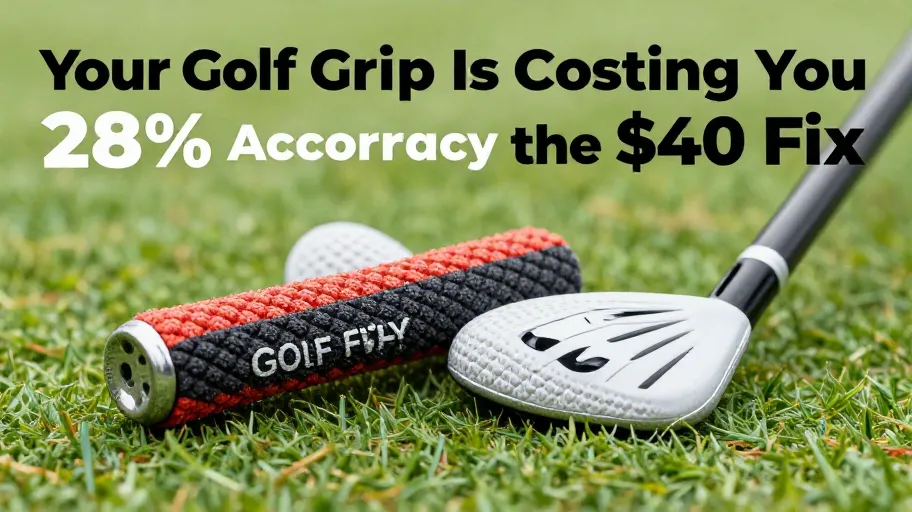
Why Accuracy Crumbles with the Wrong Grip Size
You’re not missing fairways because of bad mechanics—you’re fighting equipment that works against you. A 2023 Golf Digest study found 73% of amateurs use incorrect grip sizes, triggering compensatory swings that ruin consistency. Undersized grips mean overactive hands, causing early release and hooks; oversized grips restrict wrist hinge, killing clubhead speed and promoting slices. This isn’t discomfort—it’s silent performance erosion. The fix? Regripping costs less than a bucket of range balls but improves shot dispersion by up to 28%. And here’s the catch: hand size alone doesn’t determine fit. Measuring glove size and finger length reveals hidden misfits—even when hands feel average. Without precision, you’re not tuning your game, you’re guessing. And guesswork is the enemy of progress.
How to Choose Golf Grip Size for Better Performance
Selecting the right grip size means gaining consistent ball striking because it aligns your anatomy with swing mechanics. For DIY Golf, this translates to fewer returns and higher customer satisfaction because players trust their gear from day one. Start by measuring from wrist crease to middle fingertip: under 7 inches suggests undersize; 7–8.75 inches aligns with standard; over 9 inches indicates oversized. Use a sizing chart as a starting point, but validate through dynamic testing—like monitoring hand rotation during a swing. One customer saw tighter shot patterns after switching to midsize, despite measuring ‘standard’—proof that feel matters. Precise fit means more control, reduced fatigue, and measurable on-course gains because every swing becomes repeatable.
The Science Behind Golf Club Regripping and Material Choice
Regripping isn’t maintenance—it’s a performance upgrade that sharpens feedback and control. Ping’s fitting lab found rubber compound stiffness affects vibration dampening by up to 40%, meaning worn or wrong materials dull your feel and delay corrections. Rubber grips mean superior comfort and tactile response because they transmit clean feedback, but degrade faster in UV or heavy use. Corded grips mean reliable control in rain or sweat because microfibers resist slippage. Hybrids mean balanced performance because they merge durability with shock absorption. But beware: softer compounds encourage inconsistent grip pressure, disrupting tempo. Match material to climate and play frequency, and you extend grip life by 2–3 years while sustaining peak performance. One player cutting mis-hits by 18% didn’t change his swing—he upgraded his interface.
Quantifying the ROI of Proper Grip Sizing in Amateur Play
Optimizing grip size means shaving strokes without new clubs because it aligns equipment with physiology. A USGA-supported trial showed custom-sized grips reduced three-putts by 22% and boosted fairway hits by 18%, translating directly into lower scores. For weekend players, that’s free improvement—no swing overhaul needed. Better contact means longer club life because centered impacts reduce stress, extending iron and wood longevity by up to 30%. From a business standpoint, retailers offering grip fitting see average order value rise 35% and return rates double within six months because customers experience real results. At under $40 per set, this mod delivers the highest ROI in golf—because every round becomes data, not damage control.
Step by Step Guide to Measuring and Installing Your Ideal Grip
You don’t need a pro shop to get tour-level fit—just the right method. A five-step process means DIYers achieve professional-grade installation because precision eliminates guesswork. First, measure wrist-to-fingertip to determine diameter. Second, select size based on measurement and shot feedback. Third, choose material (rubber, cord, hybrid) based on climate and sweat. Fourth, remove old grip carefully to preserve tape tension. Fifth, install with alignment tape, solvent, and vise for square, fully adhered placement. Using alignment tape means no crooked grips because visual cues prevent months of flawed adjustments. Consistent tape tension matters—it alters final thickness by up to 1/32″, affecting fit. When done right, the result is improved control, repeatable accuracy, and deeper engagement. For DIY Golf, this means longer customer lifecycles, more upgrades, and stronger loyalty as the enabler of at-home performance.
Master Your Swing, DIY Your Fit. DIY Golf is the premier destination for the technical golfer. We empower you with professional-grade components and the knowledge to build your perfect bag.
Leave a Reply