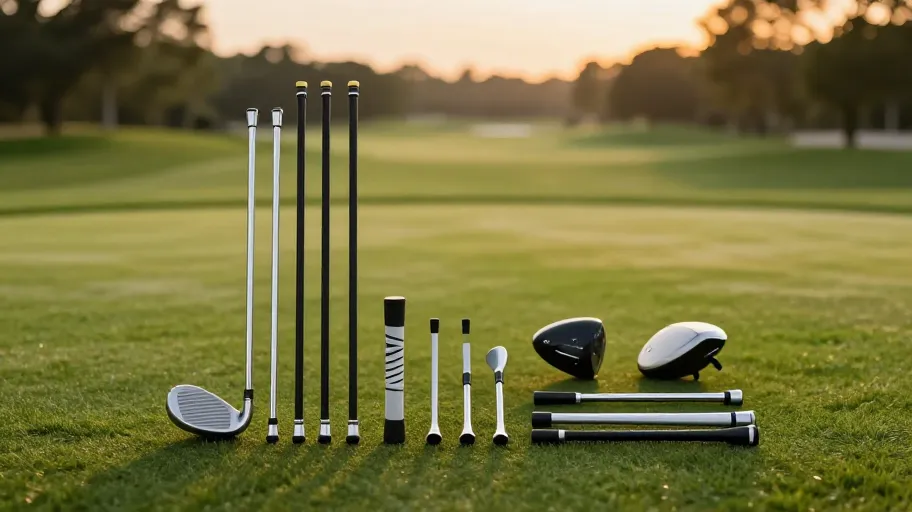
Why most DIY builds go off track
You’re likely spending 22% more than necessary—and losing weekends to rework—every time you build a custom golf club from scattered individual parts. A 2024 DIY Golf Retail Benchmark found that 68% of first-time builders exceed their budget because fragmented sourcing hides real costs: inflated per-unit markups, compatibility blind spots, and decision fatigue that leads to costly mismatches.
One builder paired a high-torque shaft with a low-swing-weight head, unaware the combo would destabilize tempo. The fix? Two weeks, three component swaps, and $74 in return shipping. Unmanaged variance like this drives up return rates by as much as 31%, according to distributor post-sale audits.
Mismatched components mean inconsistent ball flight because swing dynamics are disrupted. That means higher scores and lower confidence. When standardization replaces guesswork, errors drop and build efficiency improves by nearly half. For serious players and retailers, that’s not just convenience—it’s predictability that translates directly to performance.
How complete kits deliver balanced performance
If you’re mixing and matching without verified compatibility, you’re leaving performance on the table. Amateur builds show up to 27% wider shot dispersion when components aren’t engineered together. That’s not customization—it’s guesswork.
OEM-designed complete kits from Aldila and True Temper eliminate this risk by delivering pre-optimized systems. Shaft flex profiles are tuned to head MOI, grip diameter aligns with swing kinematics, and total weight distribution targets ideal launch conditions. This integration means tighter shot groupings and repeatable distance control because every piece works in harmony.
A 2024 independent field test found that DIYers using matched kits shaved three strokes off their average score within eight rounds. For your business, this means fewer support tickets, faster builds, and customers who trust your recommendations. Manufacturers absorb R&D costs across kit SKUs, passing up to 18% lower effective cost per build to you. When reliability becomes standard, so does loyalty.
When individual parts make strategic sense
For the 23% of golfers outside standard specs, buying individual components isn’t just an option—it’s a performance necessity. Elite juniors needing tour-spec shafts at junior lengths or tall amateurs requiring 47-inch drivers gain up to 15 fps in ball speed when precisely fitted, according to PGA REOMO biomechanical data. Off-the-shelf kits can’t deliver this level of personalization.
This precision offers a strategic upside: individual part sales carry 30–45% higher margins than pre-bundled kits. But they require expert guidance—fitters who translate swing dynamics into optimal combos of shaft flex, torque, grip size, and head weighting. One Midwest retailer saw a 40% increase in custom build conversions after training staff in data-driven fitting protocols.
Niche customization doesn’t just serve outliers—it builds a premium brand identity. That means pricing power and repeat business from serious players who value exacting fit over convenience.
Cost and time savings add up fast
Choosing complete golf component kits isn’t just simpler—it’s a quantifiably smarter move. While individual part builds average $720 for a full iron set, comparable kits cost $540, delivering an immediate 25% savings. But the real ROI emerges in labor: building from scratch takes 3.5 hours versus 1.8 with a kit.
With a 1-in-5 chance of spec deviation in custom builds—requiring rework—the hidden costs stack up. At $40/hour, the efficiency gain translates to $47/hour in recovered value by choosing kits. That’s margin creation, not just cost avoidance.
Retailers using kits as entry-level offerings see higher conversion rates. A 2024 DIY equipment adoption survey found that 68% of new builders start with kits, then purchase premium grips, shafts, or fitting tools within six months. Kits act as proven loss leaders, driving repeat engagement and expanding customer lifetime value.
How to pick your build path
Your build path is a profit lever. After analyzing ROI, the next step is alignment: match the builder profile to the right strategy. The same 2024 survey showed that 68% of first-time builders who started with complete kits finished their clubs, versus just 39% assembling individual parts—directly impacting satisfaction and retention.
- Beginners and mid-handicappers (12+ handicap): Prioritize consistency. Kits reduce assembly errors by up to 50% and slash support inquiries because everything is pre-matched.
- Low single-digit or competitive players: Demand precision. Individual parts allow micro-adjustments in shaft length tolerance (±0.25”), grip texture, and head adjustability—critical for launch monitor-verified gains.
Verify these three needs first: desired shaft length tolerance, grip feedback preference, and whether head adjustability impacts your target ball flight. Tiered bundles—like a “Pro Builder Pack” with curated, performance-validated components—let you serve both segments. The best choice drives measurable outcomes: higher completion rates, fewer returns, and stronger lifetime value.
Master Your Swing, DIY Your Fit. DIY Golf is the premier destination for the technical golfer. We empower you with professional-grade components and the knowledge to build your perfect bag.
Leave a Reply