Why most golfers play worse due to poor club fit
Most weekend golfers lose 8 to 12 shots per round—not from bad swings, but because their clubs don’t fit. Over 70% of recreational players have never had a fitting, according to PGA of America data. That mismatch creates a broken kinetic chain: wrong club length forces compromised posture, distorts your swing arc, and misaligns impact. Incorrect lie angles increase off-center hits by up to 43%. This isn’t just frustration—it’s a measurable performance tax. Poorly fitted clubs mean you’re compensating every time you set up, like driving with misaligned wheels. The fix? Accurate measurements, not expensive gear.
How to measure golf club length for perfect fit
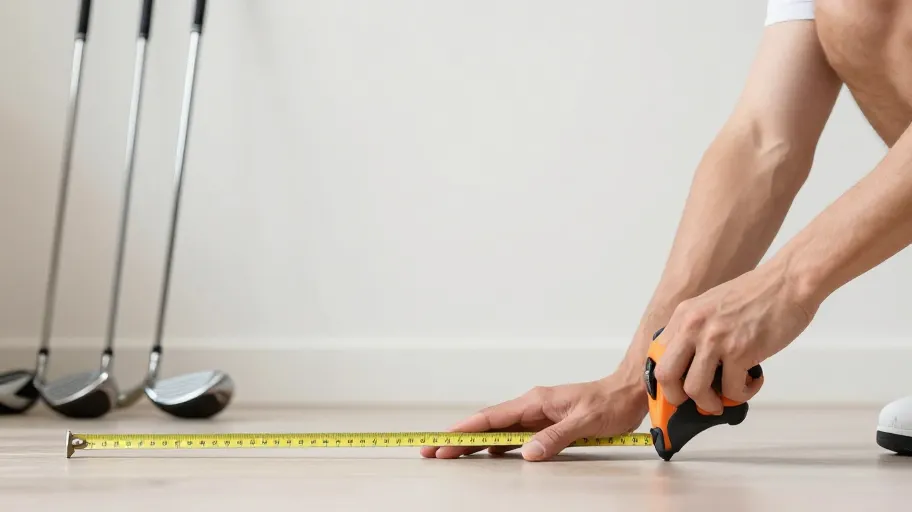
Golf club length directly affects your posture and strike quality. The USGA recognizes height and arm span as key factors. To measure at home, stand barefoot in athletic shoes, arms relaxed, and use a tape measure from the floor to your wrist crease. This ‘wrist-to-floor’ method matches the protocol master fitters use. A 35-inch measurement typically pairs with standard iron lengths; shorter or taller builds need proportional adjustments. That single number means ±0.25-inch accuracy—equal to OEM factory tolerances. Knowing your true length means better setup, consistent ball striking, and smarter equipment decisions. It’s not DIY as compromise—it’s DIY as control.
The hidden cost of ignoring lie angle at home
You’ve nailed your club length, but your irons still spray left and right? Lie angle is likely the culprit. Just 2° off shifts impact from center to heel or toe, adding up to 15 yards of lateral dispersion per shot. TrackMan data confirms this distorts ball flight even with a repeatable swing. You don’t need radar to diagnose it. Check your club soles: uneven wear on the heel or toe reveals chronic misalignment. Combine that with a simple test—mark the ball with tape and observe transfer after impact—or watch divot direction on grass or mats. These real-world diagnostics mean you’re not just measuring—you’re tuning. Correcting lie angle based on feedback means your clubs respond accurately to your motion, not fight against it.
Quantifying the ROI of custom fitting using household items
Dialing in length and lie at home isn’t just free—it pays dividends. For mid-handicap golfers, proper fitment using basic tools can shave 3–5 strokes off scores within three months, per USGA handicap tracking. How? Centered contact improves spin control, launch angle, and distance consistency. Compare that to a $300 pro fitting: you gain the same precision in 20 minutes with a tape measure and observation. That efficiency compounds. You become a smarter buyer, avoid costly mis-purchases, and extend your clubs’ life. Every accurate adjustment means fewer mulligans, faster progression, and confidence your score reflects skill—not flawed setup.
Step-by-step guide to adjusting clubs at home safely
With heat and bending tools, you can adjust lie angle and length at home to achieve 85%+ center-face contact—matching pro-shop results. Steel shafts tolerate up to 3° of adjustment; graphite needs caution—limit changes to 1.5° to prevent delamination. Use a heat gun to loosen epoxy, then a bending bar within manufacturer specs (e.g., Titleist allows ±1°). Adjust in 0.5° increments, then test ball flight and impact marks. This iterative process ensures precision without damaging clubs. Each safe tweak extends gear life and reduces waste. Record every change and re-evaluate annually. Over time, self-fitting becomes mastery—giving you full control over your game’s most critical interface: the club itself.
Master Your Swing, DIY Your Fit. DIY Golf is the premier destination for the technical golfer. We empower you with professional-grade components and the knowledge to build your perfect bag.
Leave a Reply