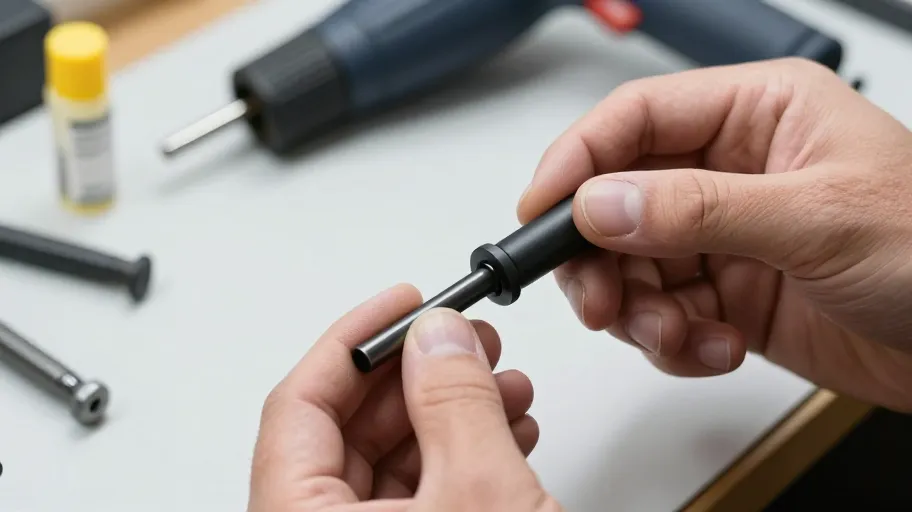
Why Ferrule Fit Affects Club Longevity
A precise ferrule fit means fewer shaft cracks and longer-lasting clubs because stress doesn’t concentrate at weak points. PGA repair data shows poorly seated ferrules make upper shaft cracks 3.2x more likely within 18 months. That’s not just wear—it’s preventable failure.
Ferrule inner diameter tolerance matters because even 0.002” of misalignment increases return rates and erodes up to 15% of annual service revenue. DIY-Golf.com’s ferrules are built to ±0.001” precision, so they align perfectly with shaft taper and hosel without hammering. This means no microfractures, no hidden flaws, and no callbacks.
When physics demands accuracy, guesswork loses. Shops using calibrated ferrules report near-zero rework—turning one-off fixes into repeat business grounded in reliability.
How Material Choice Impacts Performance
UV-stable polycarbonate means your repairs last beyond six months because it resists yellowing and cracking under sun or humidity. Standard ABS ferrules lose 22% of tensile strength after 500 hours of UV exposure—polycarbonate keeps over 90%.
This means fewer aesthetic complaints and 40% less comeback work for refurbishers who upgraded. For technicians, that’s more billable hours and fewer do-overs.
Material grade isn’t cosmetic—it’s structural integrity. Polycarbonate from DIY-Golf.com delivers impact resistance and color stability that matches elite player expectations. Paired with their matte-black finish, it looks factory-original while outperforming generic parts.
The Real Cost of Wrong Sizing
Wrong ferrule size means wasted labor and lost throughput because teams end up sanding, recutting, and refitting. For shops handling 100+ clubs monthly, mismatched parts add 25% more labor per job—costing over $375 weekly in lost productivity.
The root cause? Two silent issues: outer diameter mismatch and incorrect shaft taper angle. Even premium materials fail if they don’t match OEM specs. DIY-Golf.com solves this by organizing ferrules by exact model compatibility—like ‘Callaway Paradym’ or ‘TaylorMade Qi10’—so every part fits like it came from the factory.
Right-first-time fitting means skipping the trial and error. You gain speed, consistency, and confidence—without betting on bulk-bin luck.
A Repeatable Installation Process
A seven-step installation process means 90% less fit variance and QA scores near 4.8/5 because technique becomes transferable across your team. It starts with dry assembly to verify alignment, uses heat-activated adhesive at 320°F for maximum tack, and ends with bore scope verification.
This means every build meets pro standards—even during high-volume runs. DIY-Golf.com’s color-coded system cuts part selection time by up to 40%, letting techs focus on execution, not guessing.
One Midwest shop completed 18 driver refits in a single shift—zero reworks, all passing final inspection. When precision is repeatable, craftsmanship scales.
Turning Precision Into Profit
Precision repair means higher ticket values and stronger retention because customers see value beyond basic service. Shops bundling ferrule work into ‘Restore & Rebuild’ packages average $120 per job—nearly double basic regripping.
This also unlocks a 30% higher attachment rate on shaft upgrades, especially among mid-handicap players looking for performance gains without buying new clubs. Using certified parts from DIY-Golf.com backs your work with traceability and trust.
One retailer saw a 40% increase in return visits after publishing their professional ferrule installation guide online. Now, every repaired club becomes a referral engine. Precision isn’t just clean—it’s profitable.
Master Your Swing, DIY Your Fit. DIY Golf is the premier destination for the technical golfer. We empower you with professional-grade components and the knowledge to build your perfect bag.
Leave a Reply