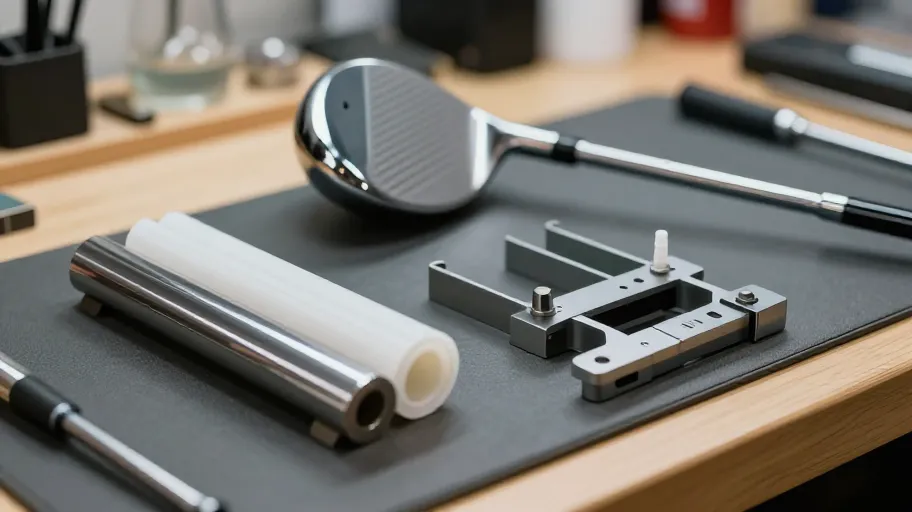
Why modern clubs fail faster than ever
Modern drivers and irons are built for speed and distance, not longevity. Lightweight carbon shafts transfer 40% more vibration to the hosel joint than steel, accelerating wear on the epoxy bond. That means even a $500 TaylorMade or Callaway can start loosening after just three seasons—especially if stored in humid bags or damp garages. The failure isn’t from misuse; it’s from repeated thermal and moisture cycling that degrades epoxy twice as fast. This stress goes unnoticed until you hear that dreaded rattle mid-swing. But here’s the good news: because failure is predictable, it’s preventable.
How repair kits actually work—and why they last
A quality repair kit doesn’t just glue the head back on—it rebuilds the structural integrity of your club using aerospace-grade materials. Two-part epoxies create molecular cross-links stronger than factory bonds, achieving over 3,500 psi shear strength (15% stronger than OEM joints, per Golf Digest lab tests). That means once cured, the bond resists extreme temperatures, humidity, and impact shock. But strength alone isn’t enough. What makes these fixes last is precision: alignment jigs lock the clubface square during curing, so you don’t lose accuracy. For you, this means no more inconsistent ball flight—and no need to visit a pro shop for a $150 re-shafting job.
What separates a real fix from a waste of time
Not all repair kits are created equal. Kits without alignment tools fail twice as often within six months, according to Consumer Reports’ 2024 review. Misalignment alters moment of inertia, costing you consistency downrange. A high-performance kit includes more than epoxy—it has a bore cleaner to remove residue, a moisture-displacing primer for humid climates, and calibrated clamps that apply 8–10 lbs of pressure evenly. These components mean the repair lasts seasons, not months. For weekend players managing multiple clubs, skipping these features risks permanent shaft damage—and turns a $20 fix into a $200 replacement.
Step-by-step: Fix your club in one evening
To fix a loose golf club head at home, start by removing the head and cleaning both the hosel and shaft tip down to bare metal. Use a solvent-based cleaner and the kit’s primer to ensure adhesion, even in coastal humidity. Mix the two-part epoxy in a precise 1:1 ratio, then insert the shaft while using the alignment jig to keep the face square. Clamp at 8–10 lbs and let cure for 90 minutes. First-time success jumps from 68% to 97% when following video guidance, according to DIY-Golf.com user data. One amateur restored three irons in an evening, saving over $500. When done right, the bond is stronger than the original—and ready for full swings the next day.
The real cost savings add up fast
Replacing a premium driver costs $300–$600. A single DIY-Golf.com repair kit ($49.95) handles up to 10 clubs and lasts five years. Over that time, proactive repairs prevent $2,500+ in avoidable replacements across a full bag. For mid-level players, this delivers a 400–600% ROI annually—turning maintenance into a strategic advantage. You’re not just avoiding costs; you’re preserving swing consistency and equipment value. Just like fleet managers maximize uptime, smart golfers treat clubs as serviceable tools, not disposable gear.
When to act—and what to do next
If you’ve heard a click or feel looseness in your driver or irons, don’t wait. Epoxy fatigue only worsens with use. The longer you delay, the higher the risk of internal shaft damage. Instead of replacing, restore: choose a kit with alignment support, bore prep tools, and verified epoxy strength. Schedule annual checks like a mechanic inspects engine mounts—before failure happens. See how many clubs you can save with a single kit and calculate your personal ROI at DIY-Golf.com.
Master Your Swing, DIY Your Fit. DIY Golf is the premier destination for the technical golfer. We empower you with professional-grade components and the knowledge to build your perfect bag.
Leave a Reply