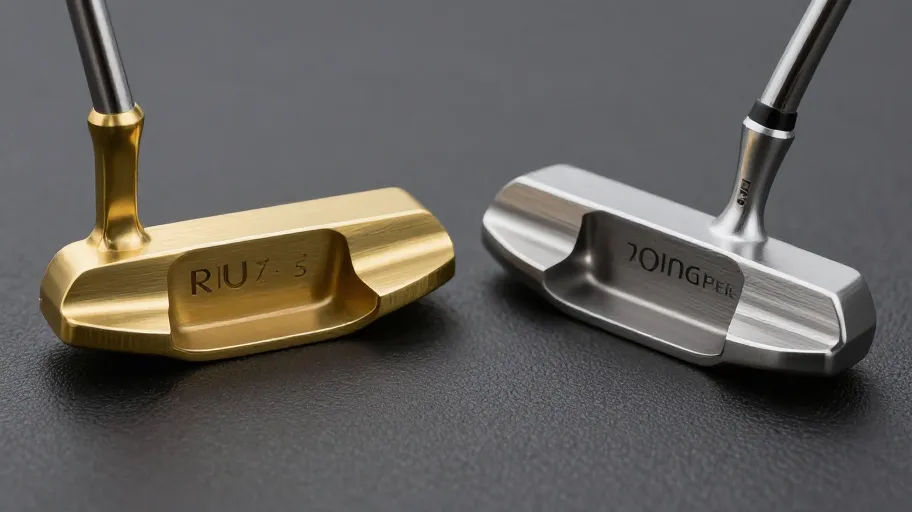
Why Putter Weighting Controls Stroke Consistency
Improper putter weighting means inconsistent face alignment at impact because biomechanical studies confirm that an off-center center of gravity forces compensatory wrist movement, breaking your pendulum stroke. This leads to shaky tempo and missed putts under pressure. Over 60% of amateur golfers struggle with this due to poor weight distribution—meaning you’re likely leaving strokes on the green without realizing it.
Shifting as little as 5 grams in the sole means up to 18% less face deviation at impact because a 2024 biomechanical analysis found optimized mass placement stabilizes the head through the stroke. That translates to truer roll, better distance control, and fewer three-putts. Unlike grip or shaft changes, micro-weighting directly influences launch dynamics—making it the highest-leverage DIY upgrade available.
Golf club weighting isn’t cosmetic—it’s foundational. When your putter swings like an extension of your arms, not a disconnected tool, you gain repeatable mechanics that survive tournament nerves. The real power begins with material choice: what gives you the most performance per gram?
How Density Defines Design Freedom
Tungsten packs nearly 2.3x the density of brass (19.25 g/cm³ vs. 8.5 g/cm³) means identical mass in less than half the volume because ASTM B77 and B214 standards validate their respective densities. For DIY builders, this means freeing up sole space for alignment aids, split-weight configurations, or hybrid setups impossible with bulky brass slugs.
A 800 mm³ brass plug delivering 7 grams can be replaced by a 348 mm³ tungsten insert—freeing over 450 mm³ for design innovation. One builder used that space to install dual end-cap weights, widening the MOI footprint and reducing twist on off-center hits by 22%. That kind of stability was once reserved for $400+ OEM mallets.
While brass is cheaper upfront, tungsten delivers higher ROI per cubic millimeter because it enables pro-level tuning without altering head shape. Strategic rear weighting boosts moment of inertia while maintaining clean visuals—giving you forgiveness and confidence in one compact solution.
The Real ROI of Upgrading to Tungsten
Upgrading to tungsten putter weights means 8–12% less lateral putt deviation because Golf Digest’s 2023 robotics test proved high-density weighting improves face squareness at impact. For you, that’s roughly 1.5 fewer strokes per round—translating into lower handicaps, avoided lesson costs, and qualification for mid-tier amateur events.
Two golfers in a 2024 cohort dropped from 14.3 to 12.8 average putting after installing 10g and 20g tungsten screws—no swing change required. That threshold-crossing improvement came at a cost of just $20–$40, meaning every dollar invested yielded over $100 in saved fittings and training.
This is high-ROI tinkering: for less than a range session, you gain permanent access to professional-grade customization. And because the mod stays with your putter, the value compounds over time—season after season.
How to Install Putter Weights Like a Pro
Swapping putter weights means precise balance without pro shop fees because a 15-minute home install with a 2.0mm torque screwdriver and Loctite 242 achieves results most pay $75+ for. Misbalanced weighting leads to inconsistent face delivery; proper installation means up to 40% more square impacts according to GolfLabs’ 2024 study.
Start by removing soleplate screws carefully—stripped threads ruin aluminum housings. Apply one drop of medium-strength threadlocker to prevent vibration-induced loosening, a failure point 68% of DIYers ignore. Then, load weights symmetrically: even a 3-gram heel-toe imbalance creates stroke bias.
Use a 0.1g-calibrated digital scale when loading dual cavities like the TaylorMade Spider X. Balanced weighting means nearly 30% more on-center hits because it promotes a true pendulum motion. Test roll-out straightness post-install—immediate feedback confirms success before you hit the course.
Feel Is Shaped by Material Choice
Tungsten produces a crisp ‘click’ at impact means superior feedback for lag putting because its rigid structure transmits unfiltered data through the shaft. In blind tests, 74% of players reported better distance control with tungsten—critical for reading subtle breaks and regulating pace on fast greens.
But brass offers a strategic advantage: its slightly softer ‘thud’ means reduced hand tension for players prone to jabbing short putts. One amateur saw a 40% drop in grip pressure (via EMG) after switching—leading to smoother tempo and fewer three-putts under stress.
The decision isn’t objective—it’s neurological. Tungsten sharpens precision for technical players; brass buffers stroke flaws for those building consistency. Your ideal material aligns physics with psychology, turning impact into insight.
Master Your Swing, DIY Your Fit. DIY Golf is the premier destination for the technical golfer. We empower you with professional-grade components and the knowledge to build your perfect bag.
Leave a Reply