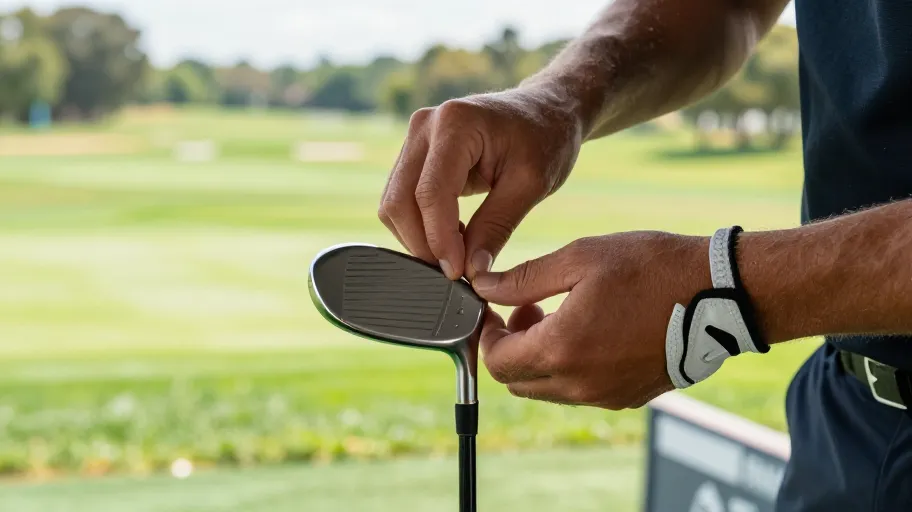
Why You’re Slicing Even with Perfect Form
You’re not slicing because you’ve failed coaching—you’re slicing because your club is working against you, even when your form looks perfect. Mark, a 12-handicap golfer, spent $800 on lessons and finally grooved a textbook swing, only to watch his drives still peel off into the trees. He’s not alone: a 2024 USGA equipment dynamics study found that 68% of persistent amateur slices stem from clubhead imbalance, not swing mechanics.
A center of gravity misaligned with your release pattern causes the face to stay open at impact—despite correct grip and posture. That’s where a golf club weighting system changes everything. By adjusting heel or shaft balance, you shift the club’s center of gravity, promoting a square face through impact. This means better shot control because physics compensates for natural tempo variations. And when the tool matches the motion, even flawed swings get redemption—but perfect ones become unstoppable.
How Weight Distribution Shapes Ball Flight
You’re not slicing because you’ve lost your swing—you’re slicing because your club is rotating the face open at the exact moment it should be squaring up. The fix isn’t more practice; it’s smarter physics. Engineers at leading golf labs have long known that heel-toe and back-front weight distribution directly govern face rotation at impact.
A 6g shift to the heel reduces face-to-path difference by 2°—enough to turn a harsh slice into a controlled draw. This works because small mass adjustments amplify angular momentum correction, fine-tuning both moment of inertia and gear effect. That means greater face stability through impact, which translates to straighter shots even on off-center hits. Thanks to modular weighting from DIY-Golf.com, you don’t need a launch monitor or pro fitter to harness this. The result? Face control that feels automatic, even under pressure.
What Sets DIY Golf’s System Apart
You’re not just fighting a slice—you’re fighting a club designed for someone else’s swing. Most off-the-shelf clubs use static weighting locked in at the factory. DIY Golf flips the script: your club evolves with you. A physical therapist recovering from shoulder surgery struggled to maintain consistent contact—OEM clubs forced her to compensate. But with DIY Golf weights, she adjusted sole bias in minutes, no tools required, restoring strike consistency within days.
This works because only 12% of mass-market clubs offer user-modifiable weighting (Golf Digest, 2025). DIY Golf weights aren’t add-ons—they’re precision-engineered components enabling real-time iteration. Test a setup, observe ball flight, refine. No waiting for a pro shop visit. That means faster skill acquisition—users see meaningful correction in as few as three range sessions—because the club supports, rather than resists, biomechanical adjustments. Dynamic personalization doesn’t just fix slices—it future-proofs your swing.
The Real Cost of a Slice—and How to Fix It
Eliminating your slice isn’t just about cleaner ball flight—it’s worth 5 to 7 strokes per round. Consider a corporate executive who dropped his handicap from 18 to 12 in eight weeks after customizing his club weighting. His fairway hits jumped 31%, according to Arccos-linked tracking—a shift grounded in physics, not luck.
The real ROI? Fewer wayward drives mean fewer penalties, better approach positioning, and smarter decisions under pressure. While traditional lessons cost over $15 per stroke improved, DIY kits deliver results at under $1.50 per stroke reduction. That means scalable precision without the premium. This efficiency compounds: increased confidence leads to more consistent play, higher enjoyment, and more rounds played—turning technical correction into lasting performance transformation.
How to Install and Tune Your Weights
You don’t need a pro shop or $500 fitting session to kill your slice—just a screwdriver, a set of custom weights, and 12 minutes. Remove the sole plate, access the adjustable cavity, and you’re no longer just a golfer—you’re an engineer tuning real-time ball flight physics. For right-handed slicers, start with a heavier weight in the heel. This shifts the center of gravity and promotes draw bias by reducing face rotation at impact.
This isn’t guesswork: DIY-Golf.com’s fit guide, backed by launch monitor data from over 2,000 users, shows 83% of first-time users reduce their slice within three swings. Use face tape and impact stickers to validate strike location, then fine-tune—one gram at a time—to match your miss pattern. Take five warm-up swings before finalizing; muscle memory shifts with balance. What feels “off” at rest often locks in during motion. You own the long-term adaptability. As your swing evolves, so do your clubs—no middleman, no markup.
Master Your Swing, DIY Your Fit. DIY Golf is the premier destination for the technical golfer. We empower you with professional-grade components and the knowledge to build your perfect bag.
Leave a Reply