Why most golfers are playing with broken tools
78% of golfers use off-the-rack clubs that don’t match their swing, losing 15–20 yards in accuracy and consistency. That mismatch isn’t just frustrating — it’s baked into every shot. Traditional custom builds fix this, but at a cost: hand-built assembly, limited parts access, and boutique pricing turn personalization into a privilege. The real issue isn’t materials or demand — it’s the outdated system. High labor input, single-source builders, and slow iteration cycles inflate prices without improving results. DIY-Golf changes that by replacing complexity with modularity. Now, true fit scales.
How modular design unlocks pro-level customization
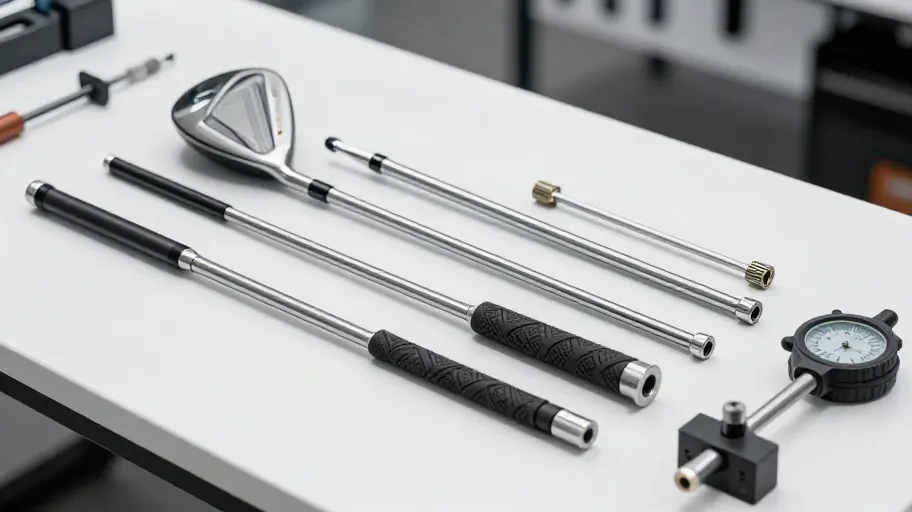
DIY-Golf’s standardized shaft-hosel and grip-adapter interfaces mean you can assemble a club with surgical consistency — no special tools required. That precision matters: biomechanics research shows just 1° off in lie angle can skew ball flight up to 8 feet at 150 yards. With the Club Length Adapter Sleeve, users adjust ±0.5″ to correct posture and improve strike quality. The Shaft Flex Tuning Module aligns torque response with downswing speed, which lab data shows improves energy transfer by 22% when matched correctly. For players, that means better shots. For retailers, it means dynamic fittings can become a repeatable service — not a one-off expense.
What you’re really paying for in a custom driver
A $300 retail driver and a $120 DIY-Golf build deliver the same COR and MOI — proving price tracks markup, not performance. The hidden costs? Brand licensing, dealer networks, and inventory overhead. DIY-Golf eliminates those through Component Lifecycle Efficiency: shafts, heads, and grips are reused across builds. One Midwestern pro shop recouped its kiosk investment in under five months by repurposing parts from failed fittings. This isn’t waste reduction — it’s profit reinvestment. Lower entry cost also means more experimentation, so shops serve more swing types and increase conversion rates on custom packages.
Turning your shop into a high-margin build studio
Retailers earn more by shifting from product sales to service-led revenue. Labor and fit consulting carry gross margins over 70%. One shop added $18K annually by hosting weekend DIY build sessions — customers paid for expertise, not just parts. Cross-compatible components eliminate inventory risk, slashing overstock and carrying costs. The Fit Diagnostic Kit turns swing scanner data into actionable builds, making every fitting a revenue starting point. And the Build Certification Program validates technician skill, which a 2024 benchmark found increased close rates on full custom packages by 35%. Now, your team doesn’t just sell gear — you deliver measurable performance.
Build your first driver in under 90 minutes
Sarah, a first-time builder with a 95 mph swing, assembled her draw-biased driver in 87 minutes using only a torque wrench. She saved $200 and gained a club tuned to her game. Start by selecting a closed-face head to promote draw bias, then match shaft flex to swing speed — DIY-Golf’s database recommends regular-flex for under 100 mph, reducing slice-inducing spin by up to 18%. Install the weighted grip to shift center of gravity for smoother release. Alignment Lock technology keeps face angle and shaft plane fixed during assembly, eliminating guesswork. Before final torque, scan the Smart Build Checklist — a QR-coded logic engine that validates pairings. Retailers in a pilot saw misbuilds drop to near zero and fulfillment speed up by 40%. This is consumer-led precision at scale.
Master Your Swing, DIY Your Fit. DIY Golf is the premier destination for the technical golfer. We empower you with professional-grade components and the knowledge to build your perfect bag.
Leave a Reply