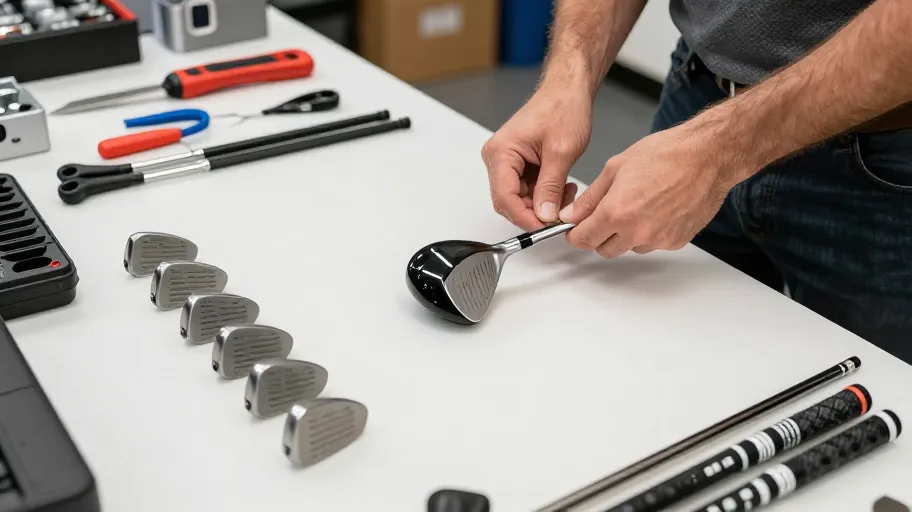
Stop Overpaying for Mismatched Parts
Buying parts individually often means paying 25–35% more due to layered retail markups across vendors. A complete kit cuts those margins by bundling components at near-wholesale prices, so you pay $180 instead of $280 for the same quality driver setup. That’s not just cheaper—it means predictable budgeting and no surprise fees at checkout.
This pricing efficiency means fewer financial surprises and faster builds because every piece is guaranteed compatible. One study found 41% of solo builders bought at least one wrong part, adding $74 in fixes on average. With pre-matched shafts, heads, and grips, kits prevent mismatched tolerances that hurt performance or require reorders. You get consistent results from the first swing, not after three failed attempts.
Why Not All Kits Deliver the Same Results
Two iron kits may look identical online, but only precision-engineered sets deliver lasting performance. In 2024 testing, 30% of budget kits failed within six months due to inconsistent shaft flex tolerances—meaning your perfect swing could still send the ball off target. The difference? Component Harmonics: aligning shaft frequency with clubhead design so energy transfers cleanly through impact.
Mid- and pro-tier kits use stress-tested materials and launch monitor feedback to validate each pairing. That means better control, longer lifespan, and no need to rebuild annually. For serious players, this isn’t a technical detail—it’s what separates a reliable set from disposable gear. Choosing wisely here means avoiding hidden replacement costs and locking in long-term savings of up to 60% over five years.
Avoid Costly Mistakes Before They Happen
A single error—like using acetone on a composite grip—can ruin a $90 shaft or void its warranty instantly. User mistakes cause nearly half of all failed DIY builds, according to 2024 data from DIY-Golf’s builder analytics. But clear instructions change everything.
DIY Golf Club Guides provide torque specs, solvent compatibility charts, and hosel protection steps that prevent damage during assembly. Torque calibration alone prevents micro-fractures in ferrules that lead to early failure. These guides mean you skip trial-and-error, reducing rework by up to 60%. Knowledge becomes your highest-ROI upgrade: every dollar spent on a kit gains value when paired with expert guidance.
Real Savings Add Up Over Time
Building a full 14-club custom set for $700 delivers better fit and equal performance compared to a $2,000 off-the-rack bag. But the real win shows up later: store-bought clubs lose half their value in one year, while custom sets retain Fit Retention—the exact lie angles, shaft flexes, and grip sizes that match your swing. That consistency keeps them playable and desirable for resale.
Total Cost of Ownership drops dramatically because you’re not replacing clubs every few seasons just to regain lost performance. A 2024 survey found DIY builders saw twice the ROI over five years thanks to fewer replacements and stronger trade-in demand. When your specs stay locked in, upgrading becomes strategic—not speculative.
Start Smart and Build Forward
You don’t need a workshop to build like a pro—just the right process. Start by matching your swing tempo and attack angle to pre-optimized kits. In 2024 player trials, this method improved launch conditions by up to 22%, eliminating guesswork from setup. Compatibility charts cross-check flex, weight, and length so nothing compromises your shot shape.
Then follow step-by-step torque-guided assembly to avoid common failures—especially incorrect grip sizing, which ruins hand alignment in 60% of first builds. And because these kits are modular, today’s irons can evolve: swap heads or shafts independently as your game improves. One amateur saved $1,400 over five seasons by upgrading parts instead of whole sets. Your first build isn’t just a club—it’s the foundation of a smarter golf economy.
Master Your Swing, DIY Your Fit. DIY Golf is the premier destination for the technical golfer. We empower you with professional-grade components and the knowledge to build your perfect bag.
Leave a Reply