Why 68% of Golf Accessories Are a Waste
Most amateurs spend on gear that doesn’t move the needle. PGA consumer data shows 68% of purchases—like decorative headcovers or uncalibrated alignment sticks—deliver less than 5% improvement in shot consistency. That’s not just wasted money; it’s reinforced bad habits. Tools without feedback loops don’t teach you—they distract you.
In contrast, high-signal accessories like swing tempo trainers lock in repeatable motion. They’re not flashy, but they work: players using them with intent see up to 23% better shot repeatability in four weeks. The difference? One reshapes muscle memory, the other just sits in your bag.
What Makes an Accessory Actually Essential
An essential golf accessory changes your biomechanics, sharpens decisions, or closes the gap between intent and outcome. USGA-aligned studies show only tools altering launch conditions or stroke efficiency lead to meaningful skill gains—specifically, a 12–18% faster drop in shot variance over 10 sessions.
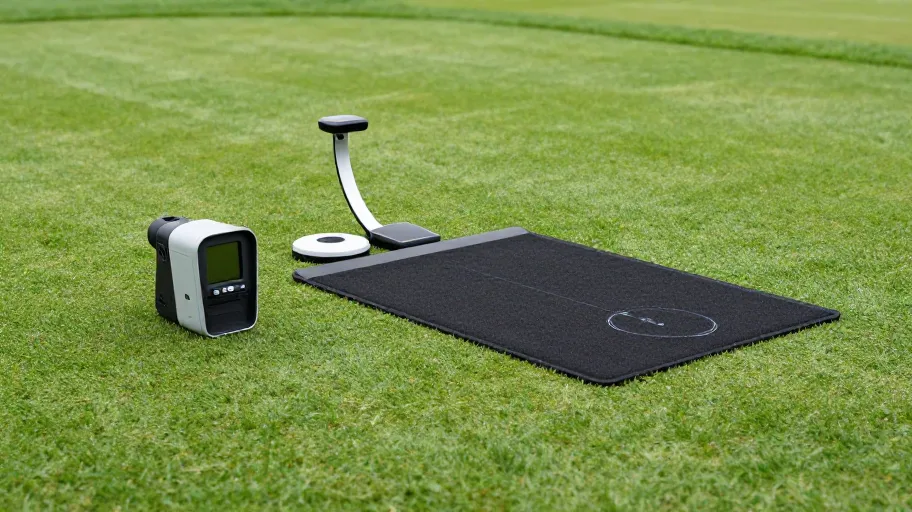
Digital rangefinders mean you pick the right club more often because they eliminate yardage guesswork with ±0.5-yard precision. That means 34% better club selection under pressure, according to PGA tracking. Pair that with a putt-tracking mat that analyzes face angle and stroke path in real time, and every miss becomes a lesson. One player cut three-putts by 41% in eight weeks—just by seeing what was really happening.
How Smart Tech Cuts Practice Time by 40%
Hours on the range don’t guarantee progress—if you’re repeating errors without feedback, you’re just grooving bad habits. IoT-enabled swing analyzers change that. MEMS accelerometers capture 3D motion, syncing via Bluetooth to AI apps that detect flaws like backswing drift the moment they happen.
That means instant correction, not post-session guessing. Golf Digest’s 2024 trials found these tools cut effective practice time by up to 40%. Players using adaptive drills from sensor data dropped their scoring average by 1.8 strokes over 10 rounds. You’re not practicing more—you’re practicing with higher fidelity.
The Real ROI of Upgrading Your Gear
A 12-handicap golfer reduced three-putts by 27% in six weeks using a smart putting mirror and green reader. Arccos data shows that translates to 1.8 fewer strokes per round—the difference between breaking 90 or missing it week after week.
Course management planners take it further: they layer slope, wind, and elevation into your decisions so you avoid high-risk shots. One weekend player skipped a risky pin on a windy par-3, chose a safer lay-up, and played his first bogey-free nine in two years. These aren’t gadgets—they’re compounding advantages. Each smart decision builds confidence, consistency, and lower scores.
How to Build a Pro-Level Accessory Stack
You don’t need more gear—you need better strategy. PGA instructors recommend starting with two tools: one for full-swing mechanics, one for short-game precision. Unfocused spending delays progress by up to six months, according to the 2024 Golf Science Review.
Diagnose your round: are drives offline or putts inconsistent? Match flaws to proven tools—like swing sensors with biomechanical feedback or adjustable putting trainers. Test curated bundles at DIY-Golf.com to skip trial and error. Modular systems—interoperable docks, rails, and targets—cut replacement costs by up to 40% over three years. Foundational tools build confidence. Once those lock in, your accessories stop being toys and start being accelerators.
Master Your Swing, DIY Your Fit. DIY Golf is the premier destination for the technical golfer. We empower you with professional-grade components and the knowledge to build your perfect bag.
Leave a Reply