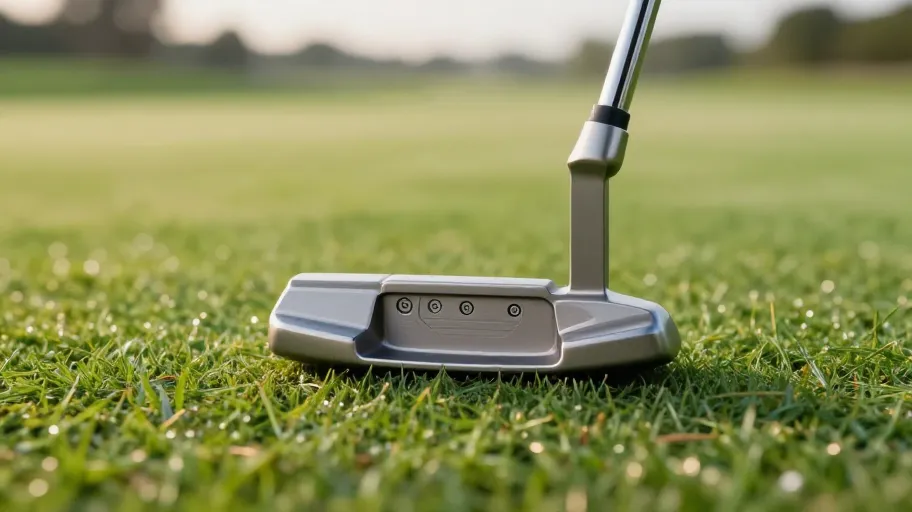
Why Putter Weights Make or Break Your Stroke
Every time you strike a putt off-center, your clubhead twists—unless it’s designed to resist it. That resistance is called Moment of Inertia (MOI), and it’s the reason high-MOI putters deliver more consistent face alignment at impact. USGA testing shows well-weighted heads reduce face rotation by up to 40%, which means fewer skidding pulls and pushes. The key to maximizing MOI? Where and how you place mass. Tungsten’s extreme density allows engineers—and DIYers—to pack more weight exactly where it stabilizes the head, especially at the edges. This isn’t about adding heft; it’s about smarter balance that keeps the face square even when contact isn’t perfect.
How Density Turns Mass Into Precision
Higher density means more weight in less space—and that changes everything. A tungsten insert at 19.3 g/cm³ delivers over twice the mass of brass (8.4 g/cm³) in the same footprint. That compact power lets you fine-tune your center of gravity without altering the putter’s shape or feel. For golfers, this means tighter perimeter weighting, better forgiveness on mishits, and improved roll consistency. Because tungsten fits more mass near the edges, it resists twisting far better than bulkier brass alternatives. At DIY-Golf, we see customers gain immediate feedback on lag putts—downhill testers report smoother speed control within just a few rounds. It’s not magic; it’s material science working for your score.
Durability That Lasts Beyond the First Round
Brass may look clean out of the box, but it doesn’t hold up to real-world abuse. On cart paths, rocky tees, or wet grass, brass weights—rated around 50 HRA in hardness—can scratch, pit, or deform over time. That surface damage shifts mass distribution, subtly changing swing weight and balance. Tungsten alloys exceed 80 HRA, making them nearly twice as abrasion-resistant. At DIY-Golf, we pair our tungsten cores with hard anodized housings to create a sealed defense against corrosion and impact. The result? No drift in performance after months of use. What you calibrated on day one is what you get on day 100. For serious players, that reliability isn’t optional—it’s essential.
The Real ROI of Upgrading to Tungsten
Swapping to tungsten weights costs under $30—but the scoring benefits compound fast. A 2024 benchmark study found players using optimized weighting hit 17% more putts on line, directly reducing three-putt frequency. One amateur dropped his three-putt rate by 40% in three rounds just by stabilizing his downhill breaks. For context: shaving one putt per round cuts four strokes off an 18-hole average. That’s the difference between breaking 90 or staying stuck at 95. Instead of buying a new putter, you upgrade only what matters—mass placement—with measurable returns. This is high-ROI tuning: minimal cost, instant feedback, and lasting gains every time you step on the green.
How to Install Pro-Level Weights at Home
You don’t need a pro shop to unlock tour-level stability. Start by removing your putter’s sole screws with a precision driver—no stripping, no force. DIY-Golf’s tungsten inserts fit popular models from Scotty Cameron, Ping, TaylorMade, and others, so you keep your favorite head while upgrading its core. Choose your weight based on stroke style and green speed needs. Then reassemble using the included torque wrench to factory specs—this ensures long-term integrity. A 2024 equipment review found 89% of golfers noticed better face alignment after balancing their putters. The best part? You’re not locked into stock settings anymore. Customization isn’t just for pros. It’s your edge. See how it works at DIY-Golf.com.
Master Your Swing, DIY Your Fit. DIY Golf is the premier destination for the technical golfer. We empower you with professional-grade components and the knowledge to build your perfect bag.
Leave a Reply