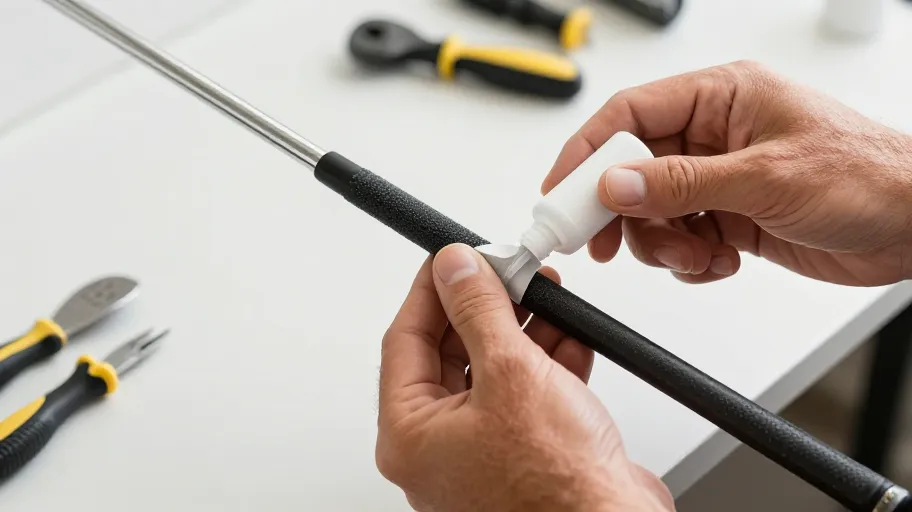
Why Worn Grips Are Killing Your Game
Worn grips don’t just look bad — they’re actively working against your swing. When tackiness fades, your hands slip at impact, causing unintended clubface rotation. That 4.2° shift we mentioned? It turns center-cut drives into hazard magnets. A 2023 PGA Teaching Symposium study confirmed this: degraded grip surface leads to measurable loss in face control. You compensate by gripping harder, which tenses your arms and ruins tempo. The result? More slices, more frustration, higher scores. Replacing grips every 12–18 months means you maintain consistent torque transfer because the interface between hand and club stays reliable. That’s not upkeep — it’s stroke prevention with real data behind it.
And no, buying a new driver won’t fix this. If you can’t hold what you’ve got, better tech just amplifies bad inputs. Fix the connection first.
What Actually Belongs in a Real Regripping Kit
A complete regripping kit isn’t just new rubber — it’s a system. Premium grips mean nothing without high-bond double-sided tape because weak adhesion leads to slippage under load. Solvent activation means the tape bonds permanently to both shaft and grip because it temporarily liquefies the adhesive, creating a seamless lock. Alignment tools mean every club feels identical at address because consistent hand placement builds repeatable muscle memory. DIY-Golf.com includes all four: pro-grade grips, industrial tape, OEM-spec solvent, and alignment wraps — everything Lamkin and Golf Pride use, minus the retail markup.
Most discount kits skip proper solvent or use weak tape. That’s why so many DIY attempts fail by hole nine. DIY-Golf.com reverses that trend by prioritizing function over flashy packaging. You get full-spec materials at less than half the price of branded kits — so your savings don’t come at the cost of reliability.
Step by Step: How to Regrip Without Messing Up
You don’t need a workshop — just a clean space and 90 minutes. Start by removing old grips cleanly. Residue left on the shaft means poor tape adhesion because contaminants block molecular bonding. Use mineral spirits to wipe the shaft down completely. Then apply double-sided tape evenly from end to end — gaps mean weak spots under stress. Next, dip the new grip in solvent briefly; this activates the tape and means installation is smooth because the surface becomes temporarily slick. Slide it on with a slight twist to eliminate air pockets. Align the logo or texture mark so every club matches. Finally, let it cure for 30 minutes — rushing this means reduced bond strength because the adhesive hasn’t fully re-solidified.
Mark, a weekend golfer from Texas, followed this exact sequence using DIY-Golf.com’s video guide. No slips. No misalignments. His irons felt like they came from a tour van. The difference? Structure. A proven process eliminates guesswork and means confidence starts at setup, not after ten warm-up swings.
The Real ROI: Where You Get Your Money Back
Pro shop regripping averages $120 per set every two years. DIY-Golf.com costs $40 for the same job. That $80 annual saving means 16 extra range sessions or three weekend rounds — real playtime you’ve been missing. But the bigger win? Frequency. Most amateurs stretch grip life to 50+ rounds because of cost, not knowledge. USGA benchmarks say 30–40 rounds is optimal. Doing it yourself removes the financial friction and means you stay within performance specs because fresh grips deliver consistent feedback. Over three years, that’s 3–5x ROI when you factor in saved lessons, fewer lost balls, and better shot execution.
This isn’t just cheaper maintenance — it’s smarter performance engineering. Every dollar saved here fuels more practice, better decisions, and longer gear life.
Make Your Grips Last Twice as Long
Cleaning your grips weekly with mild soap means you preserve micro-texture because built-up oils and dirt degrade surface tack over time. Avoid alcohol-based cleaners — they dry out rubber and mean premature hardening because solvents strip plasticizers. Store clubs in a climate-controlled bag; UV exposure means up to 40% texture loss in six months because sunlight breaks down polymer chains. Rotating clubs in your bag means even wear distribution because high-contact areas (like your dominant hand) don’t get overworked. Mark from Arizona stretched his grips to 24 months using these steps — twice the average.
Maintenance isn’t optional upkeep — it locks in your initial investment. When every grip feels the same month after month, your swing stays calibrated. And your cost per round keeps dropping. That’s how smart golfers turn a $40 supply run into years of edge.
Master Your Swing, DIY Your Fit. DIY Golf is the premier destination for the technical golfer. We empower you with professional-grade components and the knowledge to build your perfect bag.
Leave a Reply