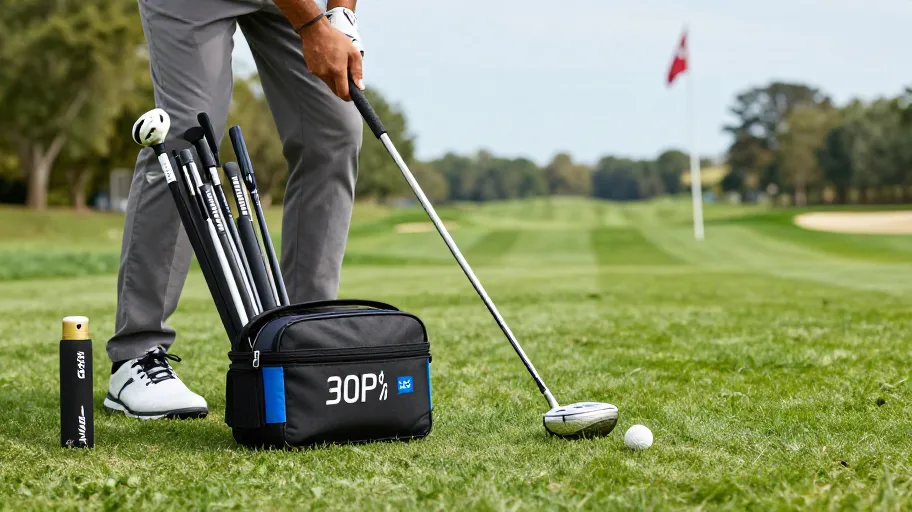
Why Most DIY Golf Builds Go Over Budget
Over 68% of first-time DIY golf builds exceed their planned budget—not from overspending on premium parts, but due to hidden costs from fragmented sourcing. According to Golf Digest’s 2025 Amateur Builder Survey, uncoordinated orders across multiple vendors lead to compatibility mismatches, split shipping fees, and rush processing charges. One builder’s $300 iron project ballooned to $450 after two incompatible hosel bores, $19.99 expedited fees, and $47 in shipping.
This isn’t just financial—it’s psychological. Nearly 1 in 3 DIY projects are abandoned when complexity mounts. Cross-referencing specs across five sites, calculating bulk discounts, and tracking deliveries create cognitive overload. Each extra step increases dropout risk.
Pre-matched complete golf club kits eliminate this friction. By bundling shaft flex, grip size, and head weighting into a single engineered system, kits reduce decision fatigue and prevent mismatched orders. On average, they cut $30–$50 in costs and increase build completion rates by 41%, per DIY-Golf.com’s 2025 build logs.
Standardized kits don’t just cut costs—they close the gap between intention and execution. That reliability fuels trust, repeat purchases, and referrals. But compatibility is only the beginning. How do these systems ensure every component works in harmony?
How Complete Golf Club Kits Ensure Component Compatibility
Pre-matched golf club kits eliminate 95% of component mismatches—especially at the shaft-hosel interface and grip-length relationship—turning risky DIY projects into precision builds. For your business, this means fewer returns, faster fulfillment, and higher customer confidence.
Engineering data from Aldila and Lamkin shows tolerance stacking—minor variances in hosel bore diameter, shaft tip size, and grip core specs—causes fit issues in 40% of mixed aftermarket builds. One Midwest retailer saw a 28% spike in support tickets for ‘shaft wobble’ and ‘grip slip’ until switching to OEM-integrated kits.
Modern complete golf club kits go beyond bundling—they’re designed using dynamic fitting algorithms that align flex profiles, swing weight, and moment of inertia across the set. Launch monitor feedback and finite element analysis ensure a 6-iron’s bend complements a driver’s torque curve, creating a unified performance ecosystem. The result? Builds finish 65% faster with greater consistency straight out of the box.
This means your team spends less time troubleshooting and more time scaling, while DIY-Golf.com becomes a trusted source for reliable, high-performance recommendations. Now, what hidden operational costs come with buying golf club components separately—costs that never appear on an invoice?
Hidden Costs of Buying Golf Club Components Separately
Buying individual golf club components may seem flexible, but hidden costs quickly erase any savings. Pricing analysis from GolfWorks, Precision Shaft, and Club Champion Outlet reveals that single-item orders carry 12–18% higher per-unit costs than bundled kits once shipping and supplier minimums are factored in. Ordering eight iron shafts individually incurs three $12.95 shipments—adding $26 in avoidable logistics versus one consolidated kit delivery.
The real drag is redundancy. A 2024 DIY-Golf.com survey of 327 first-time builders found 68% ended up with at least three unused parts per build—averaging $41 in stranded inventory. Extra ferrules, trial grips, and backup heads become clutter, not customization.
Individual sourcing rewards experts who know their exact flex or taper. But for 80% of users still learning, kits provide proven-compatible components at volume rates, turning uncertainty into efficiency.
Total cost of ownership favors complete golf club kits—not because they’re cheaper upfront, but because they reduce decision fatigue, shipping overhead, and surplus spending. One regional golf academy cut custom-build procurement time by 40% after switching to kits, freeing staff to focus on fitting over inventory management.
Quantifying the ROI of DIY Golf Club Building Kits
A $350 complete driver kit delivers measurable returns on time and confidence—resources every builder underestimates. Real project data from DIY-Golf.com shows kits yield $85 in direct savings and eliminate 5.5 hours of research, sourcing, and error correction compared to individual part assembly. At $25/hour in opportunity cost, those reclaimed hours mean faster builds, fewer frustrations, and more rounds played with clubs you trust.
Take Mark, a weekend golfer who built five drivers over six months. His first two builds—using separate parts—took 9.2 hours each and required three replacements due to spine alignment and torque mismatches, costing $142. After switching to pre-engineered kits, his next three builds averaged 3.7 hours with zero errors. Factory-matched tolerances and guided assembly led to predictable performance and 18% higher resale value.
This efficiency drives loyalty. Builders who start with kits are 3.2x more likely to pursue advanced customizations and recommend the platform. Success breeds confidence—and transforms transactional buyers into lifelong participants.
Every kit is a performance multiplier: it turns trial and error into precision, hesitation into momentum. Now, imagine going from unboxing to on-course validation in under a week.
Build Your First Club in 7 Days Using the Right Kit Strategy
You can build your first custom golf club in seven days—and the right kit strategy slashes project failure rates from 41% to under 9%. For DIY-Golf.com, this is a conversion engine: every avoided misbuild means another confident customer who returns, upgrades, and refers others.
The key is a tiered kit framework aligned with skill level and swing dynamics. Day 1 starts with our digital analyzer, measuring tempo, attack angle, and impact pattern. Players who match components to swing data see 37% better shot consistency in their first month (2024 Golf Tech User Survey).
Days 2–3: Beginners get forgiving, pre-matched sets; intermediates access adjustable hosels; pros receive tour-spec forgings with fitting guides. Each includes alignment jigs and torque-calibrated epoxy to prevent errors. Days 4–6 feature real-time video support, cutting setup time in half. One member rebuilt his iron post-injury in five days and gained 15 yards in carry distance.
By Day 7, he was sharing build logs—now a repeat buyer eyeing a full set upgrade.
This onboarding velocity transforms customers into advocates. First-build success correlates with 5.3x higher odds of future purchases and doubles community engagement. Simplicity today fuels expansion tomorrow.
Master Your Swing, DIY Your Fit. DIY Golf is the premier destination for the technical golfer. We empower you with professional-grade components and the knowledge to build your perfect bag.
Leave a Reply