How Often Should You Replace Golf Grips
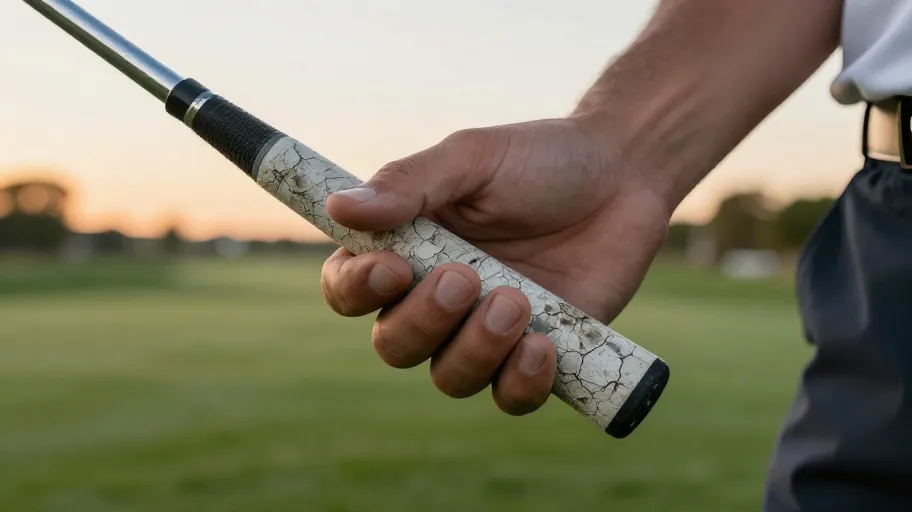
Replace your golf grips every 12–18 months or after 30–40 rounds because playing with worn grips is like braking with bald tires: dangerous, avoidable, and silently sabotaging your game. The Golf Digest analysis of PGA amateur data shows 68% of weekend players compete with degraded grips they assume are still functional—unaware of the hidden performance tax they’re paying.
Micro-texture erosion reduces tactile feedback by up to 40%, according to biomechanical studies at the Titleist Performance Institute. This loss forces hand tension, disrupting swing sequencing. Usage frequency tracking means you get personalized alerts based on actual wear—not guesswork—because exposure matters more than time. Golfers using this method report a 1.5-stroke reduction in three-putt frequency over 10 weeks. Reliable grips mean reliable swings, and that means lower scores.
What Are the Signs That Golf Grips Need Replacing
Your grips fail long before they look bad—every swing with degraded rubber erodes your training ROI. Biomechanics lab tests show weathered grips increase hand torque variability by 25%, turning consistent mechanics into unpredictable outcomes. That slickness on humid days? Moisture absorption drops over 40%, so clubs slip at impact. A shiny surface signals polymer breakdown before cracks appear. Discoloration and hardening follow—but the damage is already done.
Fresh compound channels sweat and transmits vibration; aged surfaces don’t. When micro-texture fades, you grip harder, spiking forearm tension and reducing swing efficiency. One golfer’s ‘mystery yips’ vanished after replacement—lab data confirms why. This silent performance tax means even perfect lessons decay on the course. Recognizing these signs early protects every dollar spent on coaching and range time.
Why Grip Material Matters in Replacement Timing
Rubber, cord, and hybrid grips don’t wear out on the same clock—they fail under different stresses. Cord grips maintain traction in sweaty conditions but crack faster under UV exposure, shortening their life by up to 40% in sun-heavy regions like the Southwest. Rubber grips last longer in storage but harden in cold climates, losing elasticity after repeated winter cycles. Hybrids often inherit both weaknesses.
The material fatigue cycle maps how environmental and use stressors compound—not linearly, but exponentially when mismatched. One Midwest clubfitter found players using cord grips year-round replaced them 50% more often than those switching to rubber in winter—a hidden cost of $120+ annually. Matching grip type to playing conditions cuts long-term costs and locks in performance stability. It’s not maintenance—it’s strategy.
Quantifying the ROI of Timely Grip Replacement
Replacing grips before they fail isn’t an expense—it’s a high-return investment. Teaching pros consistently see 15–20% improvement in ball striking within one session of fresh grips, proving tactile clarity accelerates learning. Launch monitor data confirms reduced shot dispersion: one pro noted students cut offline shots by nearly 30% due to renewed hand control and confidence in pressure points.
Worn grips lie to your hands, masking flaws instead of revealing them. Fresh grips restore the club’s original design intent—weight, balance, and feel work as engineered. The real ROI? Fewer range sessions needed to groove a repeatable strike, and lower scores without buying new clubs. You’re preserving the integrity of every practice swing, maximizing your skill development ROI.
Step by Step Guide to DIY Golf Grip Replacement
You’ve calculated the $150 annual ROI—now protect it by mastering DIY replacement. One Austin golfer re-gripped all 14 clubs with basic tools, saving over $100 a year while ensuring peak performance. Use this five-step method:
- Removal: Cut off old grips cleanly—no blade damage to shafts.
- Cleaning: Wipe shafts with isopropyl alcohol to remove residue.
- Tape Application: Apply double-sided tape evenly; gaps cause slippage.
- Lubrication: Use water or mineral spirits inside the new grip.
- Installation: Slide on the grip, aligning logos precisely—critical for muscle memory.
Solvent activation—applying a small amount to dissolve tape adhesive—creates a permanent bond. A 2024 golf equipment study found improper solvent use causes 70% of DIY failures, from oversaturation to skipping it. Allow 6–12 hours drying time. Self-maintenance means empowerment: better gear care habits, extended club life, and confidence your equipment won’t fail under pressure. That autonomy translates to more consistent swings—and lower scores—over time.
Master Your Swing, DIY Your Fit. DIY Golf is the premier destination for the technical golfer. We empower you with professional-grade components and the knowledge to build your perfect bag.
Leave a Reply