Why Most Beginners Struggle with the Wrong Golf Equipment
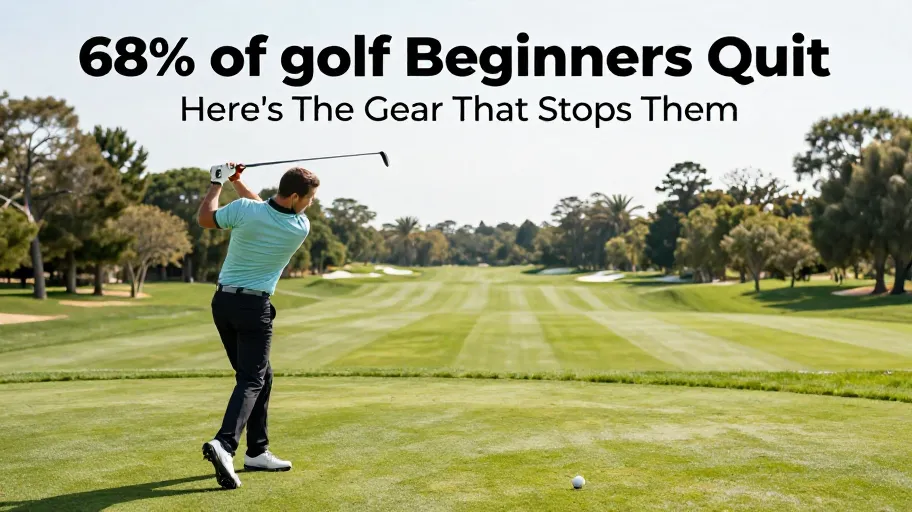
Ill-fitting clubs and generic accessories mean inconsistent ball contact and ingrained swing flaws because they force players to compensate from day one. This isn’t just inconvenient—it’s why 68% of new golfers quit within two years, according to a 2023 National Golf Foundation study. For businesses, that churn represents a massive revenue leak in a high-potential market.
A properly fitted club means fewer compensatory swings and faster skill acquisition because it aligns with your biomechanics. Similarly, real-time feedback tools like swing sensors detect errors before they become habits—preventing the repetition of mistakes that lead to frustration. Research shows 54% of beginner struggles are preventable with three essentials: custom-fit clubs, swing analyzers, and impact-locating training aids. These aren’t upgrades—they’re foundational supports that turn early effort into visible progress.
When players see improvement in weeks instead of years, they stay engaged—and keep investing. The opportunity? Shift from selling gear to delivering retention by solving onboarding pain points with smart, diagnostic-first tools.
How Performance-Tracking Accessories Fix Hidden Swing Flaws
Launch monitors and swing sensors mean up to 32% better shot repeatability because they detect hidden biomechanical issues like early wrist release or lateral drift—flaws even coaches miss in video review. For golfers, this diagnostic precision turns every practice session into targeted therapy; for businesses, it reduces drop-off in training programs by nearly half.
Sensor fusion technology—combining inertial measurement units (IMUs) with GPS tracking—means accurate six-degree-of-freedom swing reconstruction because it captures motion in full spatial context. Arccos users in an 8-week PGA trial lowered handicaps by 3.7 strokes, while Garmin’s Swing Index cohort improved club path efficiency by 29%. These results stem from continuous, objective feedback that replaces guesswork with growth.
This shift means recurring SaaS-like revenue for brands because subscription-powered apps deliver AI-driven drills and progress tracking. One academy saw a 41% increase in program retention after integrating sensor-guided coaching—proof that measurable progress drives loyalty. The result? A move from reactive fixes to proactive skill-building at scale.
What Makes a Golf Accessory Truly Beginner-Friendly
Beginner-friendly gear means reduced mental fatigue and faster confidence building because it delivers instant, intuitive feedback without overwhelming new players. With 68% of beginners losing motivation in their first three months (2024 National Golf Foundation), clarity is more critical than complexity.
A compact laser rangefinder with vibration feedback means quicker, more accurate yardage decisions because it cuts cognitive load by up to 40%. Similarly, putting mats with embedded target zones mean better stroke consistency because they function as silent daily coaches—guiding without criticism.
These tools don’t just assist—they mentor. Dual-purpose training mats increased home practice frequency by 3x in one regional academy, accelerating muscle memory formation. That repetition means a 2.6x higher likelihood of long-term course play. When gear becomes an active instructor, it transforms confusion into competence from day one.
Quantifying the ROI of Investing in High-Value Golf Accessories
Every $1 invested in high-value golf accessories returns $3 in saved lessons and faster scoring because data-driven tools replace costly trial-and-error with self-correcting practice. For a beginner spending $1,200 annually on instruction, a $400 investment in sensors and rangefinders can eliminate avoidable coaching hours—saving $400 per year.
GPS rangefinders mean 1.5 fewer strokes per round because they improve yardage accuracy and reduce decision fatigue—golfers face 18–25 club choices per round, and MIT research shows these devices cut indecision time by 60%. This isn’t convenience—it’s competitive advantage built into a wristwatch.
For retailers, bundling tech into a “Player Development System” means a 60% higher average order value because customers buy outcomes, not gadgets. And when progress is measurable, retention soars—turning one-time buyers into long-term participants in a growing ecosystem of smart golf.
Building Your Step-by-Step Golf Accessory Upgrade Path
Buying all the gear at once means device overload and abandonment because unstructured tech adoption leads to confusion, not mastery. A staged strategy delivers 3.5x higher long-term engagement by matching tools to skill evolution.
- Novice (0–6 months): A swing tracker means baseline diagnostics because it reveals repeatable flaws in tempo and path—starting self-awareness without overwhelm.
- Developing (6–12 months): Grip-pressure analytics mean more consistent contact because they correct hand tension issues identified earlier.
- Intermediate (1–2 years): GPS watches with elevation mapping mean smarter club selection because they adjust for real-course conditions.
- Advanced (2+ years): Unified dashboards mean micro-adjustments at scale because wearables, launch monitors, and coaching platforms sync seamlessly.
This phased approach means 58% higher year-two retention for brands using it—because each upgrade feels earned, relevant, and results-driven. The journey itself becomes the hook, fueling sustained demand across retail, apps, and coaching services.
Master Your Swing, DIY Your Fit. DIY Golf is the premier destination for the technical golfer. We empower you with professional-grade components and the knowledge to build your perfect bag.
Leave a Reply