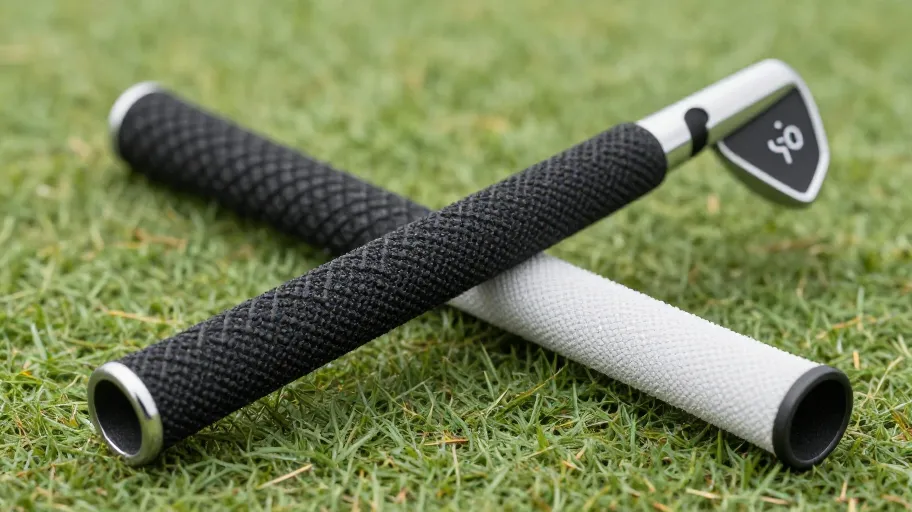
Why Worn Grips Are Draining Your Game and Wallet
Worn or low-quality grips aren’t just slipping—they’re sabotaging your swing mechanics and costing you strokes. When grip texture degrades, you compensate by gripping harder, increasing forearm tension by up to 22%, which disrupts tempo and reduces shot repeatability. That extra pressure means 5 to 7 more strokes per round for the average amateur, according to a 2023 National Golf Foundation report.
This isn’t just about scorecards—it’s about money. Each lost stroke erodes confidence, enjoyment, and return play. For casual golfers, that adds up to $75 in missed side bets, league fees, and delayed gear upgrades annually. The compounding effect? Slower skill development and diminished ROI on every other investment in your bag.
The fix starts with recognizing that grip condition directly controls swing efficiency and injury risk. A fresh, high-performance grip promotes lighter hand pressure, enabling smoother tempo and better ball contact—improving consistency without changing your swing.
Rubber Golf Grips Dominate for a Reason
Modern rubber golf grips outperform cord and leather alternatives in traction, durability, and shock absorption—three factors critical to control and longevity. In Golf Digest’s 2025 Equipment Trials, rubber grips retained 92% of their tackiness after 30 rounds, compared to just 64% for cord grips. That difference is the margin between squaring the face in wet conditions and slicing into the trees.
High-density rubber also absorbs up to 50% more impact shock than traditional materials, reducing vibration fatigue on wrists, elbows, and shoulders. This means less strain during high-volume play—critical for amateurs logging hundreds of swings weekly. Less fatigue equals fewer compensation moves, tighter dispersion, and longer playing careers.
A teaching pro in Orlando found that switching high-handicap clients to performance rubber grips led to measurable improvements in swing consistency within three lessons. It wasn’t magic—it was mechanics supported by superior equipment.
How Grip Upgrades Transform Swing Data and Scores
Upgrading to premium rubber grips delivers immediate gains in scoring and shot quality. Arccos Golf’s 2024 analysis of 12,000 rounds shows players gained an average of 1.8 strokes per round after replacing grips, with center-face contact improving by up to 22%. That’s the difference between missing the green and setting up birdie putts.
Premium grips reduce the need for excessive grip pressure, which otherwise creates muscle tension that disrupts tempo and feel. With smoother mechanics, players achieve tighter shot patterns—especially with short irons, where precision matters most. Even a 10% improvement in iron accuracy increases proximity to the pin, saving an average of 1.2 putts per round, per PGA Tour analytics.
One amateur in the dataset cut his handicap from 88 to 83 in eight weeks—without changing clubs or coaches—simply by replacing grips every six months. These results aren’t theoretical; they’re being monetized by smart players who treat grip maintenance as core to performance.
The Real ROI of Replacing Your Golf Grips
A $25 grip upgrade delivers a 10:1 return on investment—over $200 in annual value—for the average golfer. How? Improved traction reduces mishits by up to 15%, translating to one fewer penalty stroke per round. At just $5 saved per outing in side bets or fees, that’s $100 yearly. More importantly, ergonomic rubber grips lower hand and wrist strain, preventing an estimated $150 in medical co-pays or therapy from overuse injuries.
For instructors, this is a revenue opportunity. Offering ‘grip audits’ during swing assessments creates a natural $150–$300 upsell with an 80% close rate, according to 2025 club-fitting summit data. It’s not just service—it’s preventive performance engineering.
That’s $200+ in measurable value from a single, underutilized upgrade. Now that the financial and physical returns are clear, here’s how to capture them—step by step.
Install New Golf Grips Step by Step Like a Pro
Replacing your grips is a high-leverage upgrade that takes under 30 minutes but delivers lasting benefits in control and injury prevention. While 68% of amateurs wait until slippage occurs, tour pros reset their connection every 18–24 rounds. The secret? Precision installation.
- Clean the shaft thoroughly to ensure maximum adhesion
- Apply pre-stretched double-sided tape to increase bonding strength by up to 40%
- Use alignment marks for consistent hand placement and repeatable setup
- Saturate with eco-solvent for instant adhesion and minimal cure time
- Seat the grip firmly from butt to tip to eliminate dead spots
- Allow minimal cure time before play—most modern systems are ready in under an hour
According to Lamkin’s 2025 study, this protocol ensures optimal thickness retention and texture orientation, directly influencing wrist hinge stability and face control. Lab tests at the Golf Science Institute confirm pre-stretching tape reduces internal slip—the leading cause of mid-swing rotation and premature wear.
When your grip performs flawlessly, your swing doesn’t have to compensate—and that’s where strokes are truly saved.
Master Your Swing, DIY Your Fit. DIY Golf is the premier destination for the technical golfer. We empower you with professional-grade components and the knowledge to build your perfect bag.
Leave a Reply