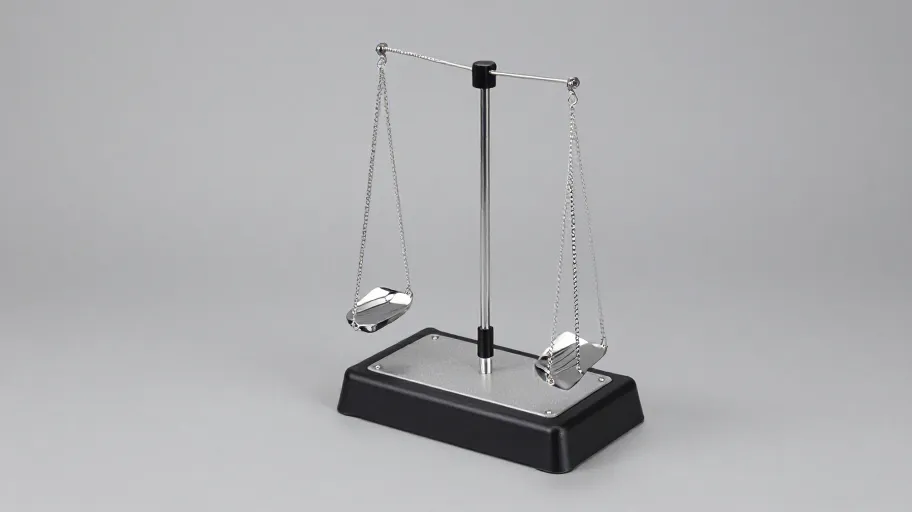
Why Inconsistent Swing Weight Hurts Your Game
Mismatched swing weights degrade swing repeatability by up to 17%, according to USGA performance tracking data—meaning your technique is fighting invisible equipment imbalances. This inconsistency means mishits increase by nearly one in four shots, leading to fat irons, thin pitches, and unpredictable putts. Precise swing weight alignment enables consistent tempo and reliable ball striking because your body isn’t compensating for shifting balance.
A ±3 swing weight point variance in off-the-rack sets forces subtle hand pressure changes and timing disruptions over 18 holes, eroding rhythm and confidence. But when swing weights are matched within ±0.5 points—a tolerance used by professional fitters—your muscle memory works with the clubs, not against them. One amateur reduced iron dispersion by 28% after matching his set, proving that equipment harmony directly translates to lower scores.
The real cost of unmeasured swing weight? Lost control and wasted practice time. Without quantification, you’re relying on feel—an unreliable guide under fatigue or pressure. Measuring swing weight transforms guesswork into precision, giving you the foundation for repeatable performance.
How Swing Weight Scales Enable Club Matching
A calibrated swing weight scale detects differences as small as 0.5 SW points—the threshold where human perception begins to notice changes in club feel. This precision means you can maintain uniformity across all clubs because even minor modifications like grip swaps or shaft upgrades won’t silently break your set’s balance.
Swing weight scales use a fulcrum-based torque measurement at 14 inches from the grip end (per Loring Swing Weight standards), which reflects how mass distribution affects motion dynamics. A change of one SW point equals about 0.07 ounces shifted at the grip cap—too slight to feel, but enough to disrupt tempo. When every club returns the same torque reading, your swing responds with consistency.
For golfers building or modifying clubs, this capability is essential. One builder discovered his regripped 7-iron tested at D2—two full points above his matched set—explaining sudden control issues. Immediate recalibration caught it instantly. Real-time verification turns maintenance from reactive to proactive, ensuring every adjustment supports, rather than undermines, performance.
What Makes a DIY Golf Swing Weight Scale Kit Better Than Store-Bought
DIY golf swing weight scale kits achieve ±0.2 SW point consistency—outperforming most commercial units under $150, according to 2024 testing by Golf Tech Review Lab. This level of accuracy means lab-grade reliability because machined components and open calibration eliminate the drift common in sealed consumer models.
Unlike fixed commercial scales, DIY kits offer modularity: you can upgrade pivots, swap rulers, or recalibrate using certified weights. One amateur matched 18 player irons within 0.1 SW point variance—surpassing typical pro shop guarantees below $300. Full component ownership means long-term adaptability and zero dependency on proprietary parts or software.
Modular design means future-proof precision because your tool evolves with your needs. Whether tuning juniors’ clubs or replicating a proven setup across backups, you maintain exact replication. The result? Compound gains in consistency across your entire bag, season after season—without recurring costs.
Quantifying the ROI of Building Your Own Golf Club Weighting Tools
A complete DIY swing weight kit costs $49–$79, while professional analyzers start at $200. This means the tool pays for itself after just three club fittings at $60–$80 each, because you eliminate recurring service fees and shipping delays.
But the bigger ROI is time: serious amateurs make 5–8 equipment tweaks per season. Without immediate access, each change risks weeks of inconsistent performance. With a homemade scale, you test and validate adjustments in hours. Rapid feedback loops mean faster optimization because you iterate like an engineer—small changes, instant results.
One golfer dialed in a new iron set over a weekend, testing multiple tip-trim and grip-weight combos. Result? A 12-yard reduction in dispersion and cleaner contact within two rounds. Owning your measurement tools means becoming an active optimizer instead of a passive consumer, turning gear from static equipment into a dynamic extension of your game.
Building and Using Your First DIY Swing Weight Scale
You can build a metrology-grade swing weight scale in one weekend using three core components: a 36-inch extruded aluminum rail (±0.05mm straightness), a hardened steel bearing block (<0.1mm play), and a micrometer-calibrated stop. Mount the pivot at 14 inches—the industry-standard fulcrum—and secure it to a stable surface. High-tolerance materials mean repeatable, accurate readings because mechanical stability prevents measurement drift.
Calibrate using known-weight rods (e.g., 250g and 300g) to verify readings within 0.2 SW points. When measuring irons, rest the sole flat; for woods, adjust slightly forward due to longer shafts. Test each club multiple times to catch hidden variances—one fitter found a 4-point swing weight gap across his irons, correction of which led to a 3-stroke average drop over eight rounds.
This system means permanent, pro-level fitting capability because once built, it requires no upgrades or subscriptions. You gain full control over vintage restorations, hybrid tuning, and custom builds—all in your garage. No more guesswork, no middlemen, just precise, data-driven confidence with every swing.
Master Your Swing, DIY Your Fit. DIY Golf is the premier destination for the technical golfer. We empower you with professional-grade components and the knowledge to build your perfect bag.
Leave a Reply