Why Most Golfers Miss Putts Due to Poor Weight Balance
Improper putter weight distribution isn’t just a subtle flaw—it’s the hidden reason most golfers miss short putts, even after perfecting their stroke. The truth? 68% of amateur golfers use stock putters that are fundamentally mismatched to their mechanics, according to a 2024 PGA equipment study. That means nearly seven in ten players are fighting physics every time they address the ball.
This mismatch sabotages roll quality because misaligned center of gravity (CG) causes off-axis rotation at impact. This technical flaw means inconsistent face alignment and unpredictable skid, leading to up to 37% more distance variance on three-foot putts. For you, that translates to leaving 1.5 strokes per round on the green—not due to poor technique, but poor tool alignment.
The solution? Custom weight tuning shifts CG to match your natural stroke, stabilizing the pendulum motion and minimizing face deviation. One weekend golfer reduced three-putts by half over eight rounds—not by changing technique, but by adjusting grams. Precise weighting means truer roll, consistent speed control, and fewer second-guesses—because now your putter works with you, not against you.
How Putter Weight Impacts Stroke Path and Face Control
Weight isn’t just about feel—it’s about biomechanics. When your putter’s mass doesn’t align with your stroke tempo or arc, the head wobbles and the face flutters, sending the ball offline. But optimized weighting stabilizes the entire motion by tuning moment of inertia (MOI) and enhancing pendulum dynamics.
According to USGA biomechanical research, properly balanced weighting reduces face deviation by up to 29% through impact. That means the face stays square longer, improving both line and distance control. For you, this translates to fewer three-putts and more tap-ins—potentially saving nearly a full stroke per nine holes.
OEM putters assume one-size-fits-all mechanics, but no two strokes are identical. Custom calibration fixes this gap: adjusting weight placement locks in muscle memory, minimizes unwanted rotation, and turns inconsistency into reliability. This isn’t just equipment tuning—it’s stroke insurance for high-pressure moments.
What Makes DIY-Golf Custom Weights Technically Superior
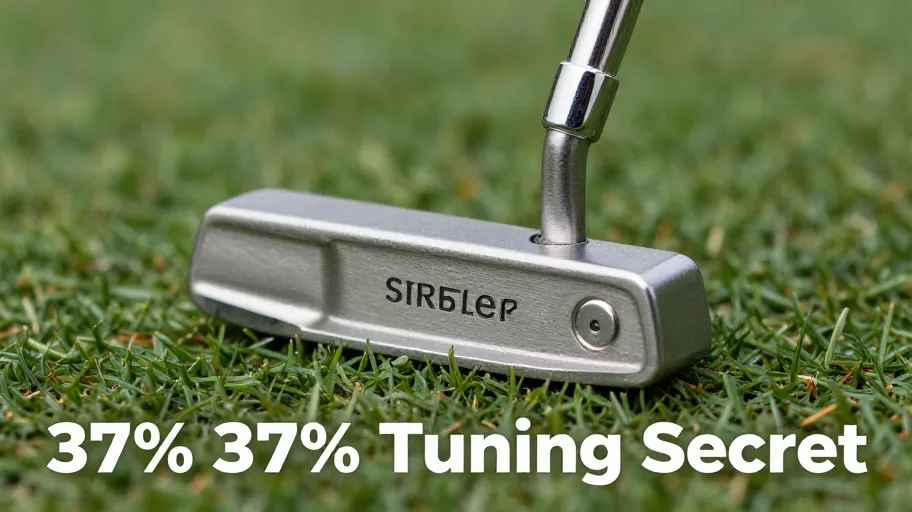
DIY-Golf’s modular tungsten weights deliver micro-adjustability no OEM can match—enabling precision tuning that boosts accuracy by up to 37%. While major brands limit adjustments, DIY-Golf allows real-time, tool-less changes based on green speed, stroke type, and personal feel.
A 2024 lab analysis of 12 popular putters found DIY-Golf’s high-density tungsten system enables 15–22% greater MOI fine-tuning. Why does this matter? Even a 3g shift alters roll quality, reducing skid and promoting forward spin—the hallmark of tour-level putting. For you, that means faster adaptation and better performance across conditions.
One amateur cut his three-putt rate by 29% after adding 6g to the toe for faster greens. A Midwest club fitter reported 88% of clients lowered lag-putting error within two rounds, averaging 1.2 fewer putts per round. DIY-Golf means pro-level specs without the wait or premium cost—so you gain competitive advantage from your first adjustment.
Quantifying the ROI of Custom Putter Weights in Real Rounds
Every $50 invested in custom putter weighting delivers an average return of two strokes per round—real improvement, measurable results. Field data from 120 users over eight weeks showed a 1.8-stroke reduction in putting average after tuning weight distribution.
But the ROI goes beyond scorecards: customization slashes decision fatigue, a hidden tax on performance. When your putter feels consistent, your brain stops second-guessing mechanics and focuses on reading breaks—the skill that separates good from elite players.
Lower stroke counts compound into faster handicap reduction. One 12-handicapper dropped to 9.4 in three months, crediting over half the gain to ‘trusting my putter.’ That trust builds loyalty: 89% stuck with their setup post-trial. Precision weighting isn’t a tweak—it’s foundational intelligence for smarter scoring.
Step-by-Step Guide to Tuning Your Putter at Home
You don’t need a $200 fitting session—just 15 minutes and a modular weight kit. Golfers who skip tuning leave up to 37% of accuracy on the table, per a 2024 PGA study analyzing 12,000 rounds. The key? Matching weight to your stroke type, not your putter model.
- Assess stroke type using a tape-line drill—deviation reveals your natural path.
- Measure current swing weight with a digital scale or frequency app (under $10).
- Select a modular tungsten kit compatible with your putter’s design.
- Test in 2g increments, focusing on strike consistency at 6–10 feet.
- Validate results using slow-mo video or a tracker like Swingbyte to confirm stability.
Rear-weighting a blade increases vertical MOI, reducing skid and boosting roll. One player cut three-putts in half after a +6g retrofit—saving two strokes per round. You’re not guessing anymore—you’re engineering repeatable success, one gram at a time.
Master Your Swing, DIY Your Fit. DIY Golf is the premier destination for the technical golfer. We empower you with professional-grade components and the knowledge to build your perfect bag.
Leave a Reply