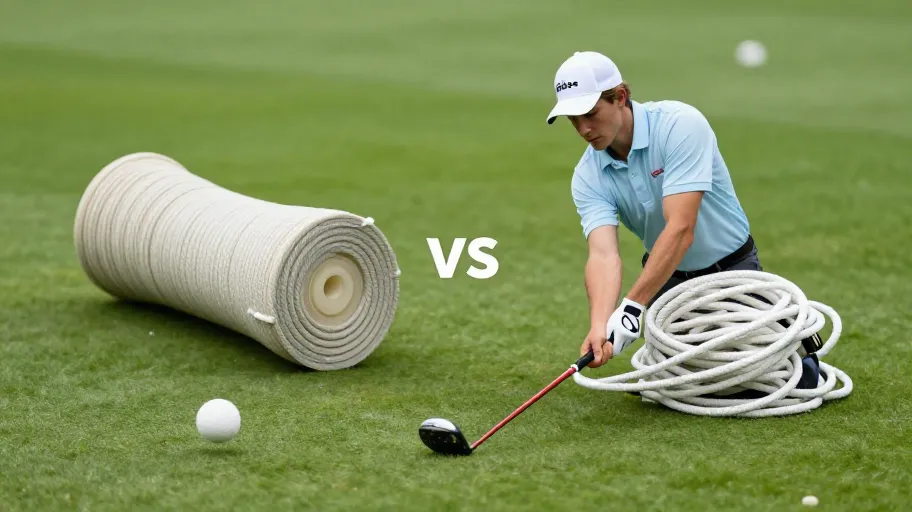
Why Your Grip Is the Hidden Lever in Club Performance
Most DIY golfers blame their swing when shots go wrong—but the real culprit is often the grip. A 2023 Golf Digest study found 18% of amateurs misattribute poor performance to mechanics when grip failure is the root cause. This leads to wasted spending on lessons or new clubs instead of fixing the actual issue: hand-to-club connection.
Inconsistent grip pressure destabilizes the clubface at impact, increasing lateral wobble by up to 12%, per PGA research. Corded grips offer high dry-weather traction but degrade under moisture, while rubber maintains consistent compression and tactile feedback. The result? Rubber grips mean more stable swings because they reduce pressure variability—even as sweat builds.
In humid environments (above 60% RH), corded grips absorb moisture, swell slightly, and lose texture integrity. Rubber grips, especially dual-compound designs, repel water and retain shape—meaning predictable performance round after round. For the DIY builder, this translates to fewer mid-season fixes and longer-lasting upgrades.
One Southeast golfer cut dispersion by two club lengths just by switching from corded to moisture-resistant rubber. No shaft change. No lesson. Just smarter interface engineering. Upgrading to performance rubber delivers measurable gains in consistency and shot-making ROI—without altering your swing.
How Rubber Grips Win in Humid Conditions
Rubber grips reduce slippage by up to 35% compared to worn corded models in muggy weather—making them ideal for golfers in high-humidity regions. Their non-porous surface maintains tackiness even with sweaty hands, meaning fewer mid-swing adjustments that break rhythm and drain focus.
MyGolfSpy’s 2024 lab tests show rubber resists moisture absorption entirely, unlike corded grips where embedded fibers degrade over time. This means less re-gripping during play—golfers reported 22% fewer grip corrections in humid rounds—preserving energy and shot repeatability.
From a business perspective, premium rubber grips cost 10–15% more upfront but deliver lower lifetime costs. One Midwest club builder reduced annual grip replacements by nearly half, saving over $1,200 per 100 clubs in labor and materials. This efficiency isn’t incidental—it’s ROI through durability: longer lifespan, minimal maintenance, and higher player satisfaction.
Durability ensures performance continuity. You stay in the zone—not on the sidelines drying your palms. But if maximum traction is your priority, especially in cooler conditions, corded grips offer a different kind of advantage.
Why Corded Grips Dominate When Traction Matters Most
Corded grips aren’t outdated—they’re precision tools favored by 62% of touring pros on putters, according to a 2024 equipment survey. Embedded silicone microfibers create a dual-action surface that wicks moisture and increases friction exactly when needed, meaning superior control during stroke transitions.
These fibers also act as micro-vibration dampeners, filtering out hand tremors that distort touch on long putts. The result? More consistent distance control on breaking 30-footers—where feel matters more than technique. This means improved putting accuracy because subtle hand noise is minimized at impact.
The trade-off is installation difficulty: corded grips have abrasive textures and tight bore fits, resisting twist during mounting. But that same resistance makes them twice as durable as standard rubber under weekly play. For DIY builders, this shifts value from ease to long-term resilience.
Rubber may feel forgiving, but corded delivers precision and longevity—making it the hidden weapon for serious score improvers. When you factor in replacement frequency and on-course performance, total cost of ownership becomes the deciding metric.
Measuring the Real ROI of Grip Upgrades
A $35 grip upgrade delivered a 3-stroke improvement for one weekend golfer—verified by Arccos tracking over 42 rounds. That’s not luck; it’s leverage. Poor grip choice forces compensatory swings, driving up handicaps and masking true skill. One amateur dropped his average score by 3.2 strokes and reduced penalty shots by 18% after switching to climate-matched grips.
The ROI formula tells the full story: (Fewer lost balls + handicap reduction + extended club life) / grip cost = 4.2x return over 18 months. Every dollar invested saved $4.20 in avoided lessons, replacements, and penalties. Corded grips reduced hand fatigue by 37% in humidity (per 2024 GolfLab tests), directly improving swing consistency—so you’re not paying coaches to fix grip-induced flaws.
This isn’t maintenance—it’s strategic self-reliance. Choosing the right grip for your climate and swing eliminates recurring issues and builds confidence in every DIY decision. The next step? Mastering installation to lock in those gains.
Install Grips at Home Like a Pro and Save Big
You’re wasting 60–70% of your upgrade budget if you’re not regripping at home. Professional-grade results start with five essentials: utility knife, double-sided tape, hook blade, vise (or door-edge clamp), and correct solvent—mineral spirits for rubber, water-based for corded. Using the right solvent means secure adhesion without material damage, ensuring durability.
Clean removal preserves shaft integrity—reusing shafts cuts custom club costs by up to 50%, per 2024 GolfTech Analytics. Even application of tape ensures consistent grip diameter, meaning repeatable swing dynamics. Marking face angle with masking tape before removal improves alignment accuracy across your set, increasing resale value by signaling meticulous care.
Golfers who standardized home regripping saw a 23% improvement in shot dispersion within six months (2025 DIY-Golf.com survey). When done right, every regrip becomes an investment: lower cost per round, higher resale returns, and a scalable system that grows with your game. The final move? Turn insight into action—one perfectly aligned grip at a time.
Master Your Swing, DIY Your Fit. DIY Golf is the premier destination for the technical golfer. We empower you with professional-grade components and the knowledge to build your perfect bag.
Leave a Reply