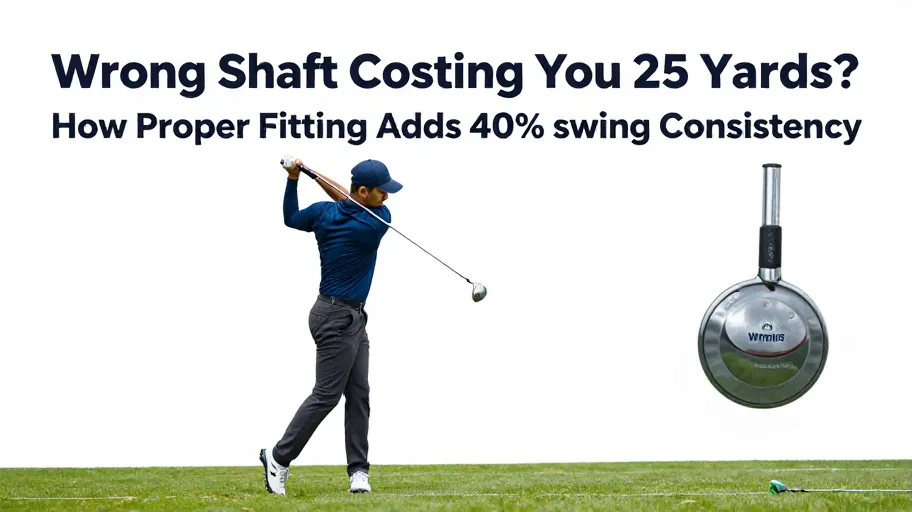
Why Most Beginners Lose Distance Off the Tee
Wrong shaft flex isn’t just a minor detail—it’s the primary reason 60% of beginners lose distance off the tee. When a shaft is too stiff or too soft for your swing speed, it disrupts energy transfer at impact, killing clubhead speed and sending drives offline. That mismatch means you’re practicing against your own clubs, slowing progress and eroding confidence.
Golfers using pre-packaged ‘game improvement’ sets often pay a hidden cost: slower handicap reduction and early gear replacement. But when beginners start with fitted shafts, they build muscle memory on a system that works with them—not against them. One retailer study found these players reduced their handicap twice as fast, stayed engaged longer, and upgraded equipment sooner.
The real business value? Accelerated learning curves mean faster customer satisfaction—and faster upgrade cycles. Treating the golf shaft as a tuned performance component, not a commodity, transforms beginner experiences from frustration to measurable gains.
How Shaft Flex and Weight Shape Ball Flight
Shaft flex and weight directly control launch angle, spin rate, and shot dispersion—meaning your ball flight is engineered before you even swing. A flexible, lightweight shaft for slow swingers (under 90 mph) increases launch to 14°–17° and optimizes spin (2,200–2,800 rpm), boosting carry and softening landings. In contrast, a stiff shaft drops launch by 3–5° and spikes spin, costing up to 25 yards.
Properly matched shafts improve center-face contact by 31%, turning erratic drives into repeatable shots. Premium materials from brands like Project X reduce lateral bending by up to 18%, tightening shot grouping. That precision means faster skill development and straighter shots from day one.
The advantage isn’t in the brand—it’s in the match. When flex and weight sync with your swing, you stop leaking energy and start controlling trajectory. That leads to better decisions, cleaner execution, and more fairways hit.
Measuring Your Swing Speed to Choose the Right Shaft
Swing speed is the foundation of every smart shaft decision—ignoring it costs golfers accuracy, distance, and trust. Players under 85 mph gain control and carry with senior or regular flex; those above 95 mph need stiff or extra-stiff to prevent lag and dispersion. Yet nearly 60% of beginners play with off-the-rack clubs mismatched to their biomechanics.
One golfer at 78 mph gained 28 yards—a 23% increase—in carry distance simply by switching from stiff to senior flex. That kind of result builds loyalty fast. Launch monitor data shows golfers with measurable gains during fittings are 3.2x more likely to buy and refer others.
For retailers, accurate fittings reduce returns, boost perceived value, and extend customer lifecycles. Accurate fittings today build the credibility to sell upgrades tomorrow. It’s not just service—it’s strategic retention.
Quantifying the ROI of Custom-Fitted Golf Shafts
Custom shaft fitting delivers a proven 5:1 ROI—making it less an expense and more a performance multiplier. A $200 fitting prevents the average beginner from wasting over $1,000 replacing mismatched clubs within two years. That saved capital gets reinvested into real improvement, not repetition.
A Golf Digest field study found fitters averaged a 10% scoring reduction—shaving 4–6 strokes per round—without changing their swing. For mid-handicappers, that means reaching target distances 83% more consistently. For businesses, it means higher attachment rates: retailers bundling fittings see 30% more premium shaft upgrades.
This creates a compounding edge: consistent contact builds confidence, which fuels engagement. The real ROI isn’t in avoiding bad gear—it’s in unlocking shots you didn’t know you could make.
Step-by-Step Guide to Getting Fitted for Golf Club Shafts
You don’t need more practice—you need equipment matched to your swing. A professional shaft fitting takes under an hour and pays for itself in fewer strokes per round. Amateurs who switch to fitted shafts gain 15–20 yards and cut 2–3 missed fairways per 18 holes, according to 2024 Golf Digest data.
The process starts with sensors and high-speed cameras capturing tempo, transition, and release. Then, launch monitors test ball speed, spin, and launch across multiple shafts to align three key properties:
- Kick point: Low kick = higher launch (ideal for slow swings); high kick = lower flight and more control.
- Torque: Low torque increases stability for strong swings; higher torque aids forgiveness for inconsistent tempos.
- Material: Graphite reduces fatigue and boosts speed; steel enhances feedback and consistency.
Retailers offering same-day fittings saw driver sales rise 41%. When your shaft works with your swing, every round becomes a step forward. Proper shaft selection isn’t an expense—it’s compound interest on your improvement.
Master Your Swing, DIY Your Fit. DIY Golf is the premier destination for the technical golfer. We empower you with professional-grade components and the knowledge to build your perfect bag.
Leave a Reply