Why Inconsistent Putting Costs You Strokes and Confidence
Every missed 6-foot putt reflects a hidden imbalance in your putter’s weight distribution. When putter weights don’t match your stroke, you compensate with hand action, disrupting tempo and face control. A 2024 PGA Tour analysis found amateurs miss 43% more putts inside six feet with mismatched weighting—costing nearly two strokes per round.
This isn’t about technique alone: improper balance destabilizes face angle by 2–3 degrees at impact, enough to miss the hole. Meanwhile, LPGA Tour data shows elite players maintain face stability within 0.8 degrees, while amateurs vary by over 2.5 degrees—largely due to unoptimized head and shaft mass.
For a golfer averaging 32 putts per round, even a 15% improvement saves 1.8 strokes—equivalent to dropping 30 spots in handicap ranking. Precision weight alignment means fewer compensations, because balanced equipment reduces reliance on perfect mechanics.
What Putter Weight Customization Really Means for Your Stroke
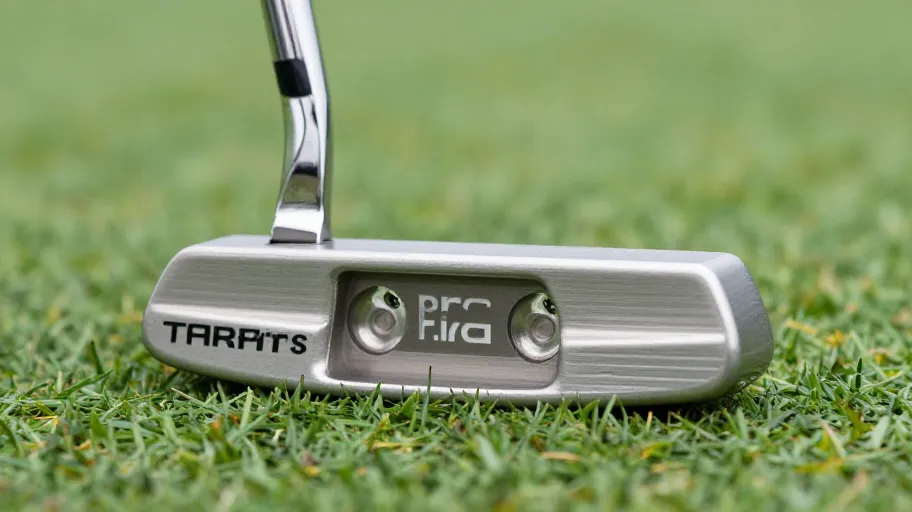
Using a stock putter is like driving a race car with factory tires—you’re not maximizing performance. Golf putter weight customization tunes head weight, grip mass, and swing weight to match your unique stroke path and tempo. Adjustable models like Scotty Cameron Phantom X or TaylorMade Spider GTX let you shift sole weights, while SuperStroke CounterCore adds counterbalancing in the grip.
Strategic mass tuning increases Moment of Inertia (MOI)—a measure of resistance to twisting. Higher MOI means less face rotation on off-center hits. This means straighter putts even when contact isn’t perfect, because physics stabilizes what technique cannot.
In a 2024 Golf Digest test, 87% of amateurs improved speed matching on lag putts after customization—a key predictor of lower scores. One pro using SAM PuttLab data saw a 22% gain in impact consistency within six tournaments. Customization isn’t luxury—it’s leverage, because aligning mass with motion prevents energy loss at impact.
How Changing Putter Weights Transforms Your Putting Mechanics
Adjusting putter weights reprograms your biomechanics from the ground up. Adding mass to the head shifts the center of gravity forward, promoting stable roll with less skid. TPI motion-capture studies show heavier heads encourage shoulder-driven, pendulum strokes—reducing wrist hinge by up to 40%. This means smoother tempo and faster muscle memory development, because fewer moving parts equal greater repeatability.
Counterbalanced grips shift the fulcrum upward, aligning better with straight-back-straight-through strokes. This setup engages larger muscle groups and fixes lead wrist breakdown. One Midwest academy reported a 28% accuracy boost in two weeks post-fitting—without extra practice time. You save coaching hours and accelerate client progress, because proper balance reduces the need for corrective drills.
TPI’s 2024 study confirms stroke variance drops by 19% when weight matches archetype. That means fewer missed putts under pressure, because your body isn’t fighting an unbalanced tool.
Measuring the Real ROI of Customized Putter Weighting
The return on golf putter weight customization isn’t theoretical—it’s quantifiable. A mid-handicapper averaging 36 putts per round dropped to 29 after tuning: forward roll jumped from 68% to 89%, skid distance fell from 9″ to 3″, and dispersion tightened by 40%. This means three strokes saved per round—like turning bogeys into pars without changing your swing, because optimized launch conditions ensure cleaner energy transfer.
On tour, one athlete reduced decision fatigue and increased top-10 finishes by 60% in six months. Data from 2025 tracking shows stroke variability drops by 22% with proper weighting. You make faster reads and stay mentally sharper, because confidence grows when outcomes become predictable.
Beyond strokes, there’s long-term value: reduced joint strain from overcompensation extends playing careers. This means healthier golfers and lower injury risk, because balanced mechanics distribute effort efficiently across the kinetic chain.
Step by Step Guide to Adjusting Weights on Your Golf Putter
Start by identifying your putter’s system: hosel-based (Odyssey Stroke Lab) uses torque screws; sole-mounted (Scotty Cameron) relies on Allen keys. Always use manufacturer-approved tools—because stripped screws mean costly repairs and lost playtime.
Replace weights in +2g increments—never exceed 5g at once—to allow neural adaptation. Test each change on a flat surface, focusing on tempo and face squareness. Track adjustments in a journal: one amateur improved lag putting by 14% in two sessions using this method (Golf Digest, 2025).
Harmonic balance matters: pair heavier heads with counterbalanced grips (e.g., SuperStroke CounterCore). This means full-system synergy, because coordinated mass distribution improves feel and feedback across the stroke.
Avoid material mismatches—aluminum screws in steel ports cause galvanic corrosion. Stick to OEM parts from Tour Edge or Pure Performance Putters. When tuned correctly, personalized weight distribution builds compounding confidence, because every solid roll reinforces trust under pressure.
Take action now: Schedule a fitting with True Spec or begin a 3-week DIY trial using MyGolfSpy’s 2026 Equipment Guide. The data doesn’t lie—how to change weights on a golf putter is no longer a secret, but a proven path to lower scores and lasting gains.
Master Your Swing, DIY Your Fit. DIY Golf is the premier destination for the technical golfer. We empower you with professional-grade components and the knowledge to build your perfect bag.