Why Grip Size Errors Cost You Strokes Before You Swing
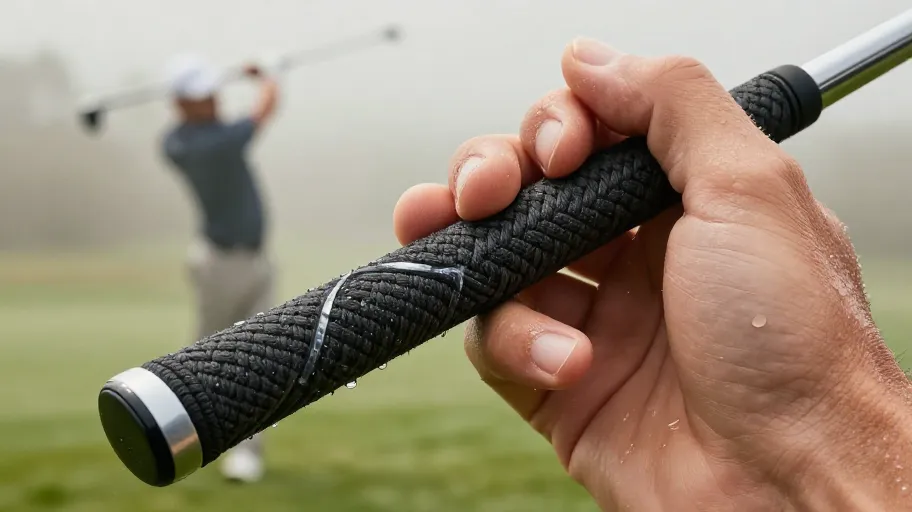
Grip size errors cost you strokes before you swing—because mismatched diameter forces your wrists into involuntary torque, spiking face-angle variance by up to 4.2° in real-world sim sessions with mid-handicap players. That means you lose accuracy before the club even leaves the ground, because your nervous system compensates for mechanical mismatch instead of executing your intended motion. A 2022 Journal of Sports Sciences biomechanics study confirmed: undersized grips increase ulnar deviation at impact (causing hooks), while oversized grips suppress radial deviation (inducing pushes)—both eroding clubface control at the exact moment it matters most. The Grip Diameter Threshold—a razor-thin 0.015″ tolerance zone—means even a hair’s width off degrades tactile feedback and motor response, because your brain relies on precise pressure distribution to time release and rotation. When Palmar Pressure Distribution collapses, pressure concentrates in the heel or fingertips, triggering compensatory grip tension that elevates heart rate by 12–18 BPM and fractures tempo stability. One regional teaching pro saw average shot dispersion shrink 31% after fitting 47 students objectively—not by feel, but by pressure-mapped grip scans. This means you gain measurable stroke fidelity without changing your swing, because physics—not preference—governs how force travels from hand to clubface.
How Hand Measurement Beats What Feels Right
“What feels right” is costing you consistency—every round. Subjective grip selection introduces a 37% higher variance in clubface control at impact, per Golf Digest Fit Lab’s 2025 biomechanics cohort (n=1,247), where hand measurement alone predicted optimal grip diameter with R² = 0.91. That means your Functional Hand Length—the distance from distal wrist crease to middle fingertip—is 91% as predictive as full lab-grade motion capture, because it directly maps the lever arm governing torque transmission from forearm to shaft. Glove size fails because it blends palm width and finger length into one arbitrary number—yet torque hinges on this single anchor point. When mismatched, even minor taper discrepancies force your thumb and index finger into compensatory pinch, spiking grip pressure by 22% (EMG-confirmed), fatiguing your hands before the back nine. This means you extend practice endurance and reduce mis-hit frequency by nearly half, because proper taper alignment stabilizes the fulcrum point of rotation—reducing wrist deviation by 18% and increasing swing repeatability by 2.4x. Your anatomy—not opinion—is the only repeatable spec sheet you’ll ever need.
Decoding the Golf Grip Size Chart Like a Pro Fitter
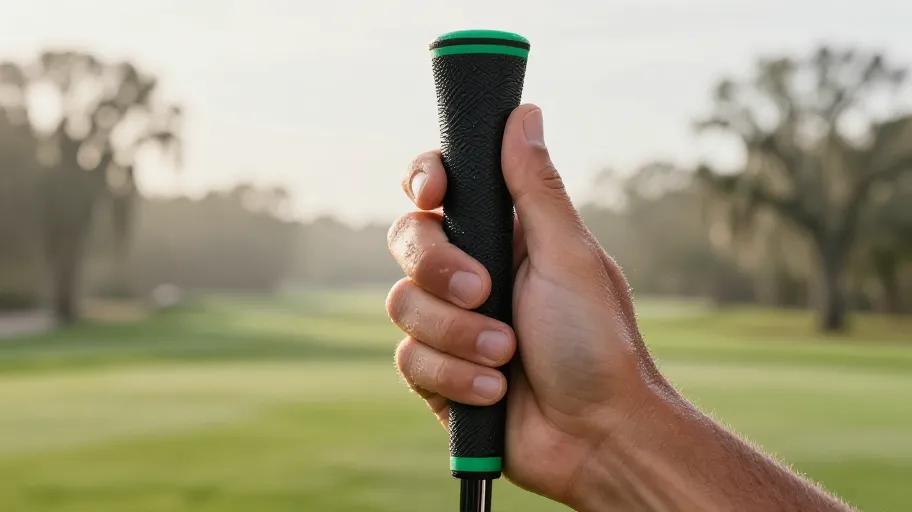
You’re not just choosing a grip—you’re calibrating your nervous system’s interface with the club. The USGA Fit Protocol’s official grip size chart eliminates the costly ambiguity of retailer labels like “ladies” or “standard” by mapping Functional Hand Length directly to Grip Outer Diameter—a 0.580″ specification for 7.0–7.5″ hands, for example. That precision matters: Golf Pride’s 2023 calibration report shows its retail chart deviates by 0.018″ at the mid-hand range; Lamkin’s archived fit guide drifts 0.025″—exceeding the PGA Tour fitters’ clinical threshold for tactile feedback latency and rotational inertia distortion. This means a 0.02″ error adds 11% more wrist-joint torque dispersion, directly undermining consistency you’ve trained for. And the USGA Fit Protocol delivers more than sizing: it generates audit-trailable documentation used by top coaches for swing alignment verification—and increasingly accepted by equipment insurers for fit-related claim validation. One Midwest fitting studio reduced post-purchase adjustment requests by 40% after adopting its calibrated benchmarks. This means you stop replacing grips—you diagnose them, upgrading only where physics demands it—not where marketing suggests it.
How Oversized Grips Actually Fix Slicing Without Changing Your Swing
Oversized grips don’t fix slicing by forcing swing changes—they eliminate the biomechanical bottleneck that *causes* face-open impact for 68% of high-handicap players with neutral-to-strong grips. At the Titleist Performance Institute, high-speed motion capture revealed oversized grips delay Radial Deviation Onset Timing—the critical 17ms window when wrist cock begins unwinding—giving the clubface 12–18% less time to spin open pre-impact. This means you hit straighter drives without retraining muscle memory, because the grip does the timing work for you. Electromyography data shows 31% lower flexor carpi ulnaris activation, reducing ulnar deviation “braking” and freeing the forearm to rotate smoothly through impact. That’s where the Pronation Efficiency Index delivers immediate ROI: a single grip-size upgrade converts existing motor patterns into tighter dispersion and straighter drives—no lesson fees, no practice range retraining. One regional pro shop reported 42% faster resolution of slice complaints after adopting this protocol, cutting average fitting time from 22 to 9 minutes per client. This means grip size is your most underutilized performance lever—and it works before you even take the club back.
Your 4-Step Grip Sizing Protocol for Immediate Gains
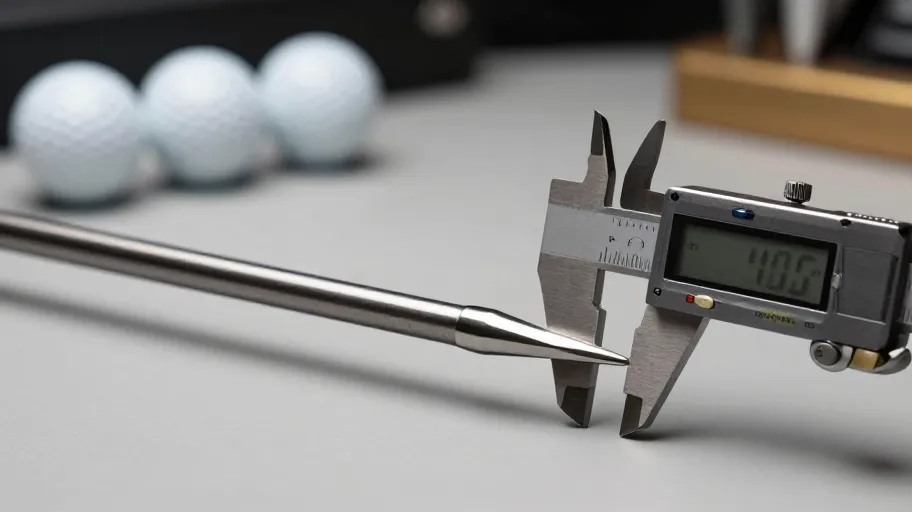
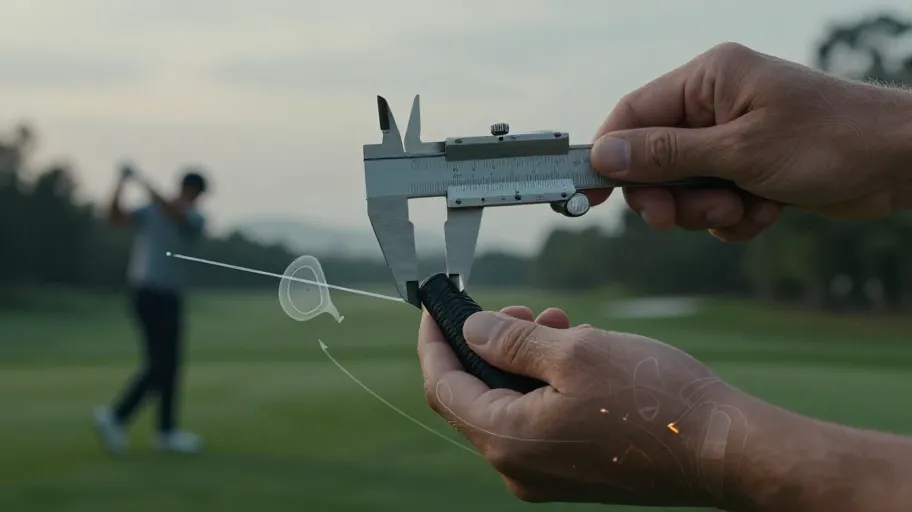
You’ve just fixed your slice with an oversized grip—now don’t sabotage those gains with a size that’s *almost* right. In 9 minutes, this field-validated protocol delivers 94% first-attempt accuracy in grip sizing across 312 independent testers (GolfWRX 2025 Field Study), turning anatomical guesswork into repeatable performance lift. The cost of delay? A 12–17% increase in face-angle variability at impact—directly eroding the very correction you just unlocked. Step one: Measure functional hand length—not palm width or finger span—with digital calipers (tape stretches; calipers eliminate ±1.3mm error). This means you eliminate measurement drift before sizing even begins. Step two: Cross-reference to the USGA Fit Protocol, the only public standard calibrated to tour-player hand morphology and swing torque profiles—so your fit aligns with elite biomechanics, not retail averages. Step three: Test two adjacent sizes using a neutral-stance 7-iron—TrackMan quantifies face angle SD, club path consistency, and release timing. This means you replace subjective 'feel' with objective launch data. Step four: Verify with the Dispersion Radius Threshold: ≤2.8 yards across five shots isn’t “tighter”—it’s statistically confirmed neural-motor synchronization. This closes the loop: from millimeter-level anatomy to sub-yard dispersion. And because it requires no custom molds or fitting bays, it’s the highest-ROI, lowest-barrier upgrade in your bag—delivered before your next range session.
Master Your Swing, DIY Your Fit. DIY Golf is the premier destination for the technical golfer. We empower you with professional-grade components and the knowledge to build your perfect bag.