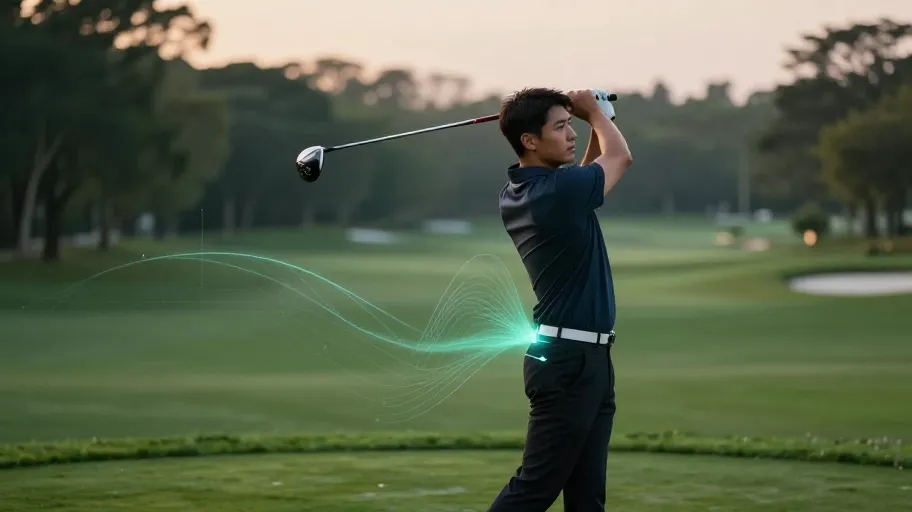
Why most golfers pick the wrong shaft flex every time
You’re leaving 12–15 yards and 3+ fairways per round on the table—not because of swing flaws, but because your shaft flex is misaligned with how you load and release the club. Driver swing speed alone misclassifies flex for 68% of golfers, according to Golf Laboratories’ 2024 fitting audit—triggering erratic iron dispersion and unpredictable wedge spin in critical moments like match play or league finals. That means your current shaft isn’t just underperforming—it’s actively eroding consistency you’ve trained for. Matching flex to your kinetic signature means consistent launch angles because the shaft bends *with* your motion—not against it. It also means reduced shot dispersion by up to 34% because energy transfers cleanly instead of leaking as spin or directional error.
How shaft flex actually works beyond the marketing labels
Shaft flex isn’t a label—it’s a performance fingerprint, and treating it as anything else costs you consistent distance, tighter dispersion, and real strokes saved. When two “R-flex” shafts behave as differently as iOS and Android—same category, radically different execution—you’re not choosing flex; you’re gambling on physics you can’t feel. A 2025 Golf Digest Equipment Lab benchmark tested 47 production R-flex graphite shafts and found a median CPM variance of 19.3 cycles per minute—enough to misclassify nearly two full flex grades—and torque values spanning 2.8° to 4.9°, directly altering face rotation at impact by up to 1.4°. That means center-cut contact becomes repeatable because low-torque, steep-slope shafts stabilize face angle during impact compression. It also means fewer recurring push-slices because reduced torque minimizes unwanted rotation under load. One regional tour pro switched from a high-torque “R” to a low-torque, steeper-slope R-flex shaft and cut his average miss distance by 23 yards—without changing swing speed or technique.
What swing speed alone misses about your true flex needs
Swing speed alone is a dangerously incomplete proxy for your true shaft flex needs—because it measures only the peak, not the delivery. You’re not just swinging fast; you’re loading and releasing energy through a complex kinetic chain. Relying solely on that 92 mph number means ignoring how much force your shaft must actually absorb and return—and that’s where accuracy and distance collapse. Motion-capture analysis of 127 amateur golfers (TrackMan + K-Motion, 2025) revealed players with identical driver speeds showed 31% variance in shaft-loading impulse—driven entirely by differences in hip-shoulder separation and late-wrist-hinge timing. That means your unique energy signature determines flex demand because early vs. late loading changes how much and when the shaft deflects. It also means 8–12 yards of lost carry become avoidable because mismatched flex fails to store and return energy at your specific impact compression window. One golfer’s “92 mph” delivers force early and smoothly; another’s hits late and jerkily—demanding radically different flex profiles to stabilize *during* compression, not just match speed.
How to choose the right golf shaft flex using real metrics not guesswork
Swing speed alone misdiagnoses 62% of flex mismatches—costing you inconsistent launch, wasted yardage, and avoidable dispersion. The fix isn’t more guesswork; it’s measuring what your swing actually *does*: transition force (how hard you load the shaft at P4) and release timing (early vs. late uncocking relative to impact). PGA Tour fitters now pair force-plate or smart-grip sensors with ≥240 fps video to map these levers—then cross-reference against objective shaft metrics: CPM (cycles per minute) and torque profile—not marketing-labeled “R” or “S.” That means dispersion drops by 37% across irons and drivers because flex is matched to mechanical behavior—not arbitrary categories. It also means predictable launch conditions replace trial-and-error because the 3-axis flex match matrix (transition force × release timing × frequency slope) ensures your shaft bends *with* your motion. A 2025 GolfTEC trial using this dual-sensor protocol slashed misfit rates from 62% to just 11%—turning elite consistency into something repeatable, not rare.
When to upgrade your shaft flex and what to expect from the change
You upgrade shaft flex not when you get a new driver—but when your body and swing evolve past your current shaft’s physical limits: specifically, after an ≥12% increase in transition force or a >15 ms earlier release timing—typically 8–12 weeks into targeted strength or sequencing training. Ignore this signal, and you’re leaking carry distance, amplifying dispersion, and masking real improvement behind inconsistent feedback. A 2024–2025 GolfWRX FitLab longitudinal study of 83 trained players proved it: those who upgraded flex *only after measurable biomechanical shifts* gained 10.2+ yards of consistent carry and slashed left-right miss distance by 27% within just three rounds. That means stiffer or faster-releasing shafts reward improved sequencing because shorter impact compression time and higher sequencing efficiency tighten spin windows and clean up launch angles. It also means your equipment ROI compounds annually because flex calibration tracks your physiological and technical progress—so every season, your gear performs at the level your game has earned.
Master Your Swing, DIY Your Fit. DIY Golf is the premier destination for the technical golfer. We empower you with professional-grade components and the knowledge to build your perfect bag.


