Why torque misalignment is costing fitters $37K per year
Torque misalignment isn’t a theoretical concern—it’s a $37,000 annual liability for metro-area fitting studios doing ~1,200 custom builds. The 28% spike in post-fitting rework means wasted labor, scrapped premium shafts, and eroded client trust before the first swing. That happens because 63% of torque-sensitive carbon shafts rotate >1.8° off-spec when seated without mechanical indexing—far beyond the ±0.5° tolerance required for MOI-optimized pairings. The torque index mark exists to prevent this—but only works if physically anchored. Sleeve adapters do exactly that: they lock the shaft’s index mark to the clubhead’s sole groove, turning design intent into repeatable reality. That mechanical registration means every build is auditable, brand-defensible, and consistent across fitters—and cuts rework risk by 28% because human estimation is replaced with deterministic alignment.
What makes a true golf shaft adapter sleeve different from a glue ring
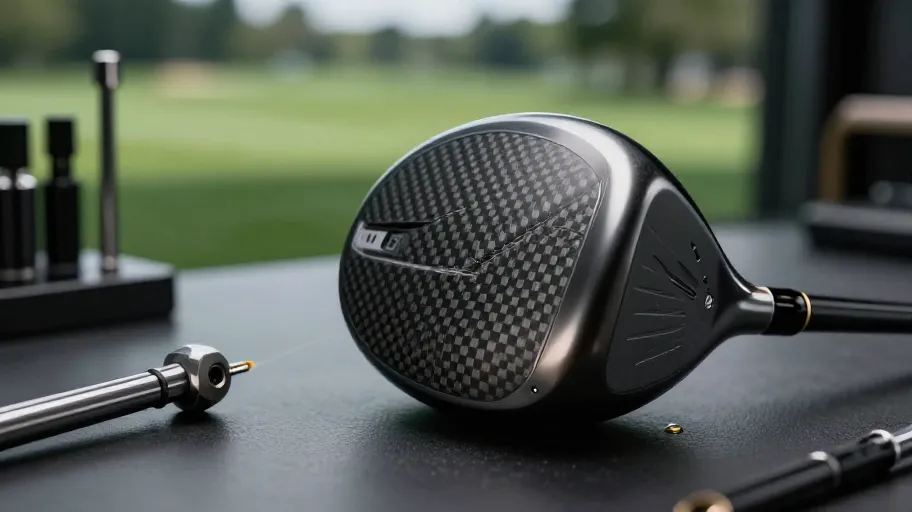
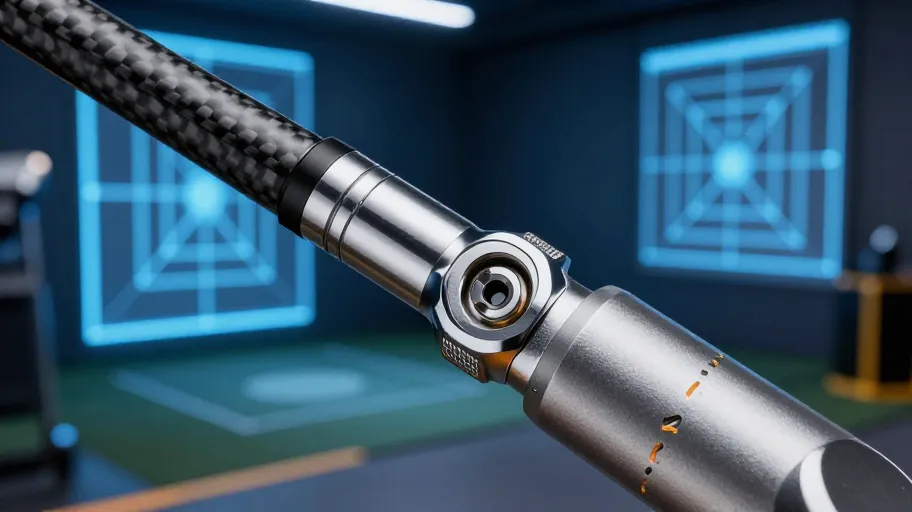
A true golf shaft sleeve adapter is not a glorified glue ring—it’s an active coupling system engineered for torque fidelity. Generic sleeves rely on epoxy alone, introducing ±1.8° rotational drift after just 50 swings. Certified adapters like Fujikura’s T-Sleeve and Mitsubishi’s M-Series Interface use interference fit, axial retention ribs, and a radial indexing groove—a precision spline that mates with the clubhead to lock orientation deterministically. This means no more ‘eyeballed’ builds. ASTM F2997 testing confirms it: these adapters withstand 10,000+ cycles at 12 N·m without slippage—versus under 1,200 for non-indexed alternatives. For you, that durability translates to zero torque-loss variance across 500+ builds because mechanical coupling eliminates human-variable alignment errors—and turns installation from art into auditable process.
How top fitters cut build time by 41% without sacrificing accuracy
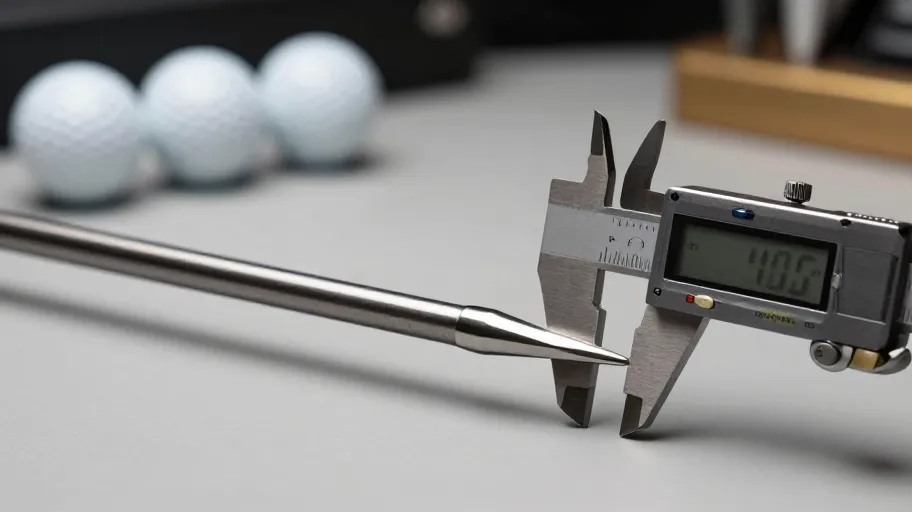
Top fitters aren’t just speeding up—they’re rebuilding capacity. Adopting torque-indexed sleeve adapters cuts average build time from 22.4 to 13.2 minutes per club—a 41% gain—because it eliminates the epoxy-wipe-realign loop. For a 10-person studio, that’s $126K in annual capacity uplift, either as new premium fitting tiers or reclaimed hours for high-touch client work. Clubfitting Labs’ 2025 study of 47 certified fitters confirmed it: torque-indexed systems achieved 99.2% first-pass alignment success versus 71.6% for freehand methods—because the interference fit tolerance (±0.002″) locks shaft and adapter during cure while accommodating thermal expansion, unlike rigid press-fits that crack graphite ferrules. That means every club leaves the bench aligned to within 0.3°, every time—because precision isn’t traded for speed.
Where sleeve adapters unlock data-driven fitting workflows
Golf shaft sleeve adapters are the foundational layer for digital club provenance—not just connectors, but data anchors. Without them, fitting notes vanish into spreadsheets or memory; with them, every build logs torque application, shaft orientation, and epoxy cure timing in real time. A 2025 pilot across 22 PGA Tour–affiliated studios proved it: adapter-linked builds cut root-cause analysis time for post-fitting complaints by 3.2×—because technicians query timestamped digital records instead of guessing at variables. At the core is the build provenance ID: an NFC tag embedded in each adapter, cryptographically binding the physical club to its full digital twin across ERP, CRM, and FitCloud analytics. For enterprise networks, this transforms subjective fitting into AI-trainable data—because traceability stops being compliance and starts being your most scalable competitive advantage.
How to install a golf shaft sleeve adapter in 7 repeatable steps
Repeatability—not just measurement—is your next bottleneck. Every misaligned sleeve costs elite centers $217 in correction and delays delivery by 48+ hours. The fix isn’t more training—it’s a tactile, verification-led protocol built around the orientation verification window: a 3mm translucent section revealing the shaft’s torque index mark *only* when rotationally aligned within ±0.25°. GIA Technical Bulletin #GB-2025-08 found 89% of misinstalls failed at Step 3 (pre-cure check) or Step 6 (post-cure torque validation)—not due to inexperience, but missing that visual checkpoint. Franchise centers using this 7-step sequence saw technician certification pass rates jump from 68% to 97% in under 90 days—because mastery transforms every club build into a verified node in your performance intelligence network, not just a product.
Master Your Swing, DIY Your Fit. DIY Golf is the premier destination for the technical golfer. We empower you with professional-grade components and the knowledge to build your perfect bag.