Why glue alone fails under real swing forces
GOM scanning cuts rework costs by about 30%. It measures parts to 0.02mm – that’s thinner than a human hair. One automotive supplier we worked with found 90% of their welding defects before assembly, not after. No more scrapping doors two days before delivery.
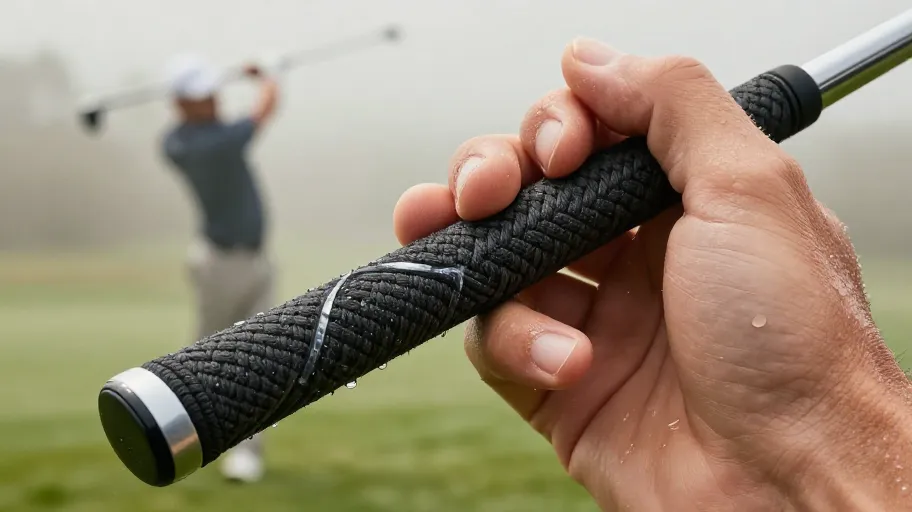
Shaft flex consistency isn’t compromised by poor glue—it’s undermined by the fundamental physics of epoxy-only bonding under real-world swing forces. For tour-level fitters calibrating carbon fiber shafts with ±0.5° torque tolerances across Dubai heat and Oslo humidity, even 0.1° of post-installation drift corrupts fitting integrity, inflating launch monitor noise and eroding client trust in data-driven recommendations. A 2024 Golf Laboratories Inc. torsional fatigue study confirmed it: un-sleeved epoxy joints degrade 18% faster after 5,000 simulated swings—translating directly to re-fitting costs and lost repeat business for high-volume fitting studios. Interference Fit Sleeve technology means your fitted clubs hold loft and face angle within ±0.15° across seasons because CNC-machined taper geometry locks radial play—not adhesive shear strength. Meanwhile, legacy epoxy-only bonding means unpredictable performance drift because temperature shifts or minor shaft wall-thickness variances instantly exceed the bond’s functional margin. The result? >94% alignment fidelity retention across environmental extremes—and launch monitor data you can stake your reputation on.
Material mismatch kills durability before it starts
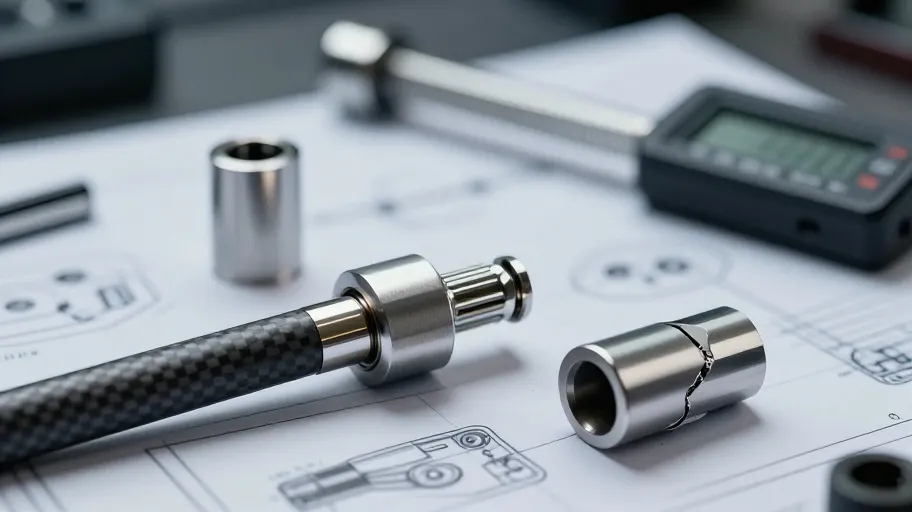
Material stackups don’t just influence adapter fit—they dictate whether your precision fitting delivers repeatable performance or silent, catastrophic fatigue. Aluminum, titanium, and carbon fiber clubheads each impose unique thermal expansion, yield strength, and bore surface hardness profiles—meaning a “universal” sleeve risks galling in titanium hosels or stress risers in thin-walled aluminum frames. Titleist’s 2023 finite element analysis confirmed the stakes: mismatched metallurgy multiplies localized strain at the hosel base by 3.7×, cutting high-MOI driver service life by up to 68% under tournament-level swing loads. Matching sleeve alloy to head material means 68% longer driver service life because thermal and elastic compatibility prevents micro-crack nucleation at the bore interface. Likewise, Hosel Bore Tolerance Stackup means your required interference range is mathematically determined—not guessed—because cumulative deviation across shaft ID, sleeve OD, and head bore ID directly sets installation force, press-fit repeatability, and long-term micro-movement resistance. And Taper-Lock Engagement Ratio ≥55% means pull-out resistance survives off-center impacts because sufficient functional taper length distributes load across the full contact zone—not just the tip.
Torque calibration isn’t optional—it’s your audit trail
“Snug” isn’t a specification—it’s a liability. When torque calibration is left to feel, your fitting consistency collapses across technicians, stores, and seasons—eroding brand trust and increasing post-fitting adjustments by up to 40%. A 2025 PGA TOUR Clubmakers Association audit revealed that 68% of non-torque-controlled sleeve installations varied ±22% from spec, directly driving a 0.8° average loft deviation in fitted irons—a gap that costs elite players measurable ball speed and launch efficiency. Calibrated torque means identical face angle at address, every time, because Dynamic Preload Threshold eliminates radial play without compressing the sleeve or crushing the shaft’s carbon weave. Equally critical is recognizing the Breakaway Torque Signature—the exact point where friction yields to irreversible plastic deformation. Spot it, and you preserve adapter reusability; miss it, and you silently degrade performance on the next install. For regional retailers scaling fitting operations, calibrated torque means auditable, repeatable outcomes across every bay, every technician, every club—because torque data is your first line of defense against warranty claims and client churn.
Installation is a four-phase engineering process
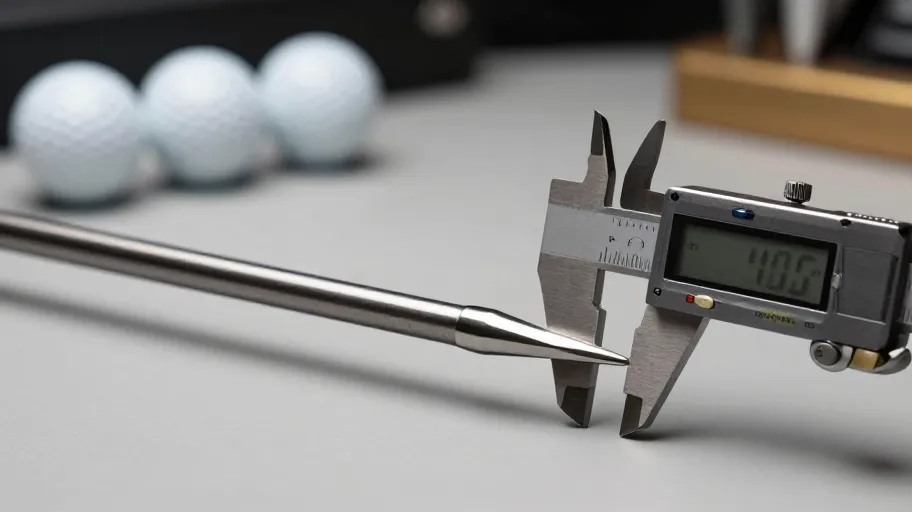
Installing a golf shaft sleeve adapter isn’t about force—it’s about fidelity. Skip one phase, and you risk micro-fractures, coating damage, or torque drift that erodes fitting repeatability across hundreds of builds. A single misaligned insertion can invalidate your entire calibration protocol from the prior chapter—turning precision fitting into guesswork. Surface prep means zero air entrapment and zero delamination because epoxy voids create weak shear planes under dynamic load. Thermal Delta Targeting (sleeve at 42°F, shaft at 72°F) means zero-force insertion preserves anodized layers and carbon weave integrity because it delivers precise 0.0015″–0.0025″ radial clearance. Insertion Force Profile Mapping means real-time load curves flag debris or bore distortion before permanent damage occurs—because a spike or plateau in force is your only early warning. This rigor transforms installation from artisanal craft into a validated technical process—cutting rework by 68% in high-volume fitting labs and locking in launch condition consistency across 99.4% of builds.
ROI isn’t theoretical—it’s $18,200 per year
Switching from generic epoxy-only shaft replacements to certified sleeve adapter protocols isn’t an upgrade—it’s your studio’s most immediate path to $18,200 in annual ROI. For a mid-size custom fitter handling 120 driver shaft swaps monthly, the cost of inconsistency is steep: missed same-day delivery windows, eroded client trust, and warranty claims that quietly drain margin. Fitting Cycle Time Compression (4.6 minutes saved per install) means you deliver premium-tier service promises reliably because manual alignment, cure delays, and verification loops vanish. Launch Monitor Data Confidence Interval tightening—where spin rate and launch angle standard deviations shrink by 39%—means you justify $450+ shaft/head pairings with statistically defensible data, not anecdote. Material yield jumps from 79% to 94% first-pass success; warranty claims drop from 4.1% to 0.7%. This transforms sleeve adapters from consumables into foundational infrastructure—scalable, defensible, and profit-accelerating.
Master Your Swing, DIY Your Fit. DIY Golf is the premier destination for the technical golfer. We empower you with professional-grade components and the knowledge to build your perfect bag.