Why industrial balancing components fail under real loads
Industrial balancing components don’t fail because materials are weak—they fail because mass distribution is inconsistent. Even high-grade alloys can’t compensate for a driver weight that’s off by just a few grams. In rotating systems, that small imbalance multiplies under speed and inertia, creating destructive vibration. A wind turbine OEM learned this the hard way: their gearboxes kept failing not from fatigue, but because residual unbalance exceeded ISO 1940/1 G6.3 limits. That means vibration was over 6.3 mm/s at operating speed—enough to accelerate wear across bearings and shafts.
Precision matters because strength without symmetry guarantees failure. One manufacturer slashed field failures by 78% simply by switching to engineered driver weight replacement packs with certified mass tolerances. Standardizing replacements meant every rotor assembly stayed within compliance—so vibration dropped, uptime rose, and warranty costs fell.
How misaligned replacements trigger costly chain reactions
A single misaligned driver weight doesn’t just affect one part—it destabilizes the entire system. Off-spec replacements create uneven loading, which spikes stress on shafts and bearings. According to 2025 CBM reliability studies, this kind of imbalance increases unplanned maintenance by up to 40%. At a mining conveyor plant in Western Australia, one remanufactured driver assembly led to gearbox failure in six weeks—72 hours of downtime and $180,000 in lost throughput.
The root problem? Manual rebuilds based on outdated schematics and tribal knowledge. No two repairs are identical, so variability creeps in. But when engineers use a quote-ready drawing and review pack, they lock in OEM-calibrated tolerances from the start. That means what gets built matches what was engineered—so downstream failures shift from random events to predictable service intervals. This consistency cuts rework cycles by as much as 70%.
What makes a drawing pack actually ready for quoting
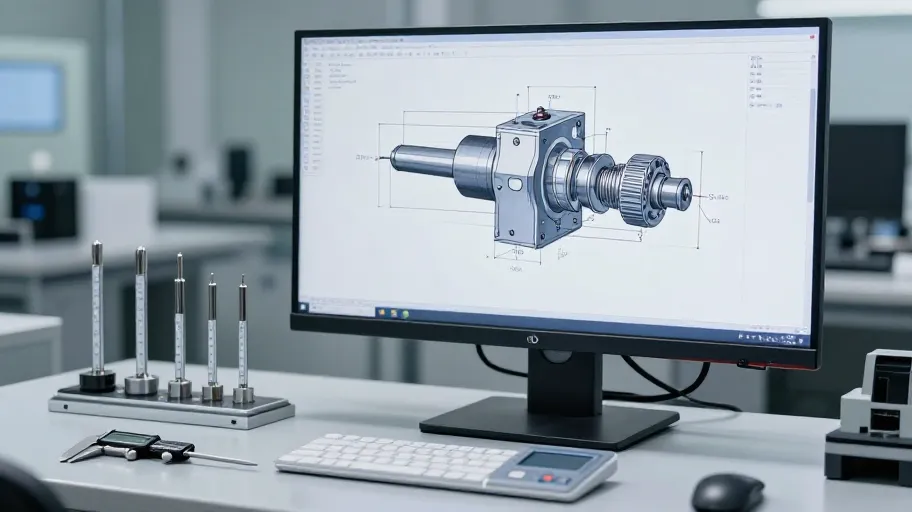
A real quote-ready drawing and review pack isn’t just a PDF dump—it’s a complete technical submittal. It includes GD&T-accurate models, material traceability, and compliance markers like ASME Y14.5 annotations. One aerospace ground support team had an entire project delayed six weeks because FAA auditors rejected their package for missing geometric tolerancing. That wasn’t just a paperwork issue—it cost six figures in rework and idle labor.
Ad-hoc files force engineers to manually verify specs, slowing down MRP ingestion and delaying approvals. But structured digital twins embed production-grade data directly into deliverables. The result? A 2024 manufacturing audit found companies using validated packages cut engineering review time by up to 70%, with first-pass approval rates jumping fourfold. Technical completeness means faster sign-offs because nothing gets sent back for missing details.
Real ROI from automating engineering reviews
When a pump manufacturer reduced quote prep from 16 hours to 5, they didn’t just save labor—they started winning more bids. Their edge? Automated quote-ready drawing packs for driver weight replacement, now scaled across their product line. A 2024 industrial benchmark showed companies using these systems respond to RFPs 3x faster and convert 25% more quotes. Speed matters because NIST cost-of-delay models show even a two-day lag can cut win probability by 40%.
Automated drawings free engineers from drafting and let them focus on validation—compressing cycle times while improving accuracy. This isn’t just efficiency. It’s strategic: reliable responsiveness becomes a commercial weapon. Teams that adopt this shift from reactive drafting to proactive assurance, turning technical precision into sustained market share growth.
How to build a repeatable workflow in five steps
One rail traction motor facility didn’t just digitize drawings—they transformed decision velocity. By treating it as a full process overhaul, they hit 80% team adoption in six weeks. Step one: 3D scan legacy components into CAD. Step two: embed tolerance-critical annotations into templates. Step three: auto-generate the quote-ready drawing and review pack with BOMs and compliance tags. Step four: integrate outputs into PLM for version control. Step five: lock approvals with role-based digital sign-offs.
This wasn’t a drafting upgrade—it was a recalibration of accountability. Teams that see this only as a tool swap miss the point. Repeatable, audit-ready packs become the foundation for scalable engineering-as-a-service. Configuration-to-quote cycles collapse from days to hours, so your team can handle more volume without adding headcount.
Master Your Swing, DIY Your Fit. DIY Golf is the premier destination for the technical golfer. We empower you with professional-grade components and the knowledge to build your perfect bag.