Golf shaft-adapter rework usually starts before assembly: the purchase specification, measurement method or approved reference is incomplete. A sleeve can look correct yet belong to a different club family, handedness convention or shaft-tip specification. The solution is not a universal tolerance or a proprietary score. It is a documented, model-specific acceptance process.
Define the fit before requesting a quote
Use an exact fit record for every adapter family. At minimum, record:
- OEM, head family and model generation;
- driver, fairway or hybrid application;
- head and shaft handedness markings where the OEM distinguishes them;
- shaft-tip specification and finished insertion requirements;
- included screw, washer, ferrule or cog components;
- material and finish requirements that are actually approved;
- the current OEM document or approved drawing revision.
Do not replace a model name with “universal.” Callaway and Titleist publish fitting systems with distinct categories and settings. A supplier drawing should point back to the exact approved application instead of borrowing dimensions from a visually similar sleeve.
Use a controlled reference and a defined measurement method
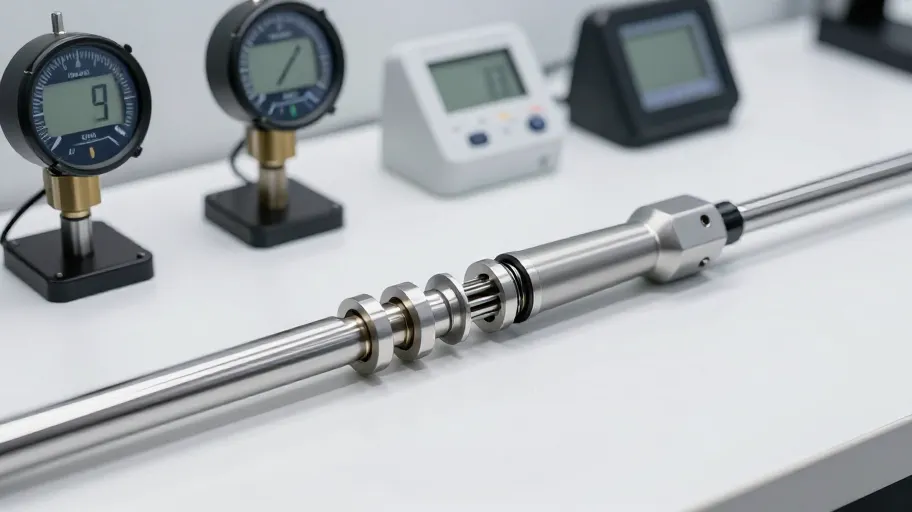
An approved physical sample is useful only when its identity and revision are controlled. Pair it with a drawing or inspection plan that defines what is being measured, where it is measured, the instrument used and the acceptance rule. NIST describes metrological traceability as a documented chain of calibrations in which each link contributes to measurement uncertainty. A calibration sticker alone does not make every measurement traceable.
For a dimensional result that decides acceptance, keep the instrument ID, calibration status, method, operator, environmental condition when relevant, measured value and result. If two suppliers measure a taper or diameter at different locations, their numbers are not directly comparable even if both reports look precise.
A five-stage incoming-inspection gate
- Identity check: verify model family, club type, handedness markings, finish and included hardware against the purchase record.
- Document check: confirm the drawing, OEM reference and approved sample are the current revisions.
- Dimensional check: measure the defined characteristics with the specified method and record the result; do not create an undocumented pass/fail rule at the bench.
- Non-destructive fit check: use an approved fixture or reference head/shaft. Never force, grind or drill a part merely to make the sample pass.
- Disposition: accept the lot, quarantine it for review, or reject it with the exact failed characteristic recorded. Keep any deviation approval linked to the lot.
Keep the corrective-action record useful
When rework occurs, record the actual failure mode: wrong identity, drawing revision, measurement method, dimension, finish, hardware, assembly instruction or supplier lot. Avoid labels such as “bad fit” that cannot guide prevention. A useful record connects the failure to the lot, evidence, approved disposition and verification of the next delivery.
This process does not promise zero defects or a fixed financial return. It makes the acceptance decision reproducible and gives engineering and procurement the evidence needed to address the real cause. For a consumer-facing identity check, use the DIY-GOLF adapter compatibility checker. For used-shaft purchases, use the seven-point fitment checklist.
Primary references
- NIST Metrological Traceability FAQ and Policy—documented calibration chains and measurement assurance.
- Titleist SureFit Performance Guide—model- and club-type-specific fit boundaries.
- Callaway OptiFit Custom Fitting Handbook—official fitting categories, tools and comparison process.
Checked September 18, 2026. This is a quality-control framework, not a substitute for the current OEM drawing, supplier agreement or qualified engineering review.