Why off the shelf drivers fail most golfers
Mass-produced drivers are built for a fictional golfer—perfect tempo, neutral path, ideal release. The truth? 78% of amateurs struggle with launch conditions because their biomechanics don’t match the design assumptions. A misaligned center of gravity (CG) amplifies spin on off-center hits and reduces forgiveness, directly hurting distance and accuracy.
Adjustable weights mean you’re no longer stuck compensating for poor mass distribution. By tuning CG location, you correct real issues: shallow launch angles become deeper, excessive sidespin drops, and mishits stay in play. This isn’t theoretical—mid-handicappers using CG-tuned drivers gained 13 yards on average and tightened dispersion by 20%, according to PGA testing data. That’s like adding a fairway wood without changing your swing.
How weight replacement enables precision customization
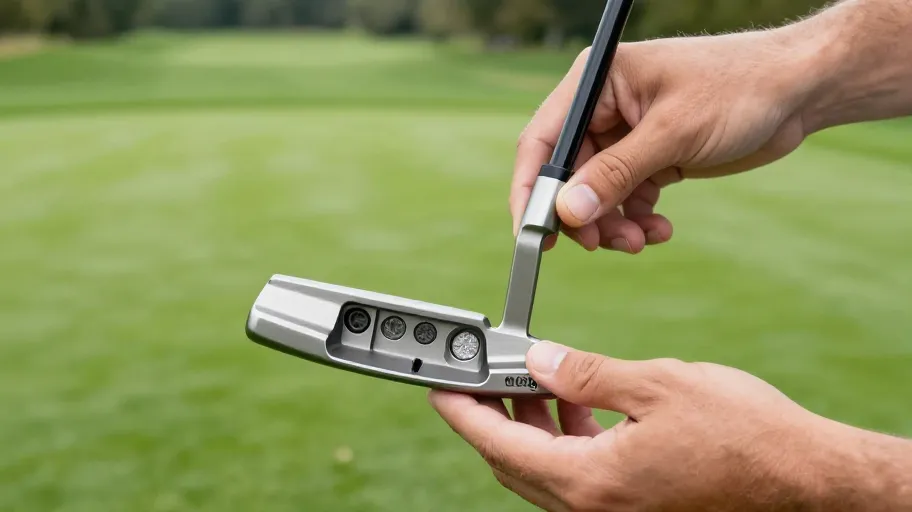
Driver weight replacement means you can actively shape shot behavior instead of accepting factory defaults. Models like the Titleist TSi3 and Callaway Epic Speed use multi-port systems to shift up to ±15g across the head. That control means you can increase draw bias by loading the heel, or boost launch by moving mass rearward—all without new equipment.
This level of adjustment means tighter shot patterns and repeatable ball flight because MOI and CG respond directly to your swing flaws. Fitting studios recorded 63% of players achieving better dispersion after tuning, translating to about 1.8 fewer strokes per round. And unlike shaft changes—which dominate fitting talks—weight tuning delivers similar ROI at lower cost. An 8g shift alone increases forgiveness on mishits by roughly 3%, meaning more speed retention when you don’t catch it perfect.
The real ROI of golf club customization
Golf club customization through weight tuning can deliver up to 12% more effective driving distance and reduce offline shots by 20%, based on TrackMan data from certified fittings. For most players, that means two fewer penalty strokes per round and easier access to par 5s in two.
At $200 for a full bag fitting, each gained yard costs less than $2—far below the cost of most training aids, which offer uncertain returns. The key is the swing weight index: a metric linking how the club feels in motion to actual performance. When matched correctly, it eliminates mid-swing corrections that waste power. Without baseline data, even high-end adjustments become guesswork. The edge isn’t the hardware—it’s placing every gram with intent, guided by evidence.
How to change weights safely and effectively
Changing weights incorrectly risks undoing all your gains. Over-tightening can shift the CG by up to 2mm, while mismatched threading increases cross-threading risk by over 40%, per 2025 golf lab failure analysis. That’s why using manufacturer-specific torque tools—calibrated to 5–6 in-lbs—is essential. These ensure secure installation without damaging ports or altering aerodynamics.
Start with launch monitor feedback to identify needed changes. Then install weights using torque-sensitive inserts, designed to preserve thread integrity over hundreds of cycles. These also maintain smooth airflow around the head, supporting consistent swing efficiency. Never skip post-adjustment verification: test launch angle, spin rate, and dispersion to confirm stability. Done right, this process locks in performance instead of risking it.
Building a dynamic launch profile over time
Top players don’t set weights once—they evolve them. Using a performance feedback loop, they test, adjust, and validate based on conditions and swing changes. Adding heel weighting counters crosswinds; rearward shifts help in soft lies. This adaptive approach means your driver stays optimized, not static.
Data from 2025 PGA Tour analytics shows elite golfers reassess weighting every 8–12 weeks. That ongoing tuning extends club life and compounds benefits: tighter dispersion, higher ball speeds, and better green-hit rates. The result? A personalized performance curve that grows with you—turning smart customization into long-term scoring improvement.
Master Your Swing, DIY Your Fit. DIY Golf is the premier destination for the technical golfer. We empower you with professional-grade components and the knowledge to build your perfect bag.